
Last updated November 18, 2026
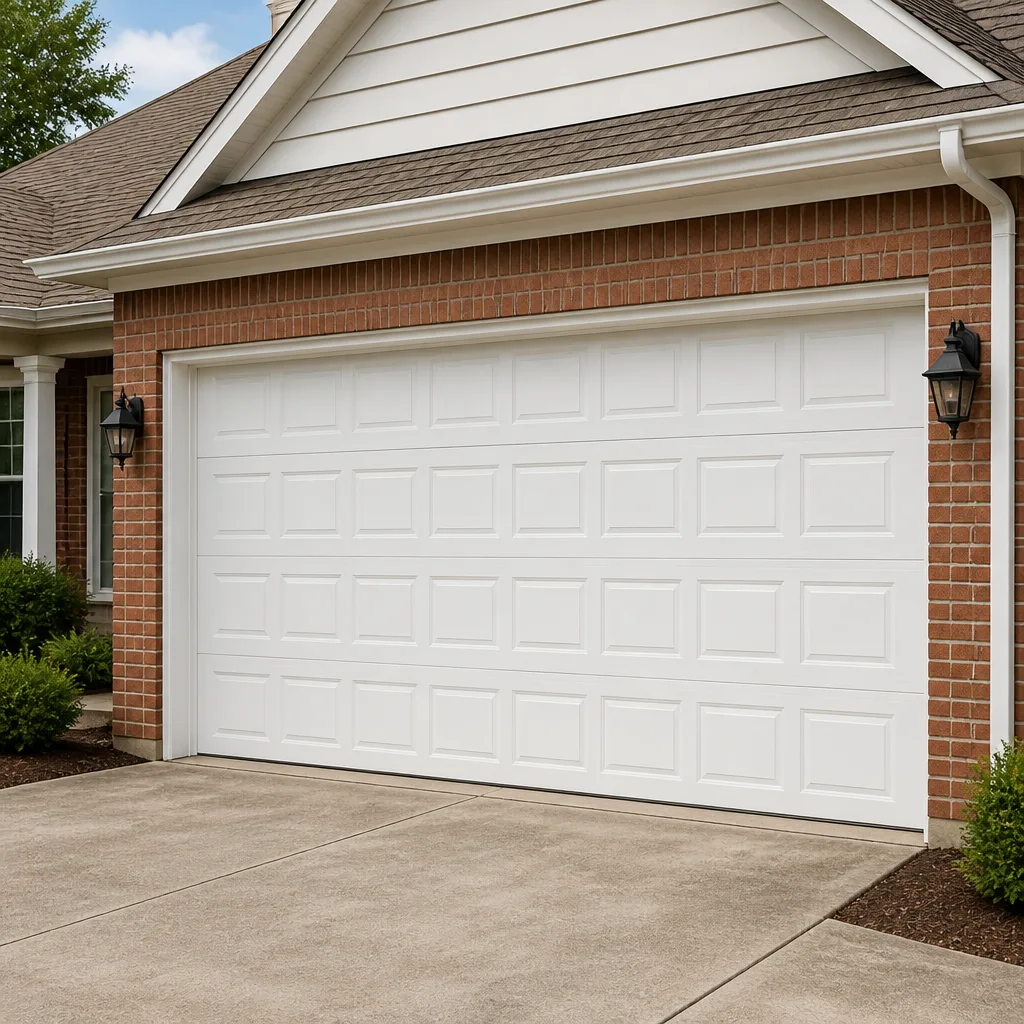 Raised-panel steel
 Carriage house
 Modern flush
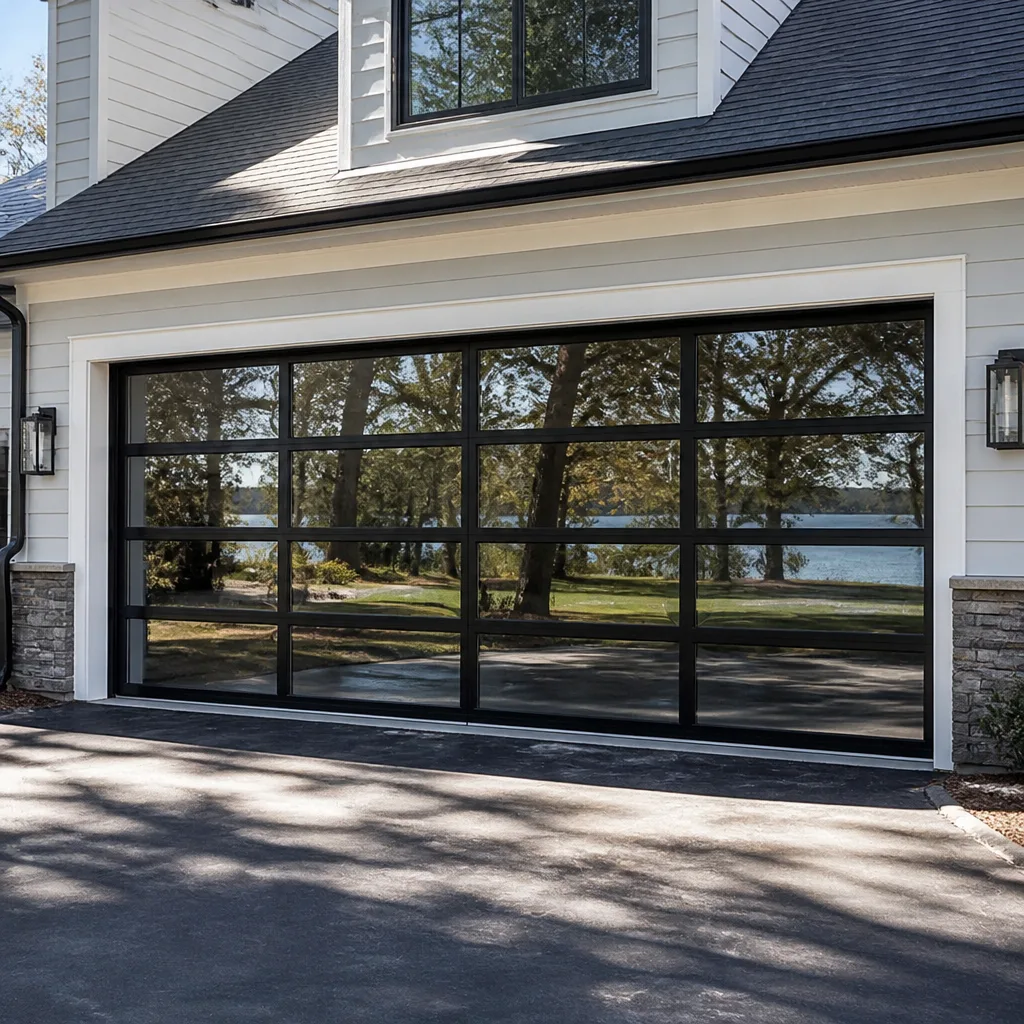 Full-view glass
 LiftMaster openers
 Chamberlain openers
Full 25-point door and opener safety check with every visit - springs, cables, rollers, tracks, and your LiftMaster or Chamberlain opener included
You get a price before we start. It does not change when the pro arrives.
Get your free estimateDIY vs Professional Garage Door: The Boulder City Homeowner’s Decision Guide
A single torsion spring on a standard two-car garage door stores roughly the same energy as a loaded crossbow, and it releases that energy in milliseconds if it slips during winding. That’s not a scare tactic to push you toward hiring someone. It’s the reason injury data on DIY spring replacement looks the way it does, and it’s the clearest example of why the DIY-versus-pro question isn’t about how handy you are. Some garage door tasks are perfectly safe for a careful homeowner in Boulder City. A few are genuinely dangerous no matter your skill level. This guide draws that line task by task, explains the physics, and shows you where DIY saves real money and where it quietly costs more.
Quick Answer
Weatherstripping, track cleaning, lubrication, and safety-sensor alignment are safe DIY jobs for most Boulder City homeowners. Torsion spring replacement, cable replacement, and any work involving the door’s counterbalance system should always go to a trained professional, because the stored energy in those parts can cause serious injury in a fraction of a second. Everything in between (rollers, hinges, opener adjustments) depends on your tools, your comfort on a ladder, and how the door behaves once you start.
Styles & brands we work with
- Raised-panel steel
- Carriage house
- Modern flush
- Full-view glass
- LiftMaster openers
- Chamberlain openers
Table of Contents
- The Line Between Safe and Dangerous
- The Physics of a Torsion Spring (Why It’s Not a Skill Question)
- Task-by-Task: What You Can Do vs What You Shouldn’t
- Boulder City Factors That Change the Playbook
- DIY vs Pro: When Each One Actually Saves Money
- How to Describe a Failed DIY Attempt to a Technician
- Common Mistakes to Avoid
- When to Call a Professional
The Line Between Safe and Dangerous
The most useful way to think about garage door work is not “easy versus hard” but “gravity-assisted versus energy-stored.” Most of the door is a simple machine: panels, rollers, hinges, a track. You can see how it moves and reason about it. The counterbalance system is different. Torsion springs and the cables that connect them hold the door’s entire weight in tension, coiled up and waiting. When you work on anything in that system, you’re not fighting gravity. You’re managing stored energy, and stored energy doesn’t care how careful you are.
That’s why we tell Boulder City homeowners to split the trade into three buckets rather than two.
- Bucket one, safe DIY: weatherstripping, bottom seal replacement, lubrication, wiping dust from tracks, cleaning and aligning safety sensors, swapping a remote battery. These touch no stored energy and no structural hardware.
- Bucket two, DIY with care: replacing rollers and hinges, tightening track bolts, adjusting opener travel limits. These need basic tools, a stable ladder, and the discipline to stop the moment something feels wrong.
- Bucket three, professional only: torsion springs, extension springs, cables, drums, and bottom brackets. These are the parts that injure people. There’s no version of this work where a homeowner should be winding a spring with a winding bar.
If you take nothing else from this guide, take the three buckets. When you’re standing in your garage trying to decide whether to call someone, ask which bucket the task falls into. Our Garage Door Repair in Boulder City team gets this question constantly, and the answer usually comes down to that one distinction.
The Physics of a Torsion Spring (Why It’s Not a Skill Question)
Here’s the part most DIY guides skip. A torsion spring is a coil of steel wire that has been wound hundreds of times and pinned in place. The energy it holds is real, measurable, and large. For a typical two-car garage door, the spring must lift a door weighing somewhere in the range of 130 to 200 pounds. To do that, it’s pre-loaded with enough torque to counterbalance that weight through the full travel of the door.
Stored energy in a spring scales with the square of how far it’s wound. Wind it twice as far and it holds four times the energy. That’s why the difference between “the door is up” and “the door is down” changes how much force is waiting in the coil, and why the spring has to be unwound in a specific sequence before it can be removed. A loaded crossbow stores on the order of a hundred foot-pounds. A wound torsion spring on a standard two-car door stores comparable energy, and unlike the crossbow, it has no safety and no trigger. It just has the winding bar and your grip.
When a spring slips during winding, or a cable snaps under load, that energy goes somewhere fast. The winding bar can whip out of the cone. The cable can crack like a bullwhip. The bottom bracket can fail and send hardware in an unpredictable direction. None of that is about being clumsy. It’s about the amount of force involved. Which is why “never attempt spring or cable work yourself” isn’t a marketing line, it’s the trade’s own rule. A trained tech uses proper winding bars, sized correctly for the spring, and knows the sequence. That training is the whole point.
Task-by-Task: What You Can Do vs What You Shouldn’t
Below is the classification we walk Boulder City homeowners through. Match your task to the list before you pick up a tool.
Safe DIY Tasks
- Replace weatherstripping and the bottom seal. The rubber strip along the bottom of the door takes a beating in the desert and is easy to swap with basic hand tools.
- Lubricate rollers, hinges, and springs. A garage-door-specific lubricant, not WD-40, applied to the right spots a couple times a year.
- Clean the tracks. Wipe out dust and grit with a damp rag. Don’t grease the tracks. Dirt sticks to grease and turns the track into sandpaper.
- Align and clean safety sensors. The two little eyes near the floor that stop the door if something’s in the way. Wipe the lenses and make sure they face each other.
- Swap remote and keypad batteries. Cheap, fast, and fixes a surprising share of “my opener is broken” calls.
DIY With Care (Basic Tools, Steady Ladder)
- Replace worn rollers and hinges. The nylon rollers on most doors wear out, and swapping them is manageable, but you’re working near the counterbalance. Do one at a time and never remove the bottom bracket.
- Tighten track bolts and brackets. Tracks should be plumb. A loose bolt is a simple fix; a bent track is not.
- Adjust opener travel limits and force settings. These are set on the opener head unit. Follow the manual for your model, whether that’s a LiftMaster, Chamberlain, or Genie.
- Balance-check the door by hand. Disconnect the opener and lift the door halfway. It should hold roughly in place. If it drops or flies up, the springs are out of balance and it’s time to call a pro.
Professional Only, No Exceptions
- Torsion spring replacement. The coiled spring above the door that handles most of the lifting weight. Never wind or unwind one yourself.
- Extension spring replacement. The older style that runs alongside the track. Same stored-energy problem, same rule.
- Cable replacement. Cables are under constant tension and can cause serious injury if they let go.
- Bottom bracket and drum work. These hold the cable and spring assembly together. Leave them alone.
If you’re curious what spring replacement actually involves for a pro, our Garage Door Spring Repair in Boulder City page walks through the process. Read it to understand the work. Don’t read it as a how-to.
Boulder City Factors That Change the Playbook
National DIY guides are written for a temperate climate. Boulder City is not that. The Mojave summer heat here pushes garage interiors well past 110 degrees, and that changes what works.
For one, lubricants behave differently. A light oil that works fine in a mild climate can cook off or thin out in a Boulder City garage in July, leaving rollers dry and squeaky by August. We see it every summer: a homeowner lubricates in spring, and by mid-summer the door sounds like it’s grinding. Use a heavier, heat-stable lubricant on the springs, hinges, and rollers, and expect to reapply more often than a guide written for the Midwest would tell you.
Second, dust. Boulder City sits on the edge of the desert, and wind-blown dust settles into tracks and hinge joints. Greasy tracks turn into a paste of grit that wears rollers out fast. That’s why we tell homeowners to clean tracks dry and skip the grease. The dust here finds every sticky surface.
Third, heat moves metal. Doors and tracks expand through the afternoon and contract overnight. A door that closes perfectly at 7 a.m. can bind slightly by 3 p.m. If your door only misbehaves on hot afternoons, that’s not a sensor problem, it’s thermal movement. Don’t over-correct the opener to compensate. Let a pro check the balance and track alignment instead.
And the local garage stock reflects the market. We service Clopay, Amarr, and Wayne Dalton doors, along with the older Craftsman setups that are still going strong in some Boulder City neighborhoods. Each brand has its own quirks worth knowing.
DIY vs Pro: When Each One Actually Saves Money
Here’s where the decision gets honest. DIY saves real money on the tasks in bucket one. On the dangerous tasks, it can cost far more than it saves.
Consider the math on springs. A torsion spring repair runs somewhere in the range of $150 to $280, parts and labor included, depending on the door and the setup. A failed DIY attempt doesn’t just cost you the spring. It costs the emergency call, sometimes a damaged door panel or track, and occasionally an injury that dwarfs the repair bill. The savings aren’t worth it, because there are no savings. What about the safe tasks? Swapping weatherstripping or cleaning tracks yourself genuinely saves the cost of a service visit, and those are worth doing.
- DIY saves money: weatherstripping, bottom seal, lubrication, sensor cleaning, remote batteries, roller and hinge swaps.
- DIY roughly breaks even: opener travel adjustments if you’re patient, minor track bolt tightening.
- DIY costs more: springs, cables, bottom brackets, and any attempt to “re-tension” a spring that slipped. A failed attempt becomes an emergency call plus parts plus possible door damage.
The other cost homeowners don’t factor in is the diagnostic time. A pro can look at a door and tell you within minutes whether it needs a $40 part or a $400 repair. That clarity has value. If you’re weighing a new door rather than a repair, see our Garage Door Installation in Boulder City page for what that process involves.
How to Describe a Failed DIY Attempt to a Technician
If you’ve already tried something and it didn’t work, the fastest way to an honest quote is to describe exactly what you did. Technicians aren’t there to judge. They’re there to figure out the current state of the door accurately, and that’s much easier when they know what’s been changed.
- Say what you attempted, in order. “I replaced two rollers and then the door started hanging up on one side” tells us far more than “the door is broken.”
- Note any parts you swapped and where they came from. Brand, source, and part number if you have it. Off-brand rollers and springs have different specs, and that matters.
- Describe the symptom precisely. Is the door binding? Does the opener run but the door doesn’t move? Does it reverse before touching the floor? Is there a bang when it opens?
- Mention any sounds and when they started. A clunk only on the way down points to different hardware than a grind on the way up.
- Be honest about strain or injury risk. If something snapped or sprung and you backed off, say so. That tells us exactly what’s under tension.
- Tell us the door’s age if you know it. Older doors have older springs with different fatigue profiles.
When you call, a live person answers 24 hours a day, 7 days a week, so you can describe the situation the moment it happens. The tech who arrives will present a written price before any work begins, and the number on the invoice will match the number you heard.
See the difference
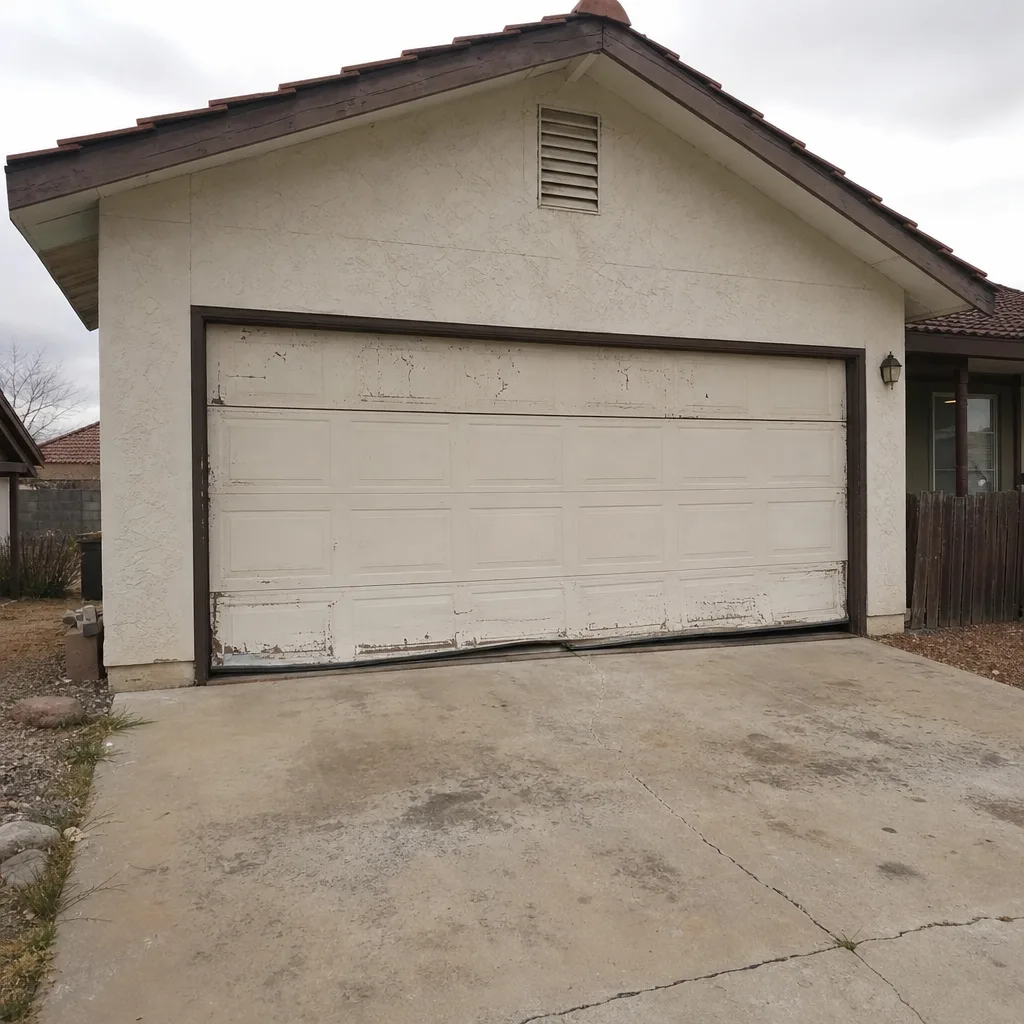 Before
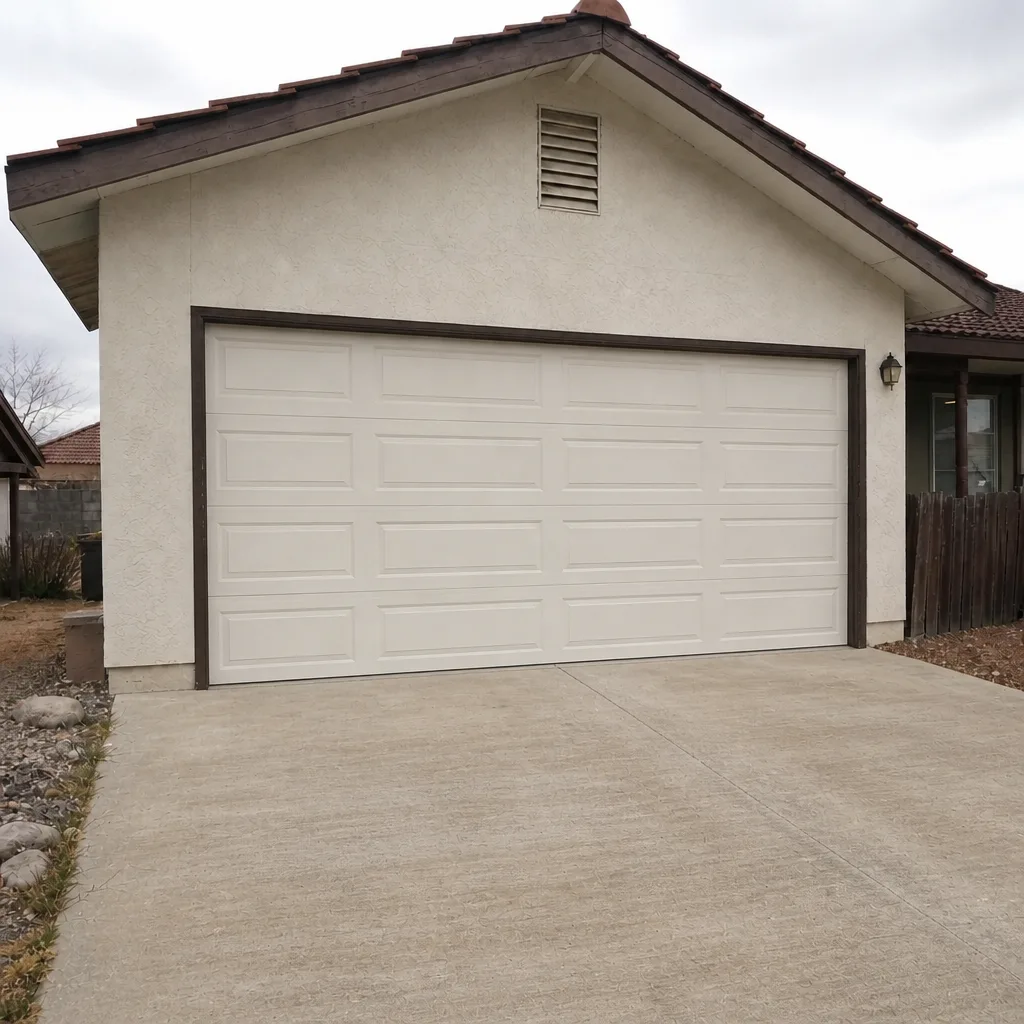 After
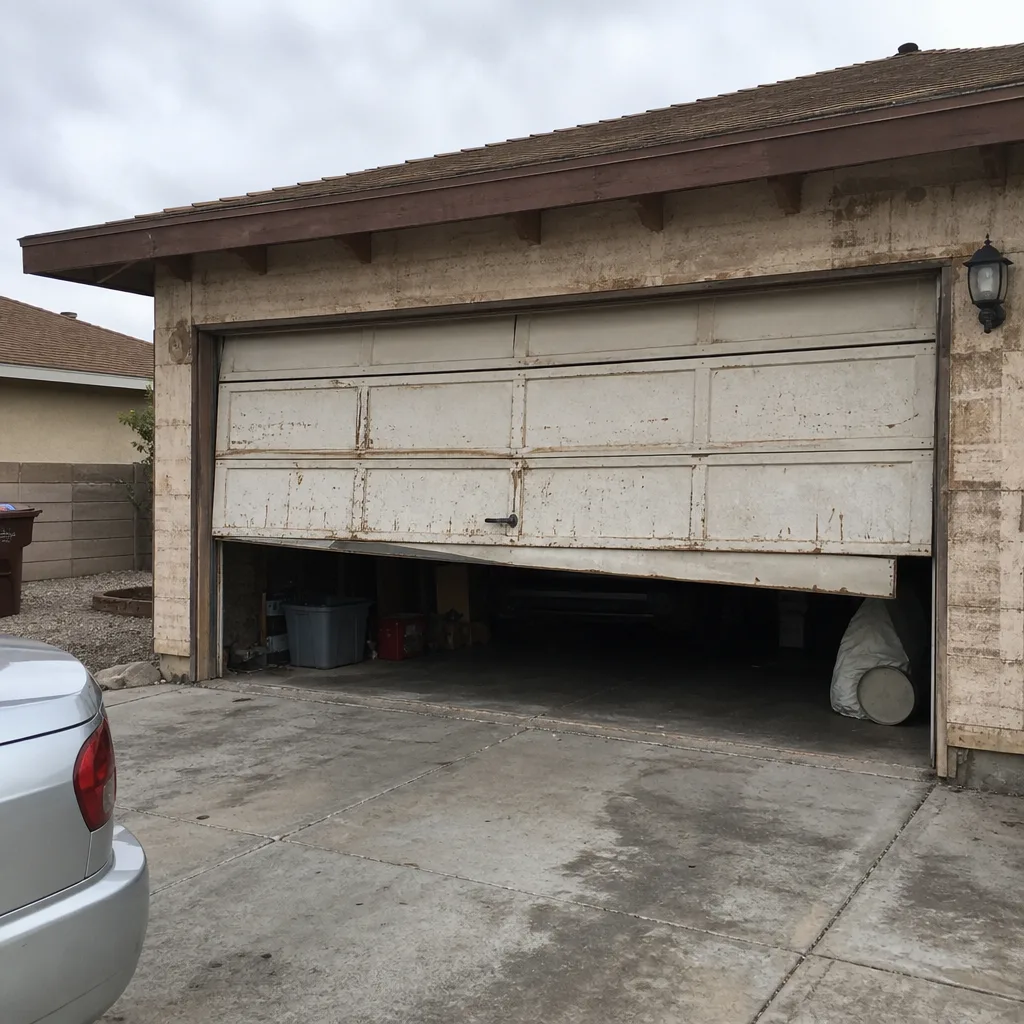 Before
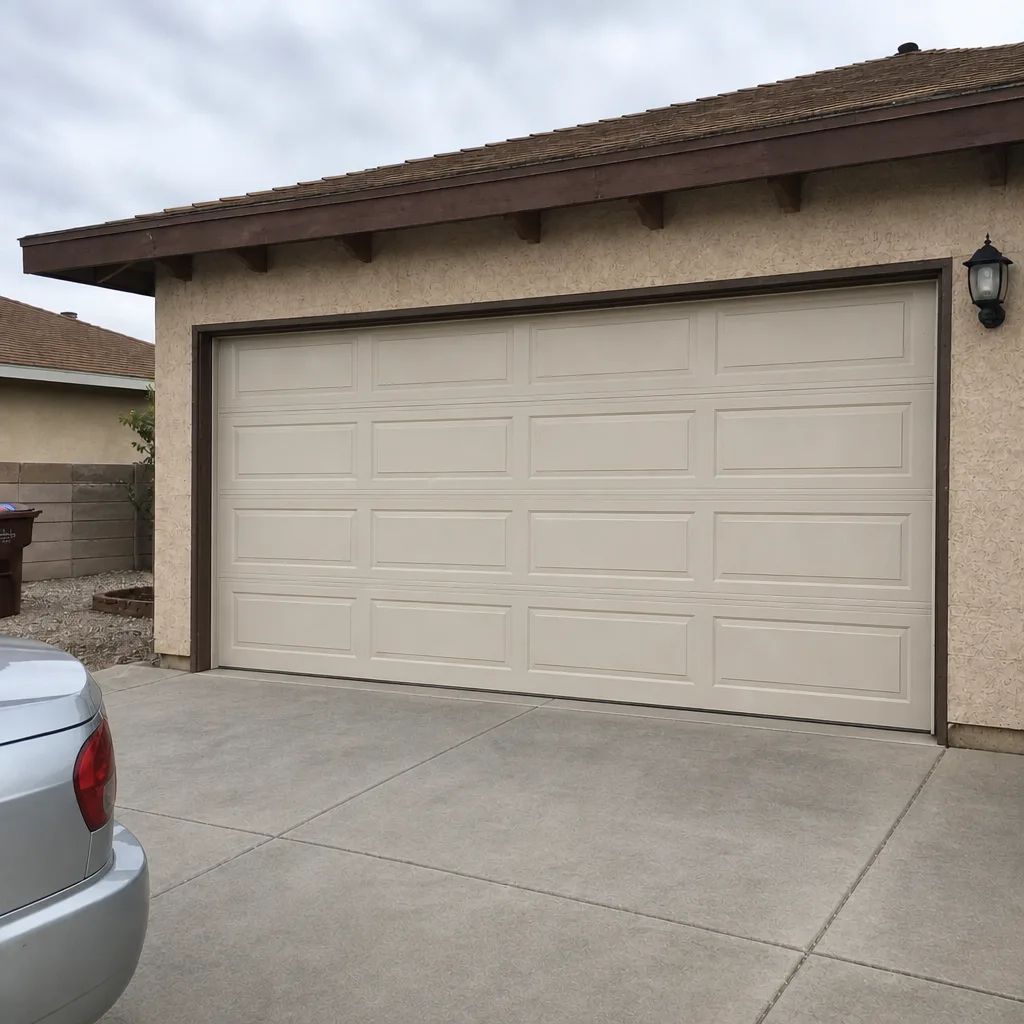 After
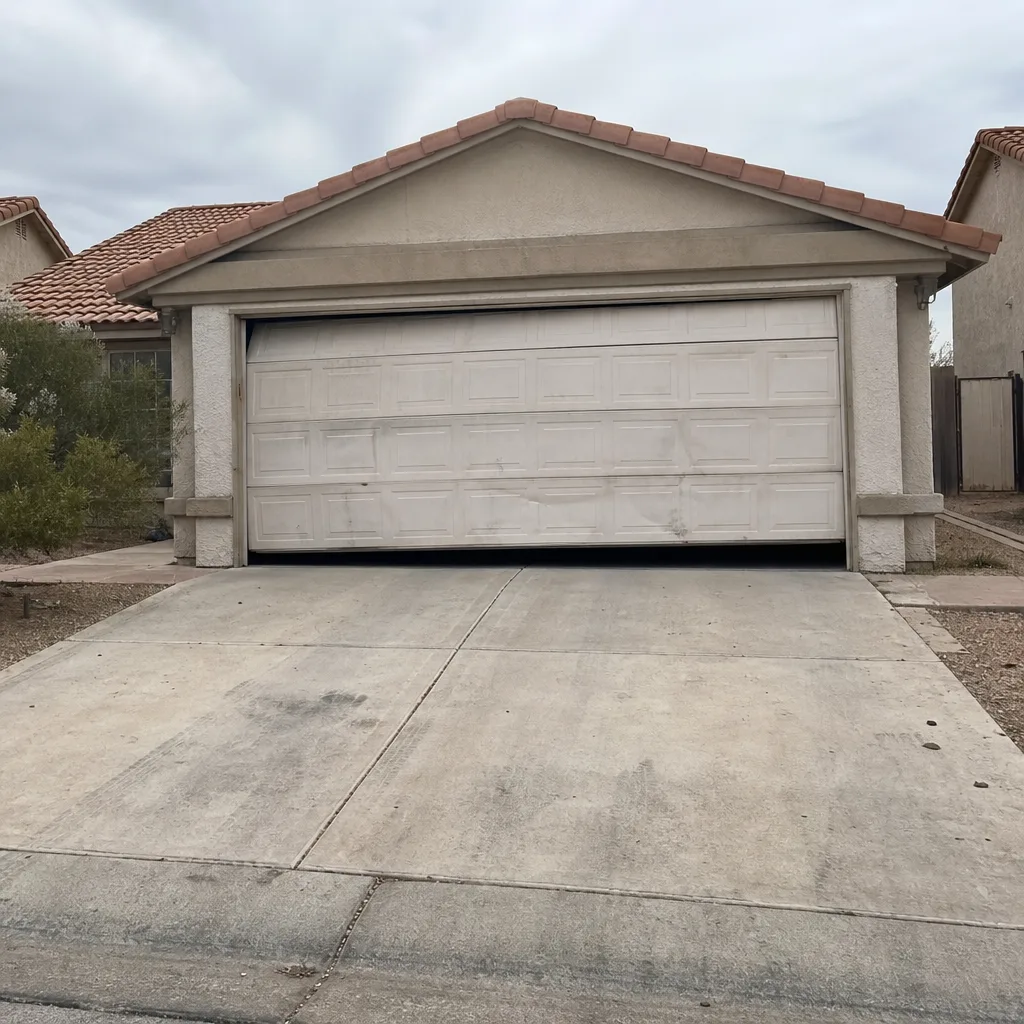 Before
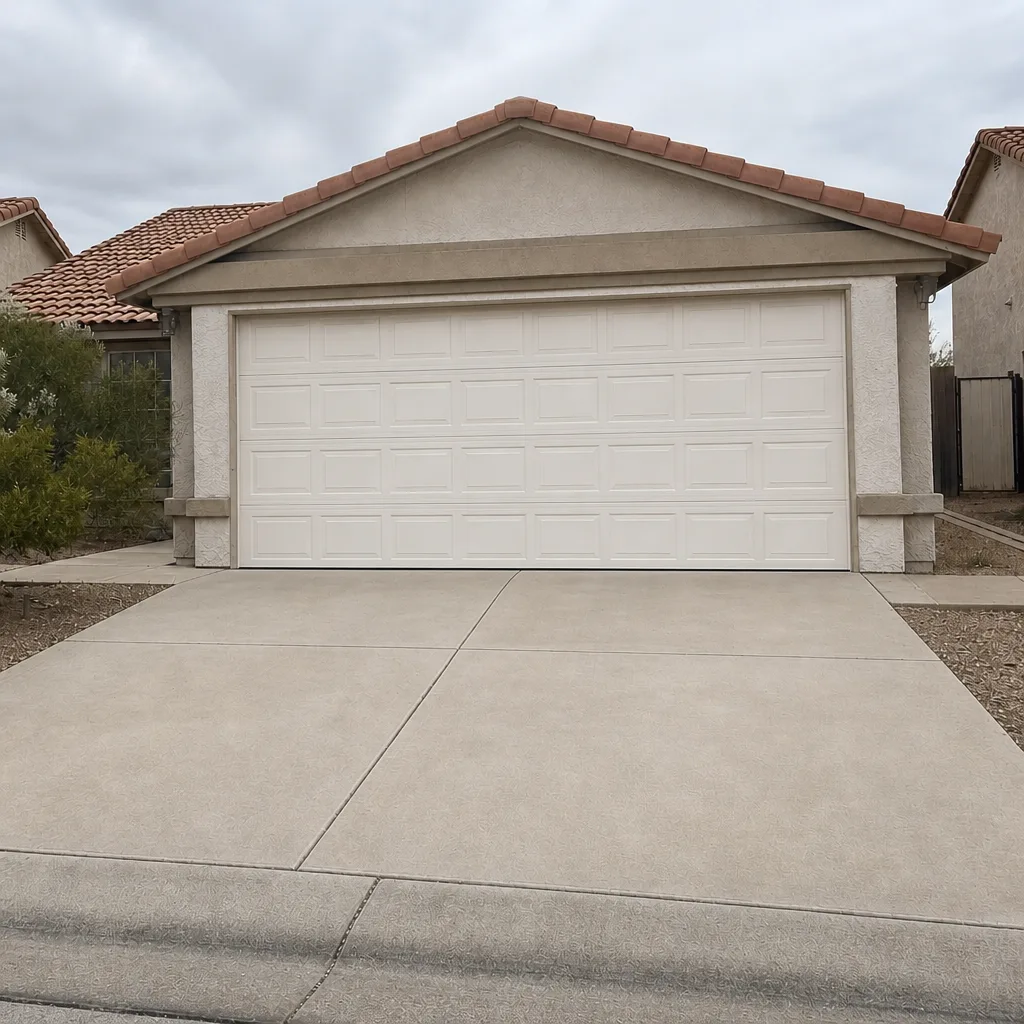 After
Common Mistakes to Avoid
- Winding a spring by yourself. This is the number one rule. A wound torsion spring holds enough energy to cause serious injury in a fraction of a second, and no amount of online video makes it safe.
- Greasing the tracks. In Boulder City’s dust, grease turns tracks into grit traps. Clean tracks dry and keep them dry.
- Using WD-40 as a garage door lubricant. It’s a solvent, not a lubricant. It thins out fast in the desert heat and leaves parts drier than they started.
- Forcing a stuck door with the opener. If the door binds, the opener isn’t the problem, and forcing it burns out the motor and can warp panels.
- Pulling a safety sensor’s lens apart to “fix” it. Sensors usually just need cleaning or alignment. Disassembly makes it worse.
- Ignoring the afternoon-only problem. A door that only misbehaves when it’s hot is telling you the metal is expanding. Adjusting the opener to compensate usually creates a new problem in the morning.
- Trying to re-tension a spring that slipped. Once a spring slips, the door is no longer balanced, and the whole system needs to be re-evaluated, not adjusted in place.
When to Call a Professional
Call a pro when the task falls in bucket three, when a door is out of balance, when you’ve attempted a repair and the door behaves differently, or when anything snaps, bangs, or hangs. Springs, cables, and bottom brackets are professional-only work, full stop. If your door binds only in the afternoon heat, that’s worth a check too, because thermal movement can mask a balance problem. And if you’re simply not sure, a free estimate settles it. Bramwell Garage Door Repair Boulder City offers free estimates in Boulder City, and our technicians have up to 25 years of experience. Call (844) 560-4479.
Frequently Asked Questions
No. Torsion and extension springs hold stored energy large enough to cause serious injury if they slip during winding, and that risk doesn’t drop with skill or caution. Spring replacement should always go to a trained professional with the right winding bars and the right sequence. Call (844) 560-4479 for a free estimate.
Weatherstripping, bottom seal replacement, lubrication, track cleaning, and safety-sensor cleaning are all safe DIY tasks. Roller and hinge swaps are manageable with basic tools. Anything involving springs, cables, drums, or the bottom bracket is professional-only. Call (844) 560-4479 if you’re unsure which category a task falls into.
Most torsion spring repairs run in the range of $150 to $280, parts and labor included, and you’ll get a written price before any work starts. That number covers the spring, the labor, and the balance check afterward. Call (844) 560-4479 for an exact quote on your door.
Heat makes metal expand, and here in Boulder City a door that’s fine at 7 a.m. can bind by mid-afternoon. That’s thermal movement, not a sensor fault or an opener problem. Adjusting the opener to compensate usually creates a morning issue. A balance and track check is the better move, so call (844) 560-4479.
No. We give you a written price before any work begins, and the number on the invoice matches the number you heard. That’s part of the Kingswell Guarantee. If the situation on site changes what’s needed, we tell you before we do anything, not after. Call (844) 560-4479 to set up a free estimate.
Every repair is protected by the 365-Day Done Right Promise. If a covered repair fails within the guarantee period, we come back and fix it at no charge, and that commitment is in writing. Ask the technician exactly what the guarantee covers and for how long before they begin. Call (844) 560-4479 with questions.
The Bottom Line
The DIY-versus-pro question isn’t about your skill level. It’s about which task you’re attempting. Weatherstripping, lubrication, track cleaning, and sensor alignment are safe and worth doing yourself. Springs, cables, and bottom brackets hold stored energy that can hurt you regardless of how careful you are, and they belong to a trained technician every time. Know which bucket your task is in before you pick up a tool. When it’s time to call, Bramwell Garage Door Repair Boulder City brings a written price, a real arrival window, a clean job site, and a written guarantee to every job. To get started, visit our Bramwell Garage Door Repair Boulder City home page or call (844) 560-4479 for a free estimate, with a live person answering 24 hours a day, 7 days a week.
Written by the team at Bramwell Garage Door Repair Boulder City.