
Last updated November 18, 2026
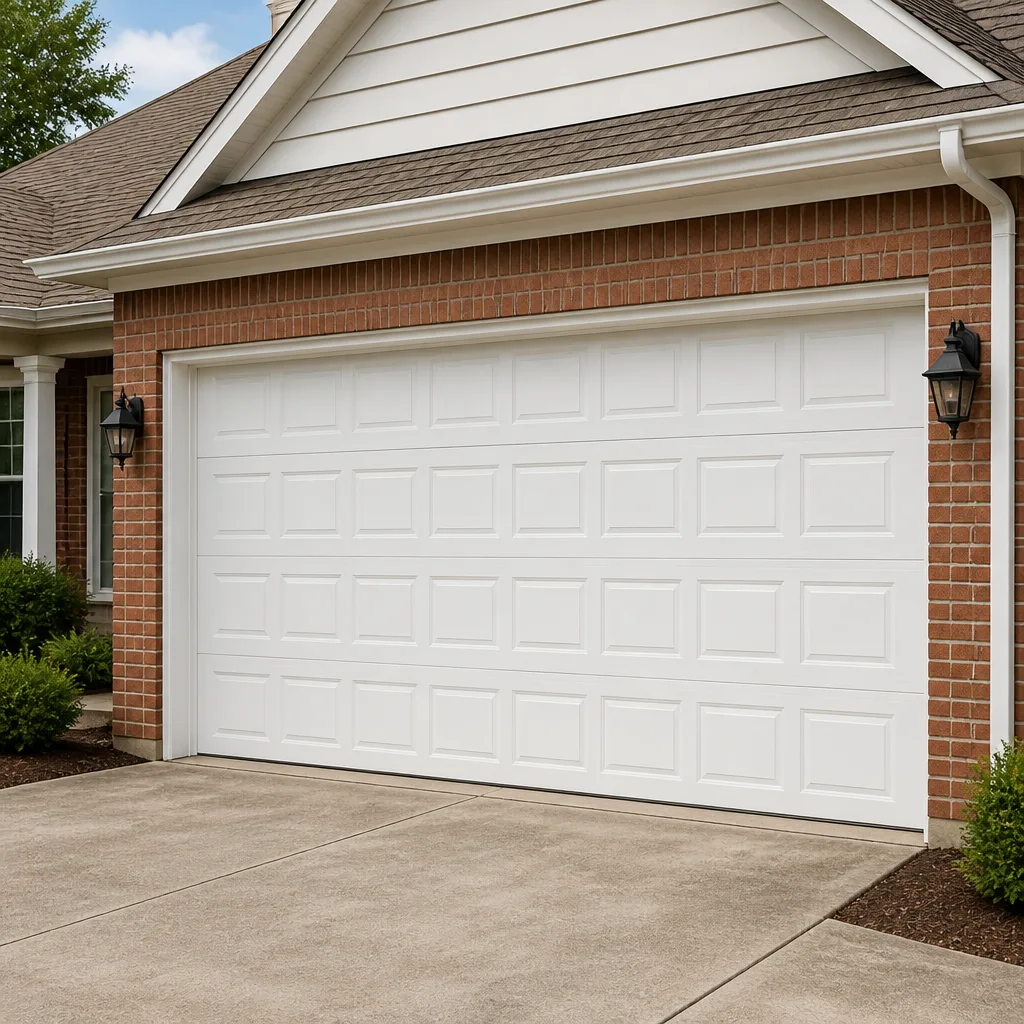 Raised-panel steel
 Carriage house
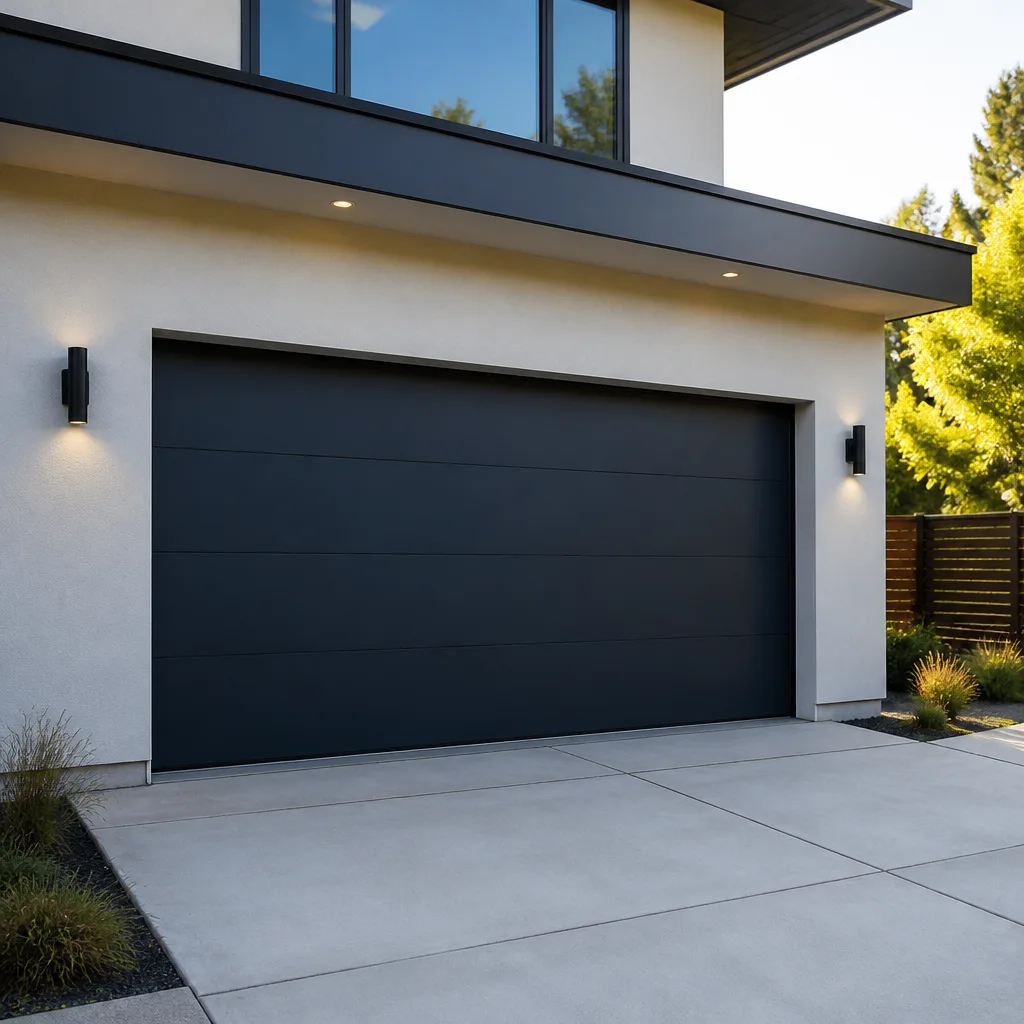 Modern flush
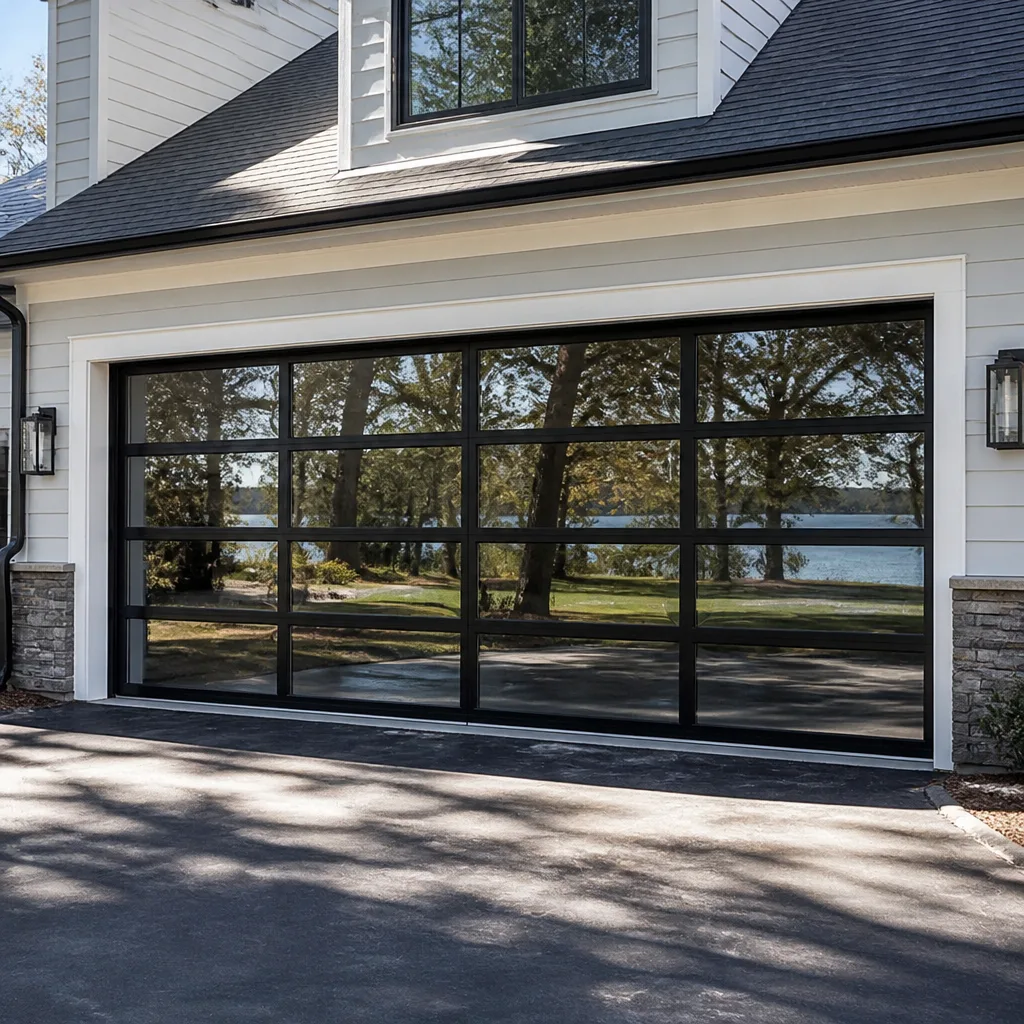 Full-view glass
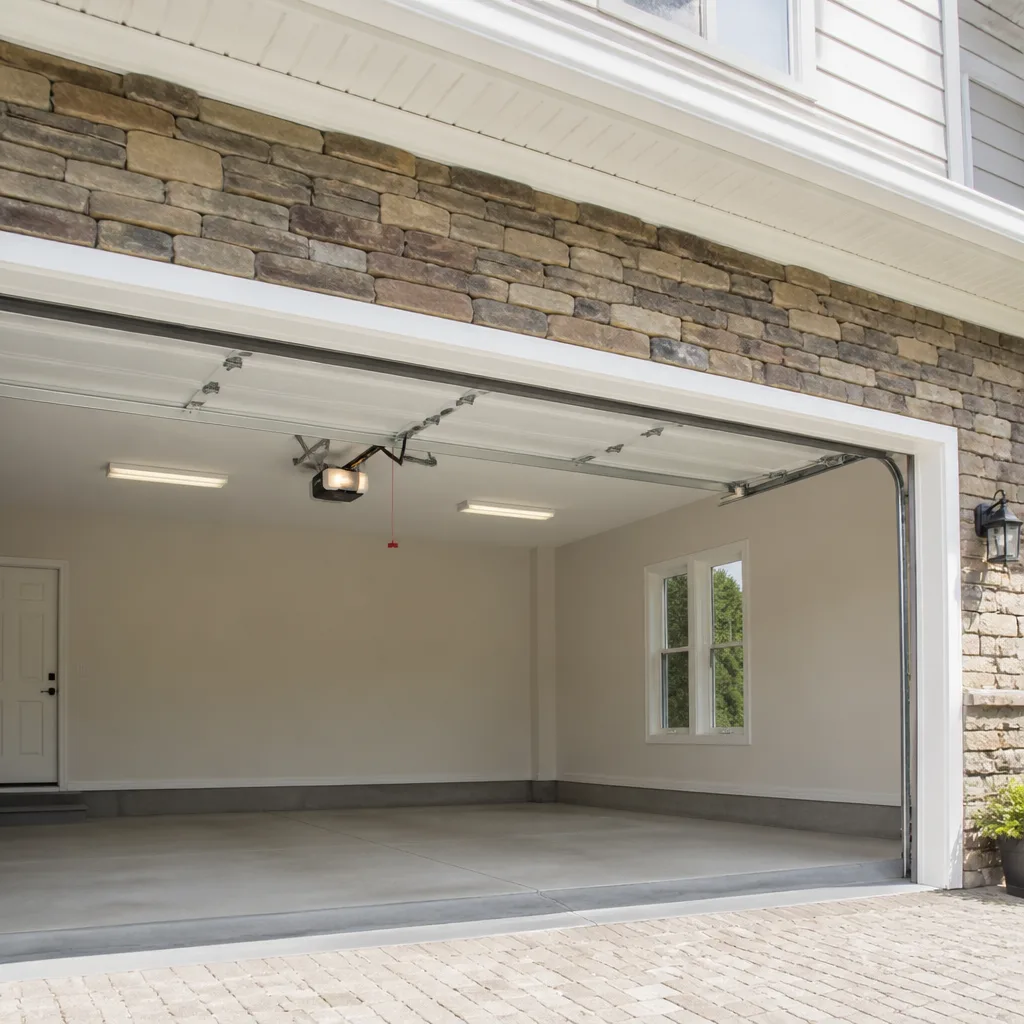 LiftMaster openers
 Chamberlain openers
Full 25-point door and opener safety check with every visit - springs, cables, rollers, tracks, and your LiftMaster or Chamberlain opener included
You get a price before we start. It does not change when the pro arrives.
Get your free estimateGarage Door Installation Warning Signs Every Homeowner Should Know
Most failed garage door installations pass the open-and-close test on day one. The door goes up, it comes down, the technician packs up and leaves. Then the real symptoms start: six weeks later a panel drifts out of line, a cable frays against a drum, or a limit switch sends the door two inches past closed on every single cycle. In Boulder City, the desert heat and daily thermal swing speed all of this up. We’ve walked onto plenty of jobs where a door was installed last spring and is already grinding through its hardware. What follows is the five-minute walkthrough we teach homeowners to run before the truck leaves the driveway, plus the checks for weeks one, four, and twelve.
This guide stays on installation and how to spot one done wrong. If you want the broader picture of what proper service looks like, start with our Bramwell Garage Door Repair Boulder City home page.
Quick Answer
The biggest installation warning signs are an uneven gap between door and floor, cables sitting off their drum grooves, a spring center cone that’s loose or off-center, a trolley carriage that drags or binds, and a door that fails the 2×4 reverse-force test. If a door closes slightly past flush, the limit switch is set wrong, and that’s a flag, not a quirk. Catch these before the technician leaves and you avoid most cable-off-drum failures down the road.
Styles & brands we work with
- Raised-panel steel
- Carriage house
- Modern flush
- Full-view glass
- LiftMaster openers
- Chamberlain openers
Table of Contents
- Why Bad Installations Look Fine on Day One
- The Five-Point Driveway Check
- The Limit Switch, in Plain Language
- What Shows Up After the First Week in Boulder City Heat
- Contractual Red Flags Before Any Work Starts
- Your 30-Day and 90-Day Re-Inspection Checklist
- Common Mistakes to Avoid
- When to Call a Professional
Why Bad Installations Look Fine on Day One
A new garage door is held in balance by a small set of parts: two torsion springs or a pair of extension springs, two cables wound onto drums at the top corners, a center bearing plate, and a trolley that rides the opener rail. When any of these is a half-inch off, the door still opens. It still closes. The imbalance hides because the opener motor has enough torque to push through it.
That torque is what masks the problem. The opener works harder than it should for weeks, and the extra load shows up as wear in places you can’t see: cable strands rubbing against a drum flange, a roller wheel flattened on one edge, a hinge bent slightly out of square. By the time a Boulder City homeowner hears a bang or the door stops responding, the damage is already in the hardware.
We’ve seen this pattern most on doors installed during summer heat, when panels expand on the truck and get screwed into place while swollen. By October, the panel has shrunk back and pulled the track out of line. The installation was never right. It just had a grace period.
The Five-Point Driveway Check
You can run this in about five minutes while the installer is still packing tools. You don’t need to touch the springs or the cables. This is a visual and observational pass, and any single fail is worth a conversation before the invoice is signed.
- Gap evenness. Close the door and look at the gap between the bottom seal and the floor across the full width. It should be even, roughly a quarter-inch or less, and consistent from one side to the other. A gap that’s tight on the left and open a half-inch on the right means a track is set out of plumb.
- Cable seating on the drums. Look up at the two top corners where the cables wind onto the drum. The cable should sit neatly inside a groove, not stacked on top of itself or riding the flange. A cable that’s already off its seat on installation day will not correct itself.
- Spring center cone position. On a torsion setup, the springs wind onto a center bearing plate with a cone on each spring end. The cone should be snug against the bearing plate, not pulled away from it. A gap there means the spring wasn’t tensioned properly or the wrong spring was installed for the door weight.
- Trolley carriage travel. Run the door up and watch the trolley move along the opener rail. It should ride smooth and square, with no side-to-side wobble and no hang-up at the point where the door arm connects. A trolley that lurches is telling you the rail isn’t level with the door travel.
- Reverse-force test with a 2×4. Lay a 2×4 flat on the floor in the door’s path and close the door. It should reverse on contact within a second. If it keeps pressing, the safety system is set wrong or not wired correctly, and that’s not something to accept.
When you’re ready for a new door, this same walkthrough is what separates a proper install from a rushed one. Our Garage Door Installation in Boulder City page covers the full process and what the written price includes.
The Limit Switch, in Plain Language
The limit switch is the small setting inside the opener that tells it where the door should stop traveling. Think of it as the “end of the road” marker for the motor. One limit sets where the door stops going up; the other sets where it stops going down.
When the down-limit is set too far, the door doesn’t just close on the floor. It pushes a couple of inches past flush, so the bottom seal flattens and the panels flex. Homeowners notice this as a thud or a creak right before the door stops, and many write it off as the door “settling in.” It isn’t settling. The opener is driving the door against the floor and holding it there, cycle after cycle, and the stress goes straight into the top panels, the hinges, and the operator arm. Over months, that shows up as cracked hinges and a bowed top section.
The up-limit has its own failure pattern. If it stops the door too high, the top section doesn’t fully clear the header, so the top panel gets rolled against the stop molding. You may see scuff marks on the top edge of the door.
Both are adjustment issues, and a competent installer should set them right on the day of install. If your technician tells you the extra thump is “just how it feels,” push back. A properly set limit switch closes flush without forcing.
What Shows Up After the First Week in Boulder City Heat
Boulder City runs hot, often over 100 degrees in July and August, and the swing between a 110-degree afternoon and a 75-degree night is where installation problems reveal themselves. Steel panels expand in the afternoon and contract overnight. Insulated doors move more than uninsulated ones because the two skins heat at different rates.
Here’s what we see after the first week of thermal cycling on a door that wasn’t installed with proper clearance and torque:
- Panel bow. A long horizontal bow across the middle sections, visible when you stand to the side and sight down the door. This often traces back to panels installed too tight against the track or against each other.
- Track gap widening. The gap between the roller and the inside of the vertical track should stay consistent. When it grows at the top or bottom, the track was installed out of plumb or the brackets weren’t tightened to spec.
- Roller noise that wasn’t there on day one. Nylon rollers are quiet when new. Grinding or squealing after week one usually means the rollers are binding in the track because of an alignment issue.
- Creaking from the spring area. Springs should be quiet through the cycle. Noise often points to a spring that’s the wrong size for the door weight, which is common when an installer uses a “close enough” spring instead of matching the door’s actual balance.
In our experience, doors installed in Boulder City with attention to expansion gaps and correct spring sizing hold their alignment through summer without adjustment calls. The ones installed in a hurry don’t, and the homeowner usually finds out the following spring when the door won’t reverse or the cable pops off.
Spring problems are genuinely dangerous to touch. Those coils hold hundreds of pounds of tension, and a released torsion spring can break a wrist or worse. When we talk about spring issues, it’s a conversation about what to look for, not what to do. Our Garage Door Spring Repair in Boulder City page explains what a proper diagnosis involves, and the short version is: leave the springs to a trained technician.
Contractual Red Flags Before Any Work Starts
The installation can be technically perfect and still leave you exposed if the paperwork is loose. We look for these red flags on every job, and they’re worth knowing before you hire anyone, Bramwell included.
- No written price before work starts. A verbal estimate that gets “adjusted for parts” once the old door is off is a setup. You should have a written number on paper before the installer opens a box.
- No written guarantee term. Ask exactly what the warranty covers and for how long. A guarantee that only covers the door, not the labor, is a partial answer. Our Kingswell Guarantee includes the 365-Day Done Right Promise, in writing, on every job. If a covered repair fails within the year, we come back and fix it at no charge.
- Technician discourages you from watching. A confident installer doesn’t mind you looking over the work. Anyone who tells you to stay inside while they hang the door is telling you something.
- No arrival window. “Sometime Tuesday” is not a window. You should get a real time range and a call if anything changes, and that’s one of the four standards every Bramwell location agrees to.
- Unmarked vehicle or no uniform. Background-checked technicians arrive in uniform and within the stated window. If someone shows up out of an unmarked truck, ask for company ID before letting them start.
- Pressure to decide on the day. Any contractor who pushes you to sign because “the price goes up tomorrow” isn’t interested in your safety. Take a night to think about it.
Your 30-Day and 90-Day Re-Inspection Checklist
The first three months are when a bad installation announces itself. Run these checks at 30 days and again at 90 days. If anything fails, call the installer back while the guarantee is still active.
At 30 Days
- Re-run the five-point driveway check. Look closely at the gap between door and floor. It should still be even.
- Watch the door through a full cycle and listen. Any new noise, thud, or grind that wasn’t there on install day is worth a call.
- Look at the cable drums at the top corners. The cable should still be seated in a groove.
- Check the door seal at the bottom. If it’s squashed flat on one side and open on the other, the door has drifted out of level.
At 90 Days
- Stand to the side of the closed door and sight down the panels. Look for any bow starting to form.
- Check the track where the roller sits at the top and bottom. Note whether the gap has changed.
- Run the 2×4 reverse-force test again. It should still reverse on contact.
- Look at the hinges where the door articulates. Cracked or bending hinges are a sign the opener is fighting an out-of-balance door.
- Open and close the door by hand, with the opener disconnected. It should feel light and smooth. If it takes real effort, the springs aren’t balancing the door and the opener is doing the work.
If any of these fail, don’t push through it. Grinding usually leads to cable failures, and cable failures are the ones that put doors on the ground. Call the number on your paperwork and get the installation inspected while the guarantee is live.
If you’re noticing signs on an older door rather than a new install, our Garage Door Repair in Boulder City page covers common failures and how we approach the repair.
Common Mistakes to Avoid
- Skipping the driveway inspection. The five minutes after installation are the easiest time to catch problems. Once the truck is gone, everything takes a phone call and a return visit.
- Accepting a door that closes past flush. Homeowners often think the extra thump is normal. It’s a limit-switch misadjustment that stresses the panels and hinges with every cycle.
- Choosing an installer on price alone. In Boulder City, a quote that’s a hundred dollars under the others is usually missing the service call charge or the guarantee. Cheaper today is not cheaper when a repair fails in month nine.
- Not asking what the guarantee actually covers. A one-year door warranty and a one-year guarantee on the labor are different things. Ask for the term in writing before the work starts.
- Ignoring new noise in the first month. A quiet new door should stay quiet. Grinding, squealing, or a creak near the springs is not “breaking in.”
- Tightening or adjusting the springs yourself. This is the single most dangerous thing a homeowner can do with a garage door. The coils hold enormous tension, and releasing it without the right tools is a fast way to a serious injury.
- Never running the balance test. Disconnect the opener, lift the door to halfway, and let go. It should stay put. A door that drops back to the floor is out of balance and will wear out the opener motor early.
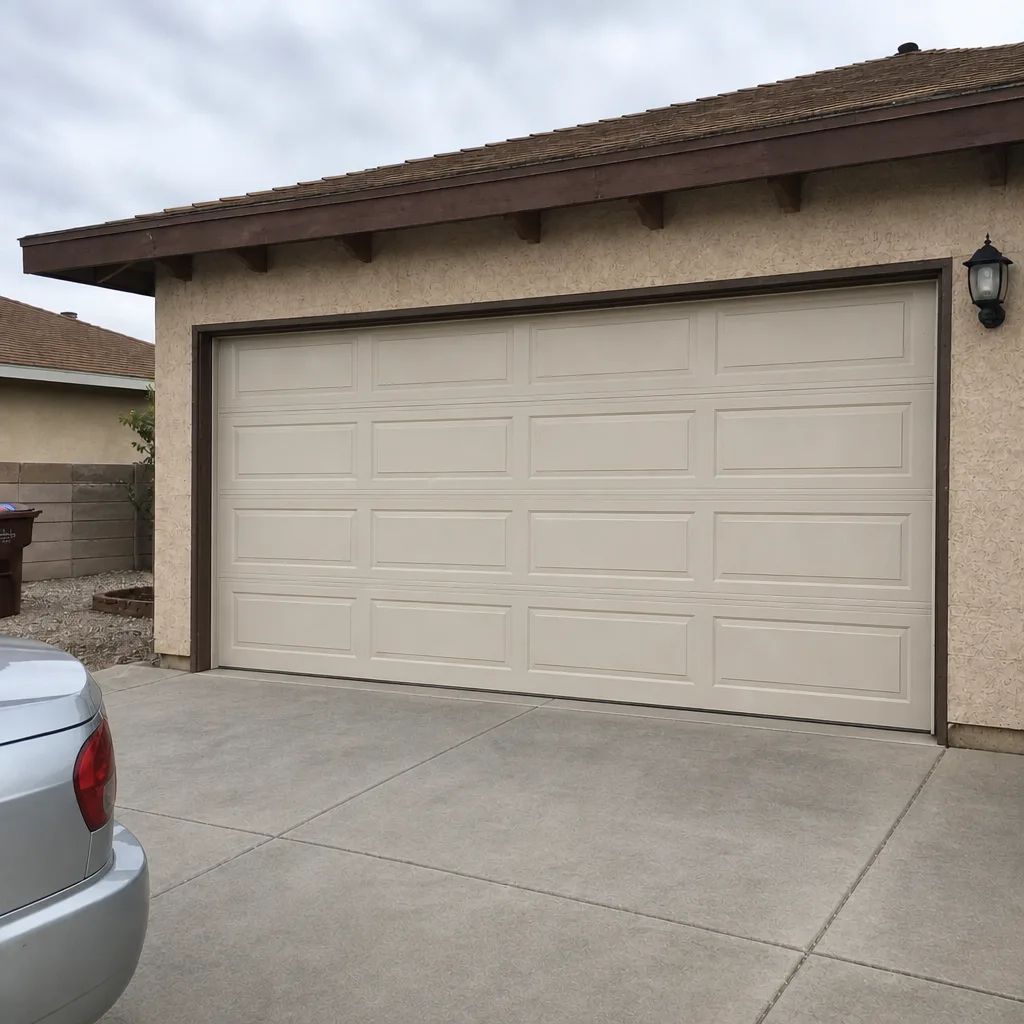
See the difference
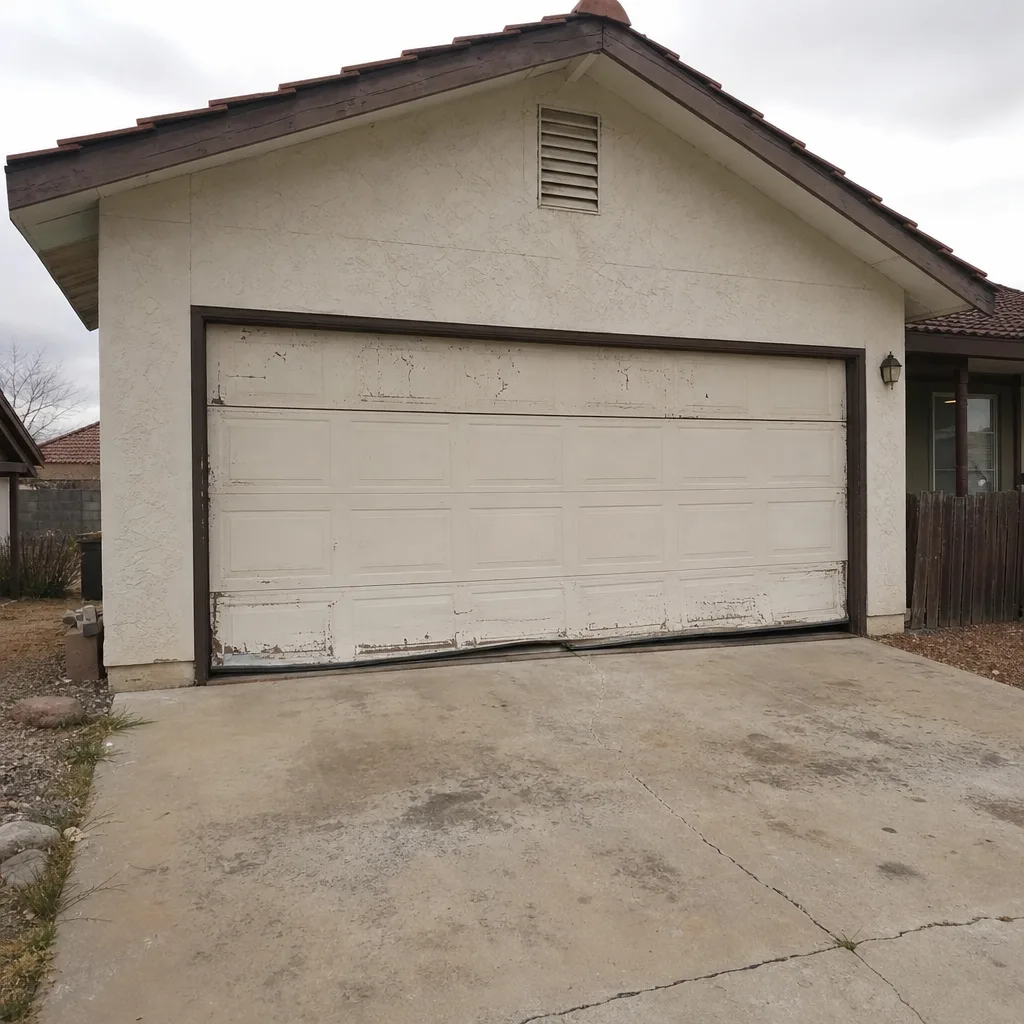 Before
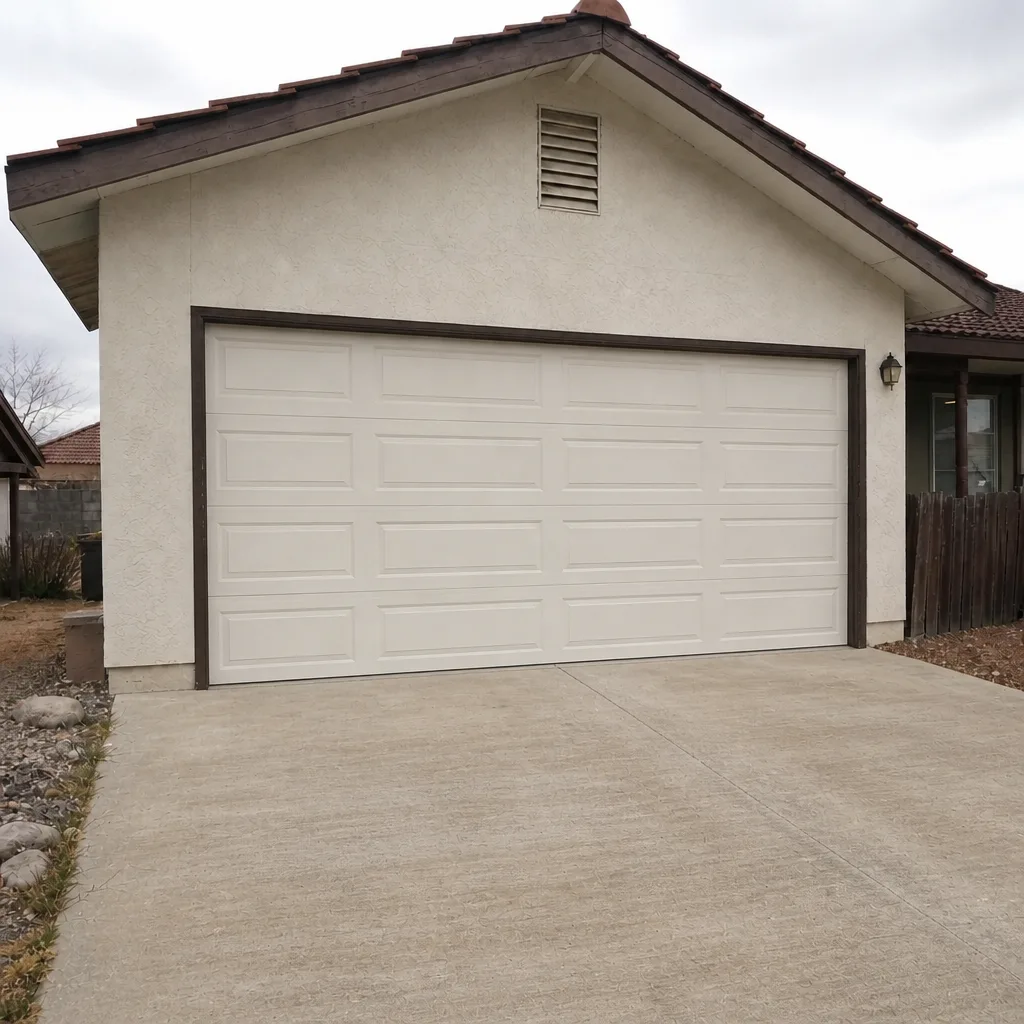 After
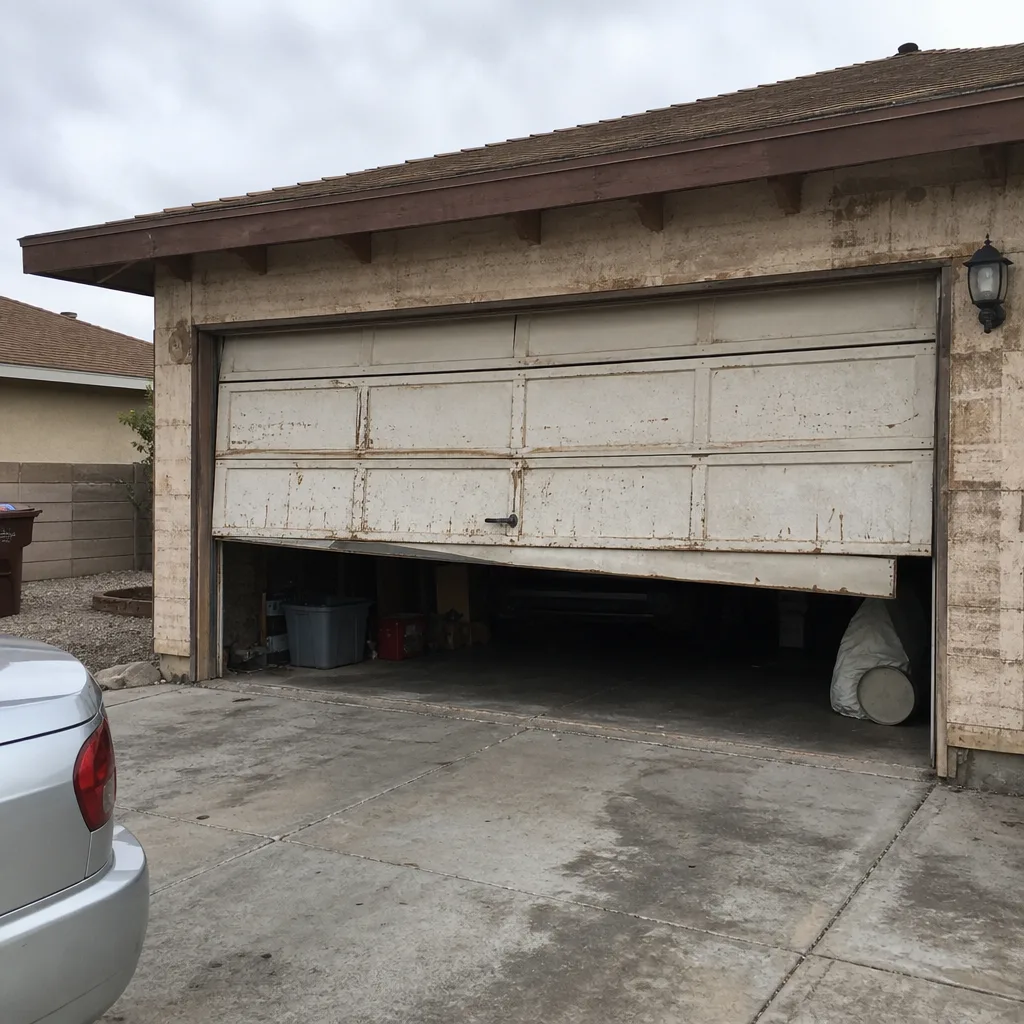 Before
 After
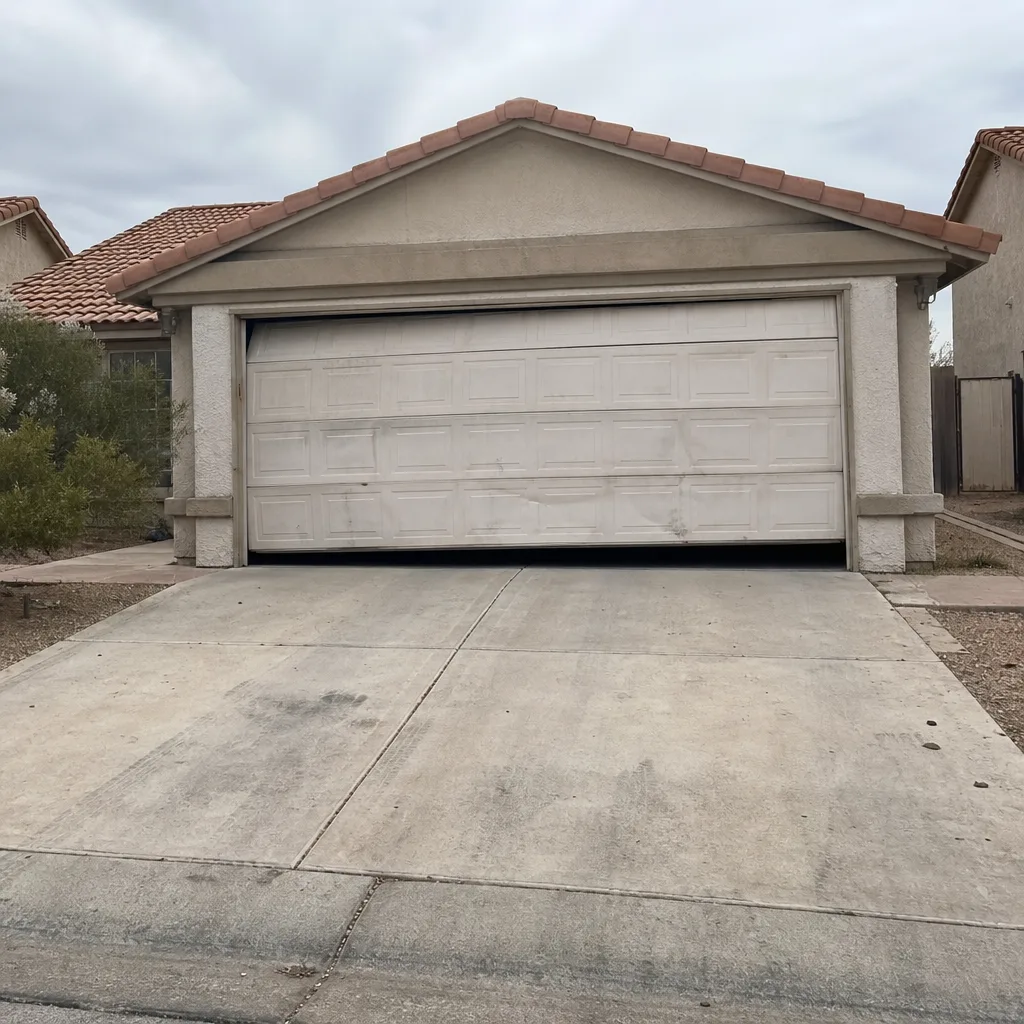 Before
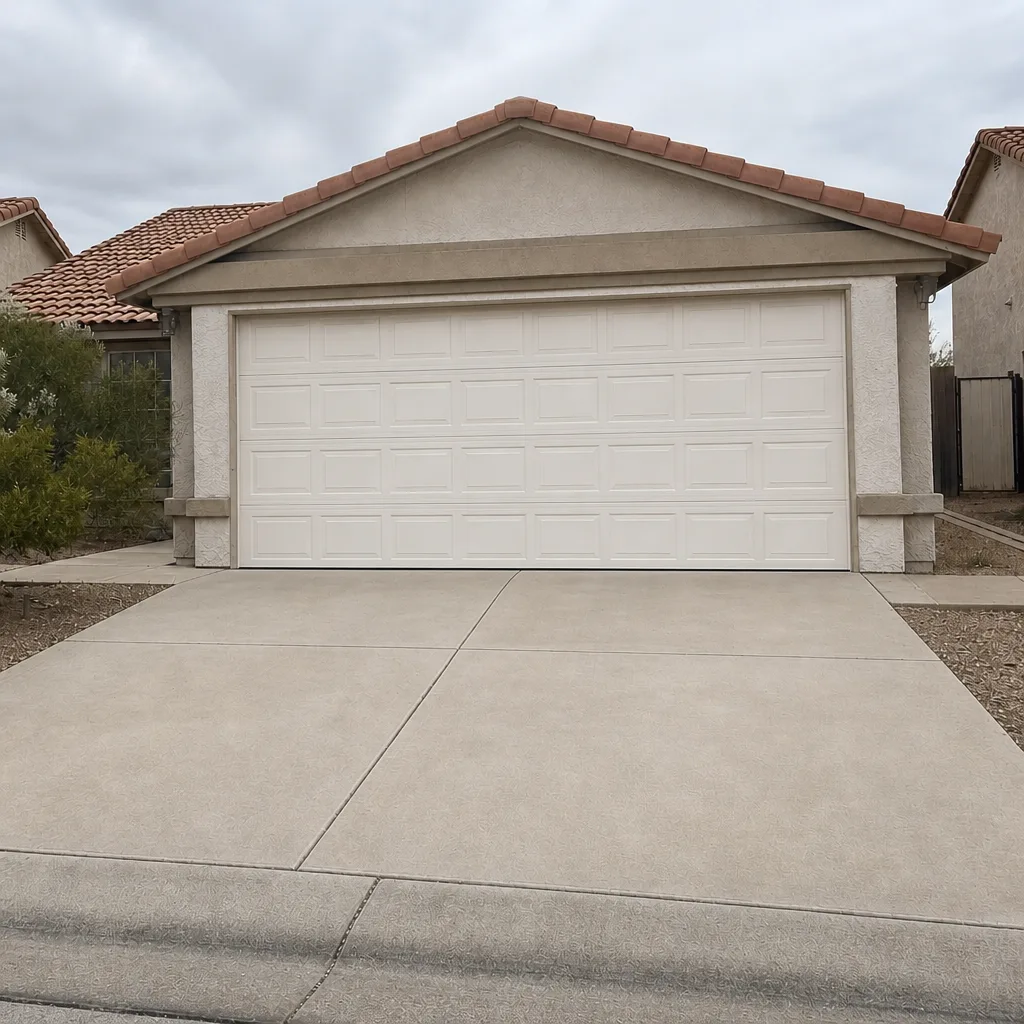 After
When to Call a Professional
Call for help when you see any of these: a door that closes past flush and thumps to a stop, a cable that’s come off the drum or is fraying, a spring that’s visibly stretched or making a loud crack, panels that have bowed or shifted, or a reverse-force test that fails. Those all point to components under real tension and to issues that get worse the longer you wait. If your door is three months old and the track has widened or the panels have moved, call the original installer first, while the guarantee is active. If they’re unresponsive or you’re not sure who installed the door, our team can inspect it and give you a written price before any work starts. We answer live, 24 hours a day, including nights and weekends. Bramwell Garage Door Repair Boulder City offers free estimates in Boulder City. Call (844) 560-4479.
Frequently Asked Questions
The most common sign is an uneven gap between the bottom of the door and the floor. A gap that’s tight on one side and open on the other means a track was installed out of plumb, and it’s the earliest problem to spot on install day. Look at it before the technician leaves and ask them to correct it.
Your down-limit switch is set too far. The opener is driving the door against the floor and holding it there every cycle, which flexes the bottom seal and stresses the panels and hinges. A properly set limit closes the door flush without forcing. Call (844) 560-4479 for an exact quote on adjusting it. Estimates are free.
Lay a 2×4 flat on the floor in the middle of the door’s path and close the door. It should reverse on contact within a second. If it keeps pressing on the wood, the safety system is set wrong or not wired, and that needs an adjustment right away. Don’t use your hands for this test, and don’t reach under a moving door.
It depends on the brand and the installer. Door panels from major manufacturers like Clopay or Amarr carry multi-year warranties, but labor is usually separate. The labor guarantee is where contractors differ, and it’s the number you want in writing before the job starts. Bramwell backs every repair with the 365-Day Done Right Promise.
Yes. Boulder City runs over 100 degrees through summer, and the daily swing between a hot afternoon and a cool night expands and contracts steel panels. Doors installed too tight against the track or with the wrong spring size tend to bow or widen at the track gap within the first few weeks. Running the 30-day and 90-day checks early catches it while it’s still adjustable.
No. Torsion springs hold hundreds of pounds of stored energy, and a single slip can break a wrist or worse. If the door feels out of balance, if the springs are noisy, or if you see a gap at the center cone, call a trained technician. That’s not a DIY project, and it’s the one part of installation we recommend homeowners never touch.
The Bottom Line
Installation warning signs are quiet. A door that opens and closes on day one can still be out of plumb, out of balance, or set with a limit switch that drives the panels into the floor on every cycle. The five-point driveway check catches most of it before the truck leaves: gap evenness, cable seating on the drum, spring center cone position, trolley travel, and the 2×4 reverse-force test. Then re-run it at 30 and 90 days, because Boulder City’s heat pushes any weakness into the open within the first month. Get the written price and the written guarantee term before work starts, and leave the springs to a technician. If you’re in Boulder City and want a second opinion on a new door, call (844) 560-4479 for a free estimate. We’ll give you the price in writing before anything starts, and the number on the invoice matches what we told you.
Written by the team at Bramwell Garage Door Repair Boulder City.