
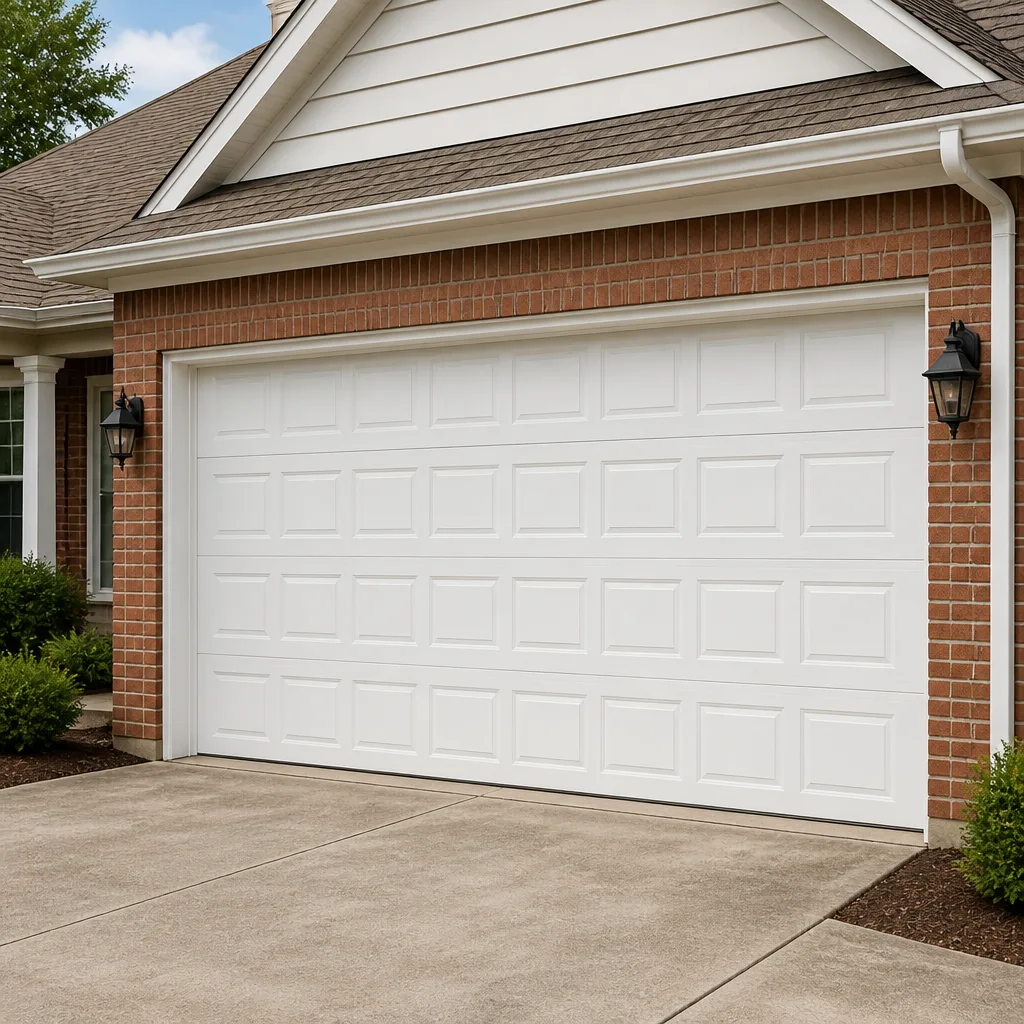
 Raised-panel steel
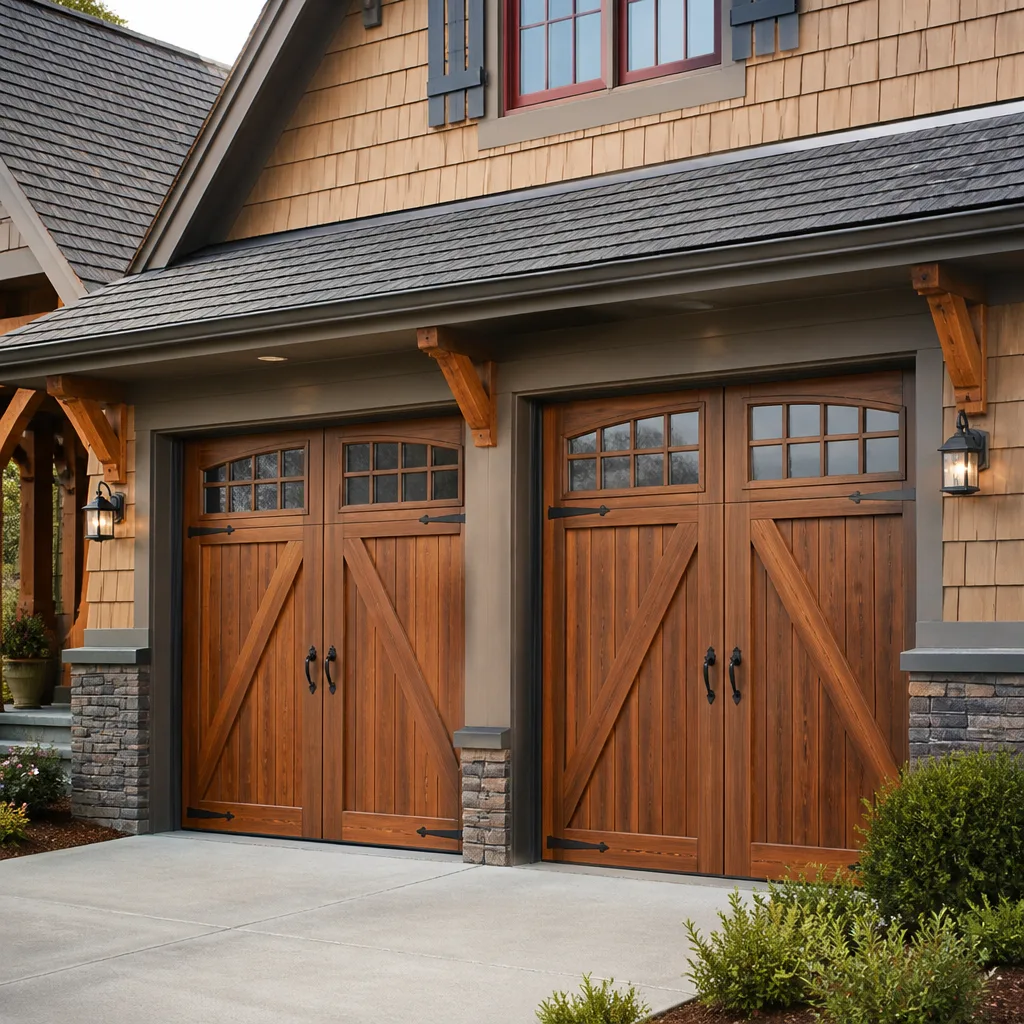 Carriage house
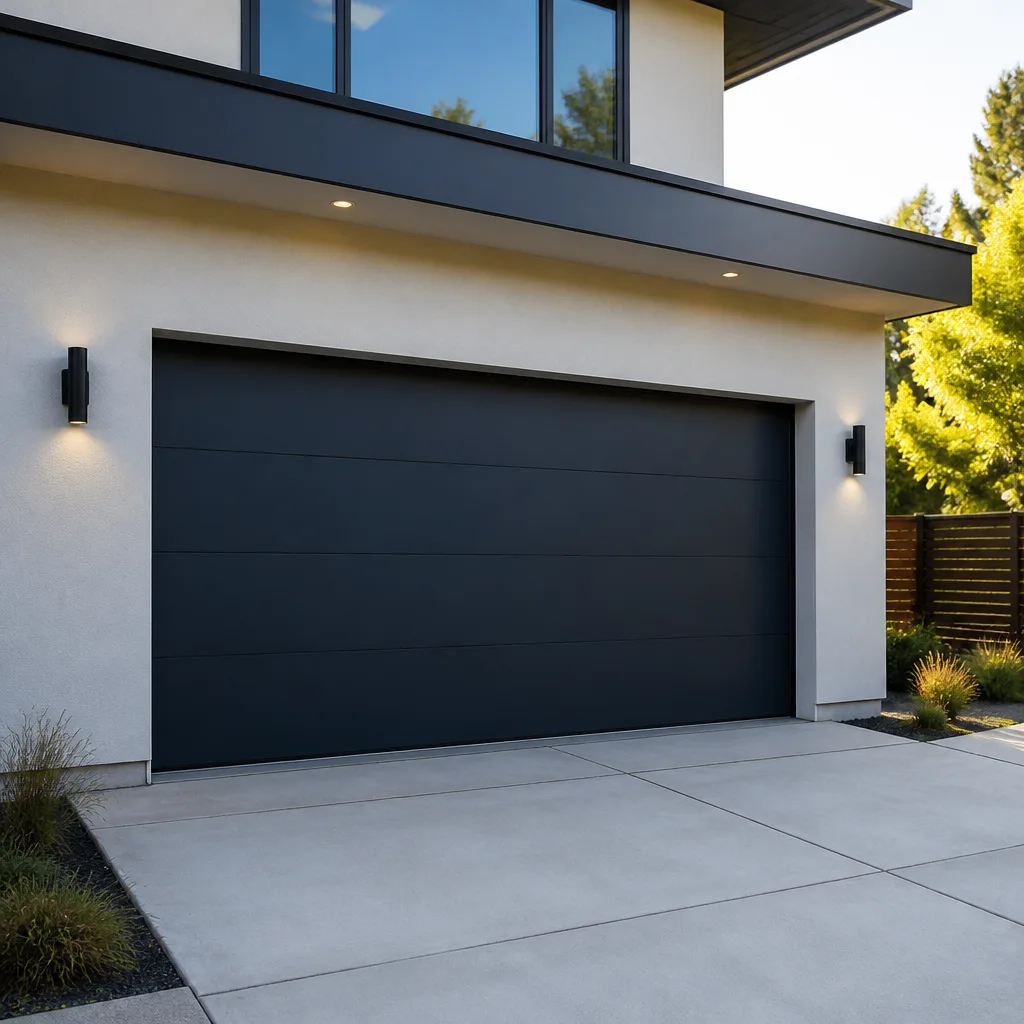 Modern flush
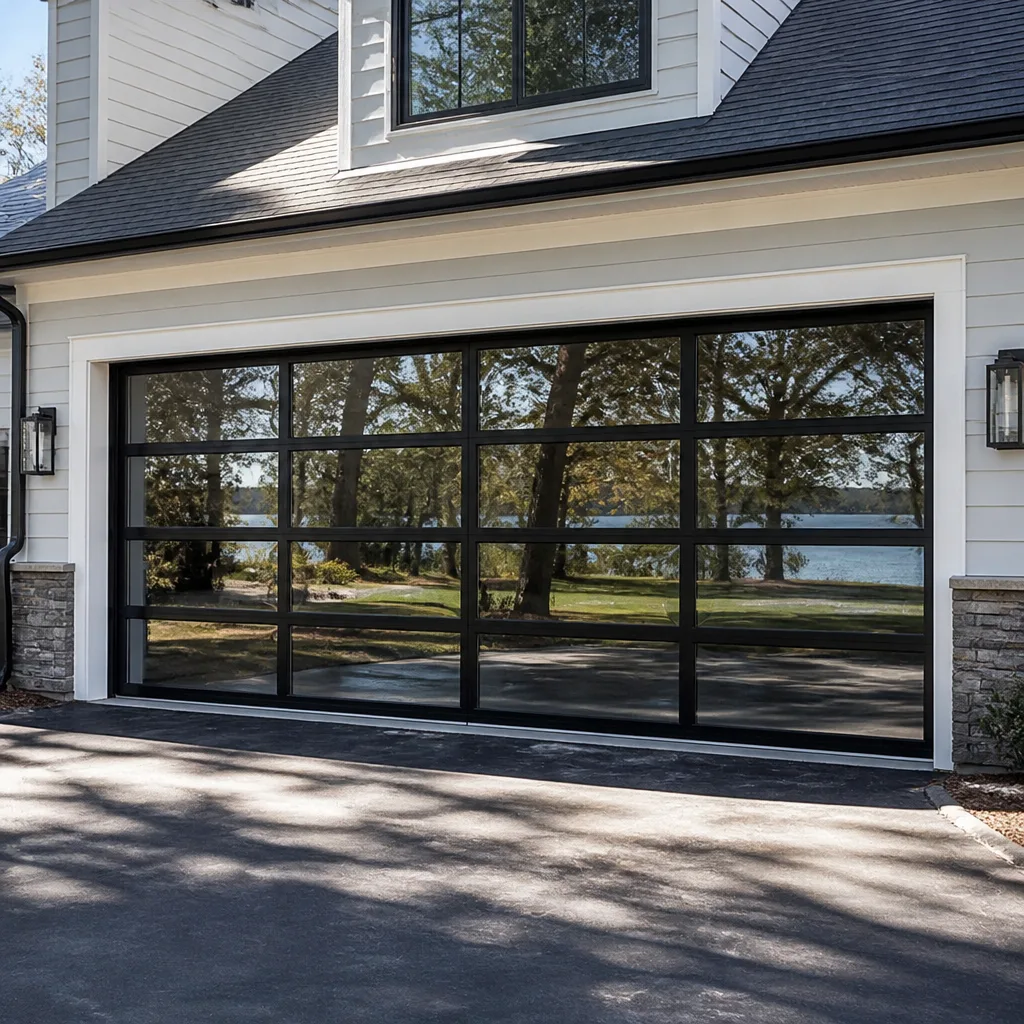 Full-view glass
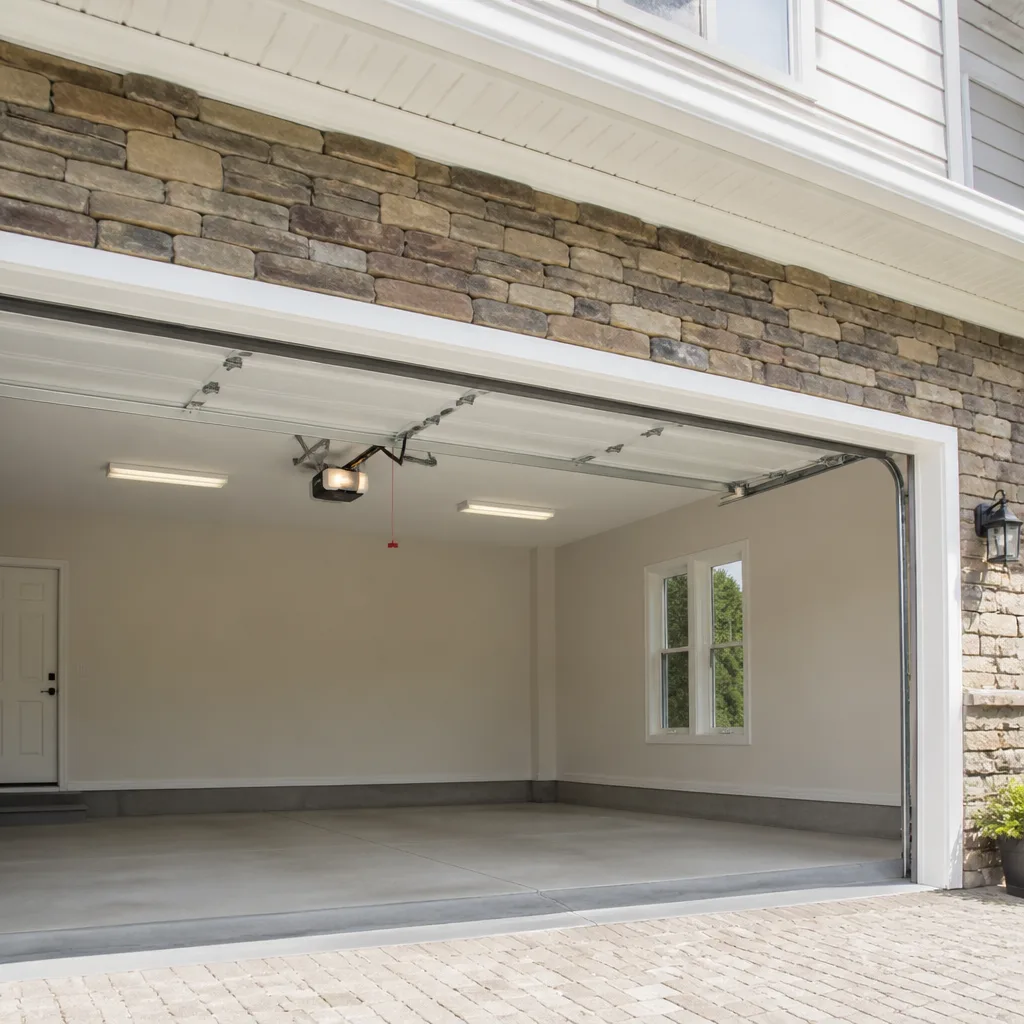 LiftMaster openers
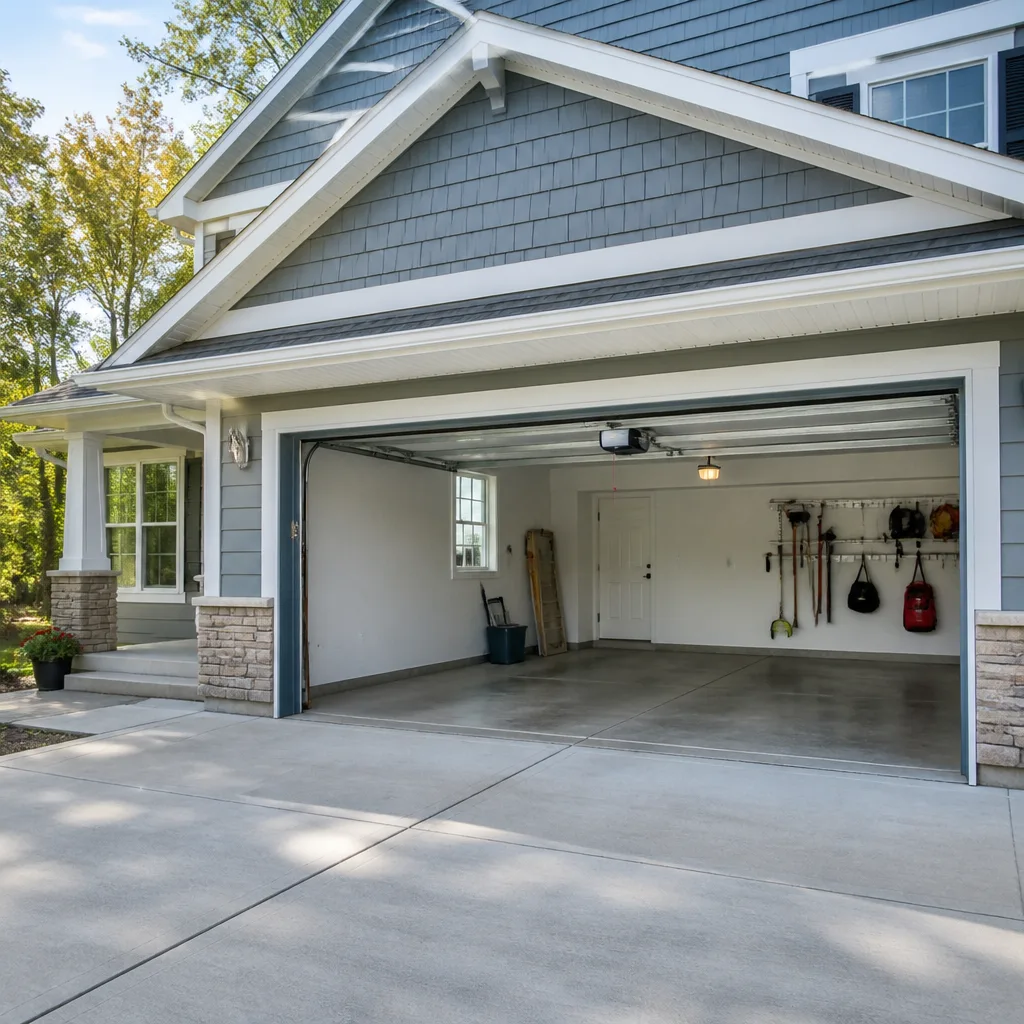 Chamberlain openers
Full 25-point door and opener safety check with every visit - springs, cables, rollers, tracks, and your LiftMaster or Chamberlain opener included
You get a price before we start. It does not change when the pro arrives.
Get your free estimateStyles & brands we work with
- Raised-panel steel
- Carriage house
- Modern flush
- Full-view glass
- LiftMaster openers
- Chamberlain openers
See the difference
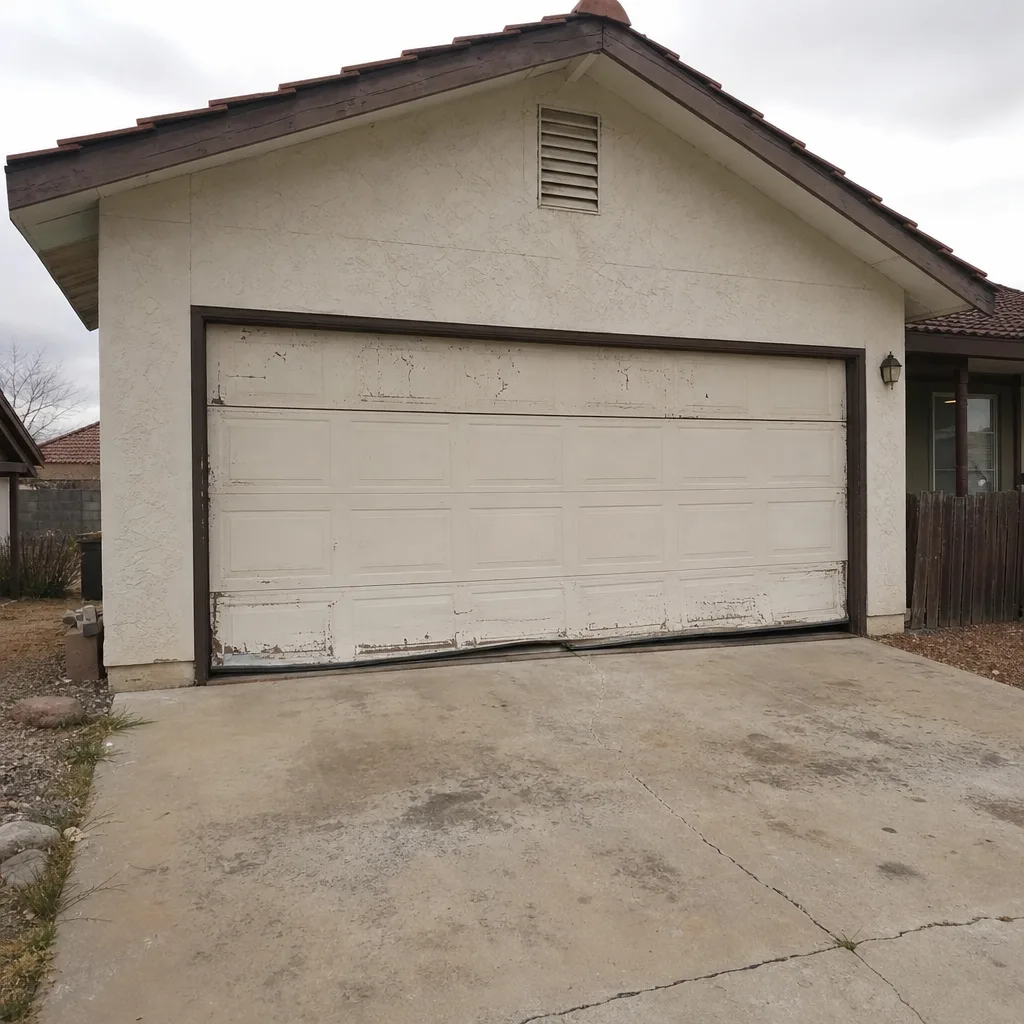 Before
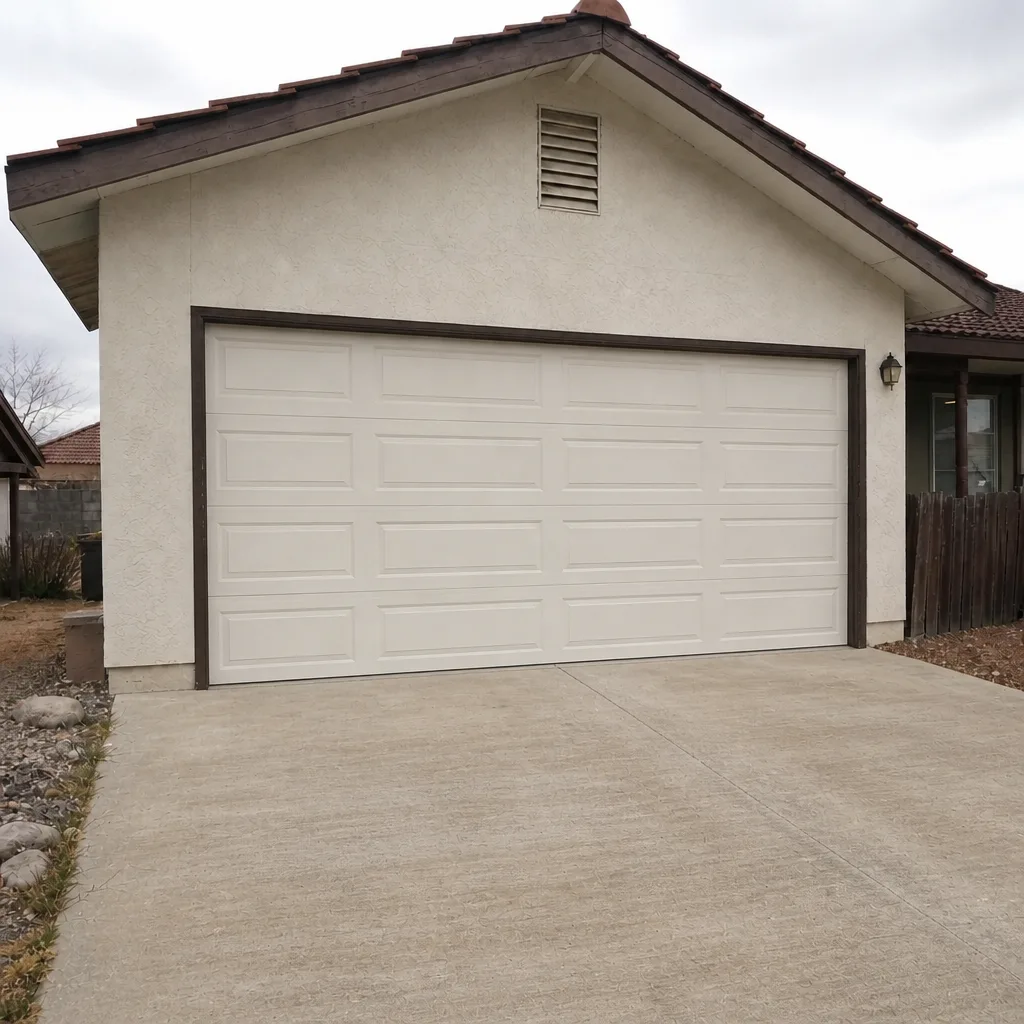 After
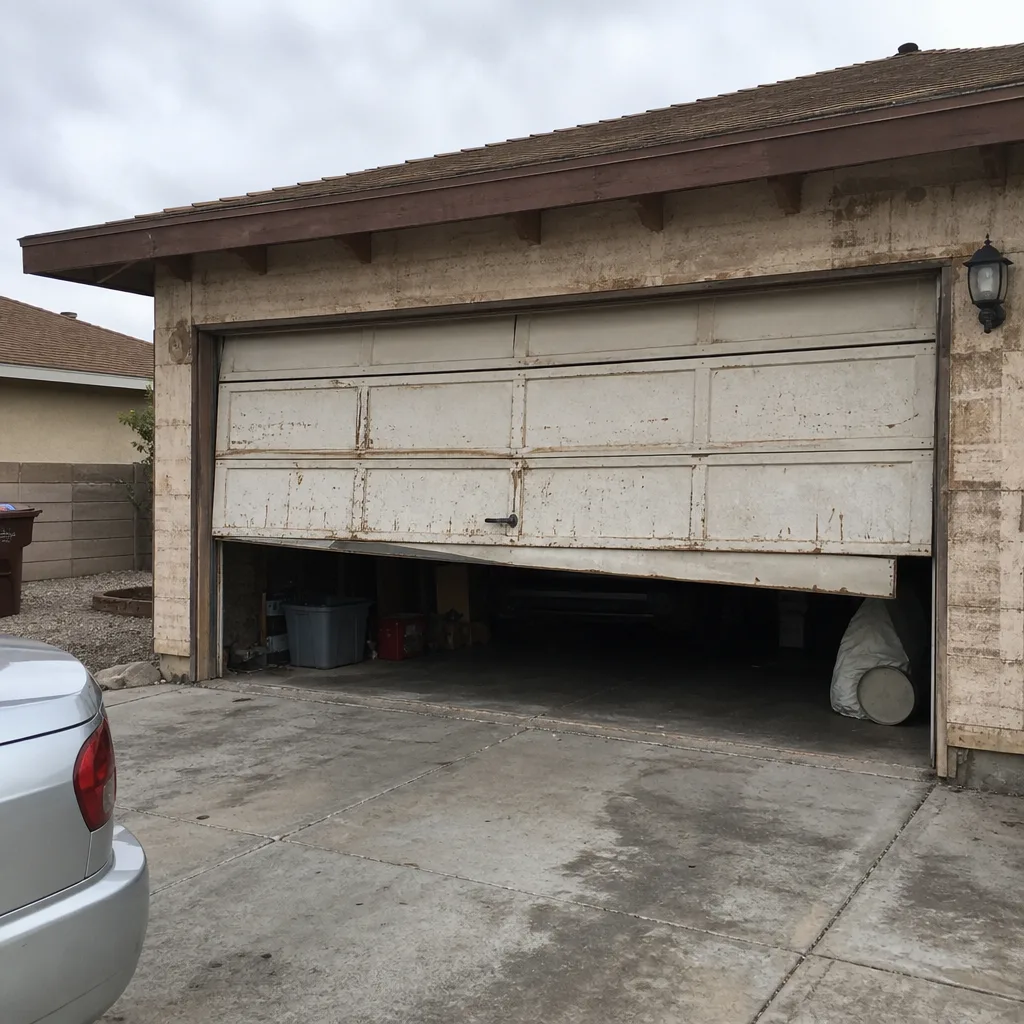 Before
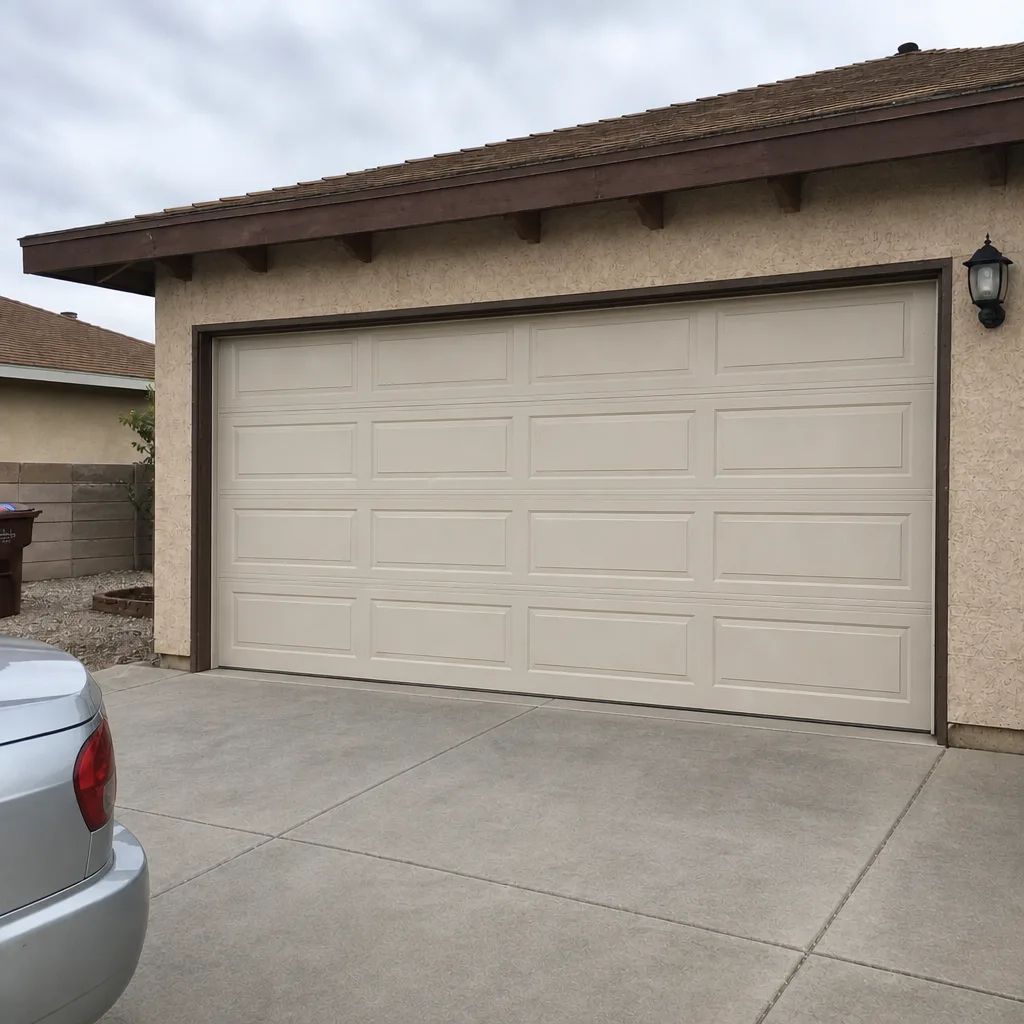 After
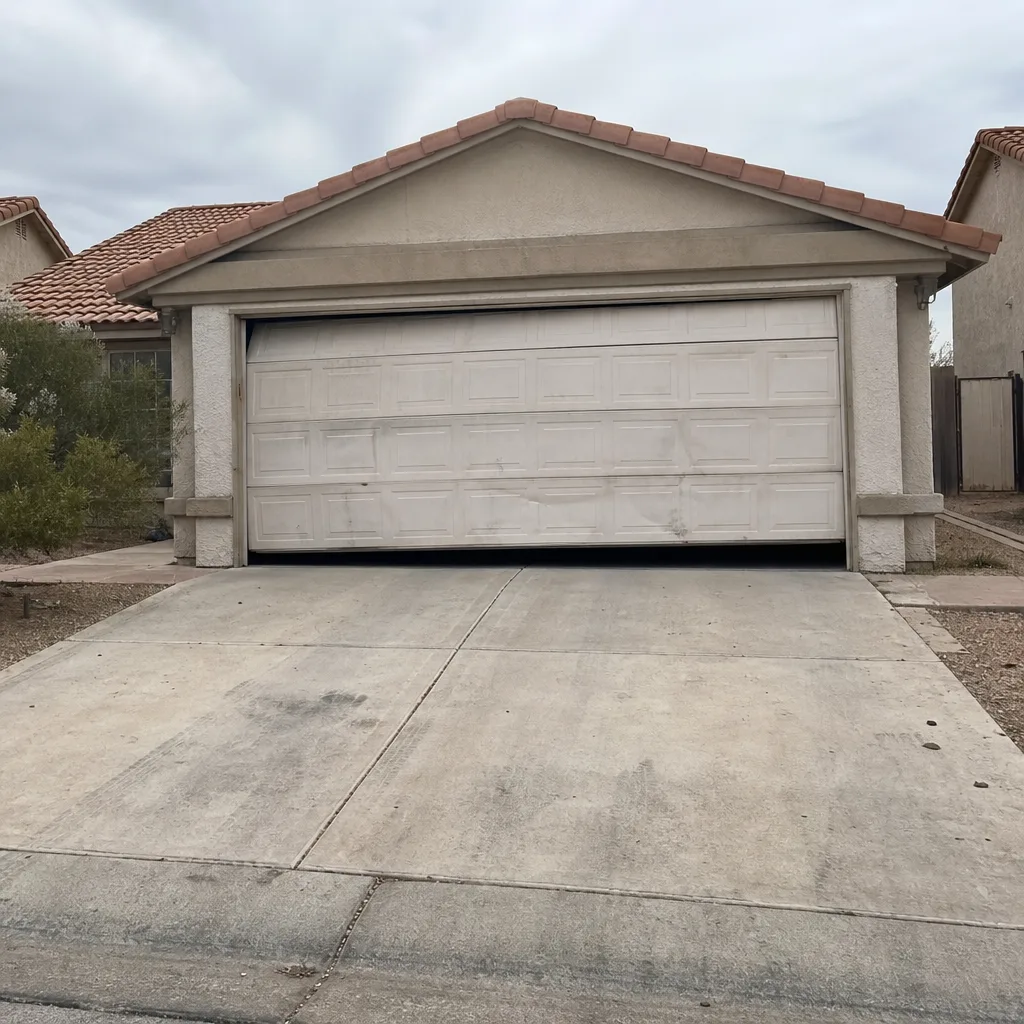 Before
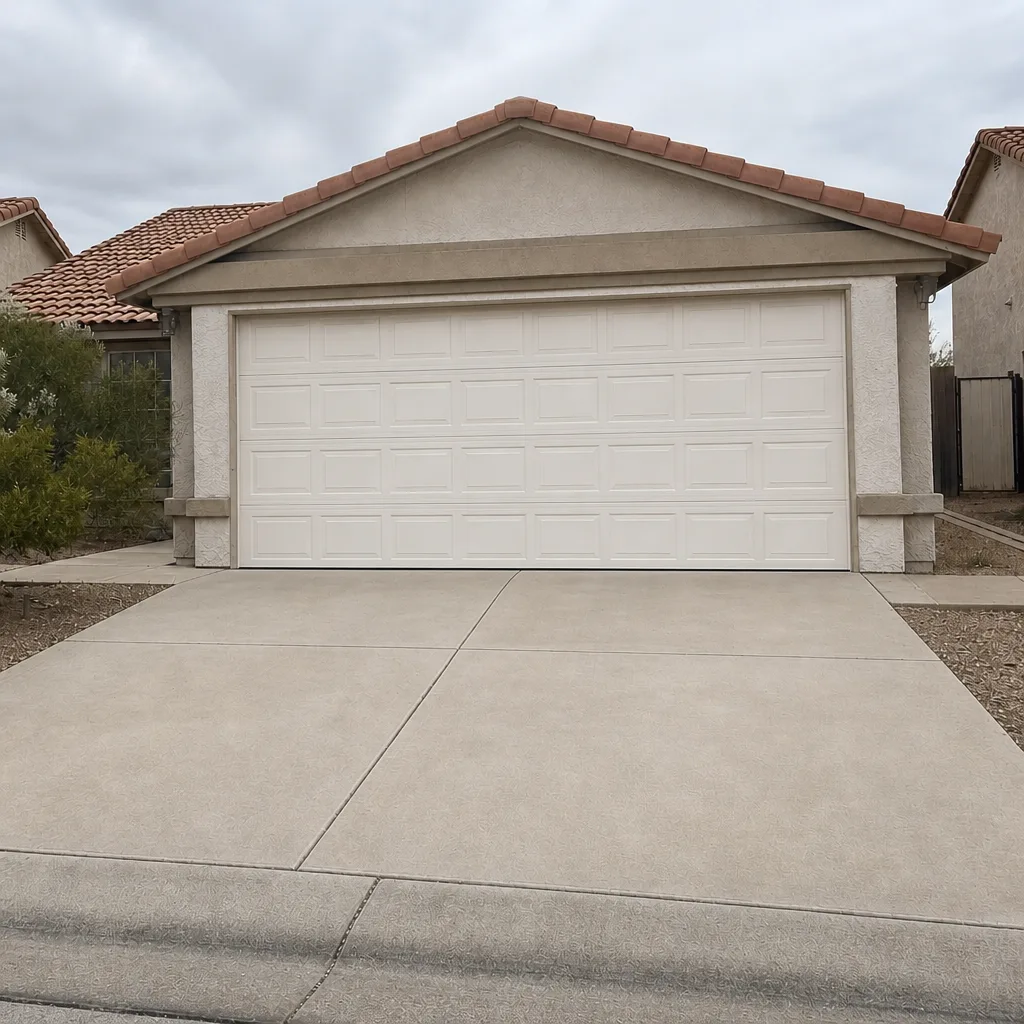 After
Why Does My Garage Door Reverse in Boulder City, NV? The Heat-Expansion Cause Most People Miss
If your garage door reverses before it closes and your safety sensors look clean and lined up, the problem usually isn’t the sensors at all. It’s the force limit switch in your opener responding to resistance – most often late-day heat binding a steel track that was installed too tight. In plain terms: your door is pushing against slightly expanded metal, the opener reads that push as an obstruction, and it reverses to be safe. The short answer to “why does my garage door reverse” is almost always one of two systems firing: the photoelectric sensors near the floor, or the force limit switch inside the opener. Knowing which one is triggering the reversal changes the fix completely. If your door reverses on a schedule that tracks the afternoon heat, call (844) 560-4479 and we’ll look at the track and force settings the same day.
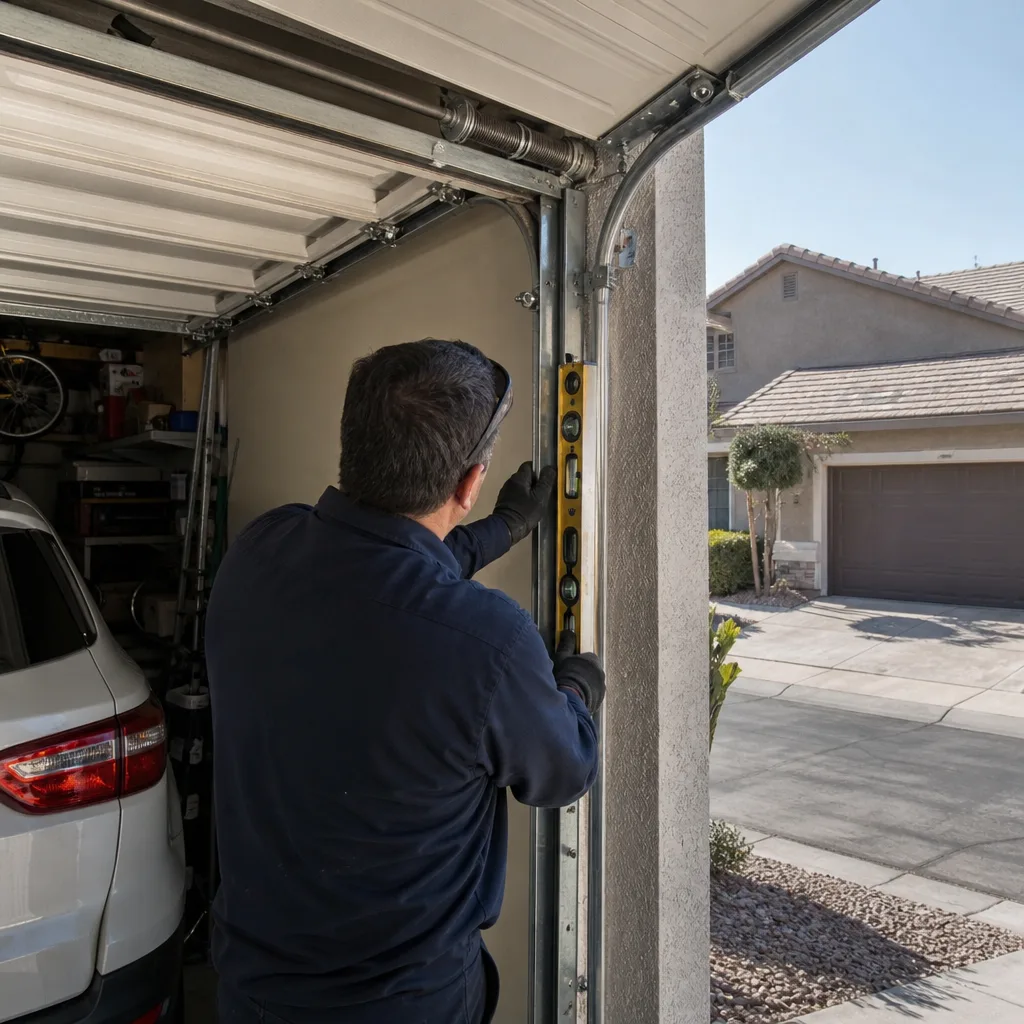
Two Reversal Systems, One Symptom: Which One Is Your Door Tripping?
Modern openers ship with two independent reversal systems, and they fail for completely different reasons. Homeowners often treat “the sensors” as a single diagnosis, then clean the lenses and stay stuck because the real trigger was the other system.
- Photoelectric safety sensors – the small lens units near the floor on each side of the opening. One shoots an invisible beam (usually infrared), the other receives it. Block the beam and the door reverses instantly. These fail from misalignment, dust, cobwebs, or direct sun flooding the receiver.
- Force limit switch – a setting inside the opener that watches how much resistance the door meets as it travels. If the door pushes against something mid-travel, the opener reads it as an obstruction and reverses. This is the system that catches a binding track, a failing roller, or a door that’s out of balance.
Here’s the tell: sensor faults reverse immediately, usually right at the floor. Force-limit reversals happen higher up, partway down, and often only under certain conditions – heat, cold, or a door that’s been running for a while. If you’ve cleaned the sensors and the reversal keeps happening at the same spot, you’re dealing with the force limit switch, not the beam.
Why Boulder City Heat Specifically Binds Your Track
Boulder City summers routinely run into triple digits, and steel expands in that heat. A standard sectional door track is installed with only a small tolerance for movement. If it was set with minimal expansion allowance – which happens often on quick installs and older doors – the track can grow just enough by mid-afternoon that the door binds slightly at the same point of travel every hot day.
The homeowner test is simple and costs nothing:
- Run the door at 7 or 8 a.m., before the garage heats up. Note whether it closes cleanly.
- Run it again around 3 or 4 p.m., the peak of the afternoon heat. If it reverses at roughly the same point it closed fine in the morning, you’ve confirmed a heat-dependent bind.
- Watch the door as it travels. A slight hesitation, a shimmy, or a rubbing sound at one spot points to the track or a roller, not the sensors.
That time-of-day pattern is the clearest signal we see in Boulder City. When a door reverses only in the heat, the fix is usually track realignment and roller inspection, not a sensor replacement. Track realignment in Boulder City typically runs $120-$240, and roller replacement runs $110-$220 – both are modest compared to letting a binding door hammer the opener for a full summer.
If you’d rather skip the guesswork, our team handles this exact diagnosis as part of standard Garage Door Repair and can usually tell you which system is tripping within a few minutes of arrival.
The Sensor-Related Causes, Explained Simply
Before you assume heat, rule out the beam. These are the three sensor failures we see most in Boulder City, all of which a homeowner can check without tools.
Misaligned sensors
Look at the small LED on each unit. Most brands – LiftMaster, Chamberlain, Genie – show a steady light on one and a steady or blinking light on the other when the beam is aligned. If either light is off or blinking rapidly, the sensors aren’t talking. Nudge each unit until the lights stabilize, then test the door.
Dust and cobwebs on the lens
Windblown grit off the Lake Mead shorelines is a year-round condition here. A thin film of dust on the sensor lens can scatter the beam just enough to trigger a false reversal. Wipe both lenses with a dry microfiber cloth – no glass cleaner, which can leave a haze.
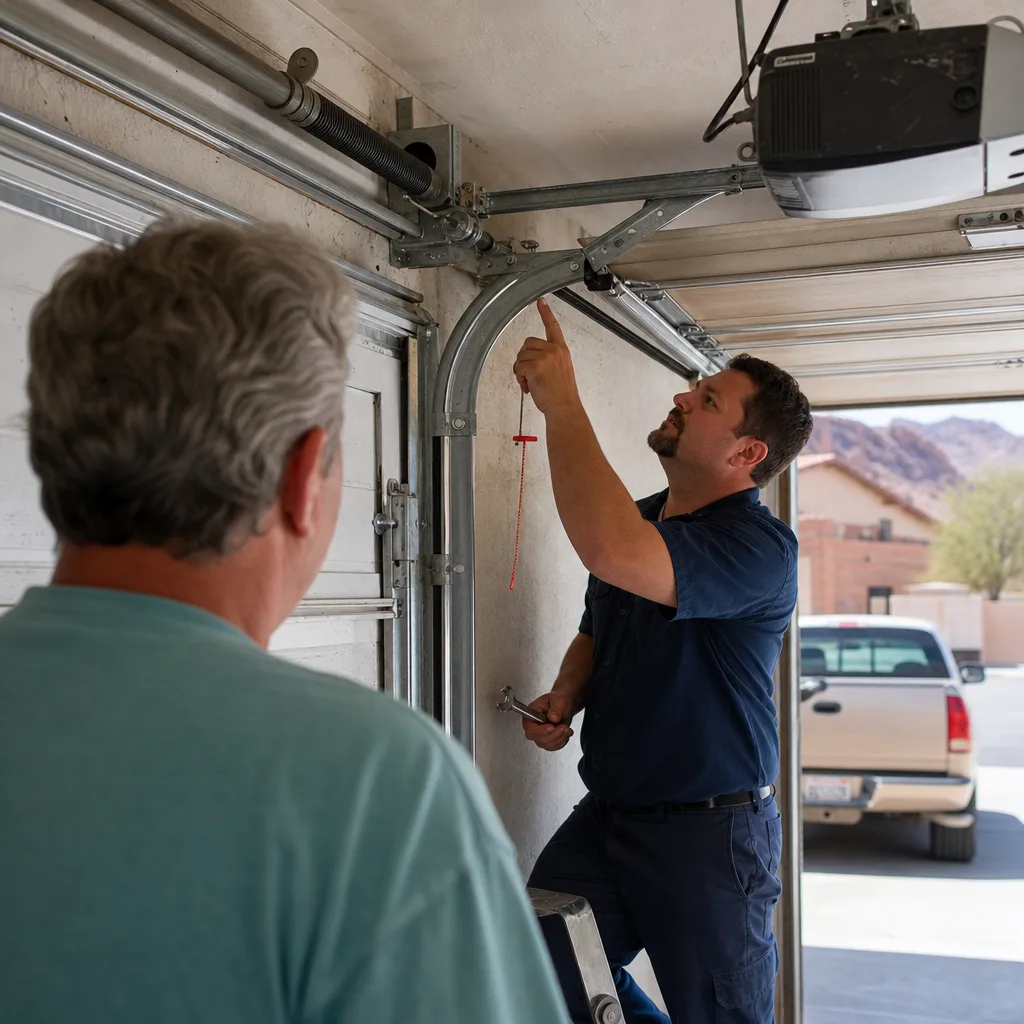
Direct sun hitting the receiver
Late-afternoon sun through an open garage door can flood the receiving sensor and overwhelm the beam, causing the door to reverse only at a certain time of day. A small sun shield or a slight re-aim of the sensor usually solves it. If the reverse time matches the sun angle rather than the air temperature, this is your cause.
Adjusting the Down-Force Limit – and When Not To
On a standard opener, the down-force adjustment is a small screw or knob on the back or side of the motor housing, labeled “down force” or “force.” Turning it a small amount gives the door more authority to push through minor resistance. A quarter turn, test, repeat – never a full turn at once.
The catch: forcing a binding door to close by cranking the limit masks the real problem. If the track is binding, the extra force wears the opener gears, the door panel, and the rollers faster. Adjust the force limit only after you’ve confirmed the door moves freely by hand and the track looks straight. If the door feels stiff or you hear rubbing, the adjustment isn’t the right fix – the mechanical problem is. Our technicians have up to 25 years of experience spotting which is which, and a proper force-limit check is built into every visit under the Kingswell standard, where we say the price before the work and put the guarantee in writing.
| Reversal Cause | Typical Fix | Boulder City Price Range |
|---|---|---|
| Dirty or misaligned sensors | Clean and re-aim lenses | Often no charge – homeowner check |
| Heat-expanded track bind | Track realignment | $120-$240 |
| Worn or flat rollers | Roller replacement | $110-$220 |
| Force limit set too low | Adjustment + balance check | Included in a service visit |
| Opener logic or gear failure | Opener repair or replacement | $120-$320 repair / $250-$550 install |
A Maintenance Habit That Prevents Most Reversal Calls
Wipe the sensor lenses once a month during windy season – March through June, when grit off the lake is heaviest. It takes 30 seconds and prevents the single most common reversal call we get. Pair it with a visual check of the track for bends or debris, and a listen for grinding at the rollers. Doors in the Historic District – the original 1930s garages behind the stucco bungalows – are especially worth checking, since their narrower tracks and older hardware are more sensitive to heat movement than a modern 16-foot double door. Serving homes like these is part of what makes our Garage Door Repair in Boulder City work a bit different from the tract-home swaps common in neighboring Henderson.
If a reversal keeps happening after the sensor check, the track check, and the force adjustment, the door is telling you something mechanical is worn. That’s when a trained eye saves you a summer of guessing.
FAQs
Because the sensors aren’t the only reversal system. The force limit switch inside the opener reverses the door when it meets resistance mid-travel, and a heat-expanded track, a worn roller, or a door that’s out of balance will trigger it even with clean, aligned sensors. In Boulder City, the heat-expansion cause shows up most on triple-digit afternoons. Call (844) 560-4479 for a free second opinion if it keeps happening.
Usually, yes. Track realignment and roller replacement are same-day repairs in most cases, running $120-$240 and $110-$220 respectively. If the door only reverses in the afternoon heat, that’s the repair we’d look at first. Call us for a written price before we start.
Repair is almost always cheaper when the reversal is caused by a binding track or a misadjusted force limit – both are service-level fixes with no new opener needed. Opener repair runs $120-$320, while a full opener installation runs $250-$550. Our technicians will tell you honestly which side of that line you’re on before any work starts.
Watch where the door reverses. A sensor trip reverses the door right at the floor, immediately. A force-limit trip reverses it partway down, at the same spot, often only in the heat or only after the door has run a few times. If the sensor lights are steady and the door still reverses higher up, it’s the force limit. Call (844) 560-4479 and we’ll confirm the cause at no charge.
If you’d rather have it looked at, Bramwell Garage Door Repair Boulder City offers a no-pressure assessment in Boulder City – call (844) 560-4479. We give you a written price before any work starts, show up inside a real arrival window, and stand behind the repair with the 365-Day Done Right Promise, backed in writing. A live person answers, any hour.
Written by the team at Bramwell Garage Door Repair Boulder City, serving Boulder City, NV.