
Last updated November 18, 2026
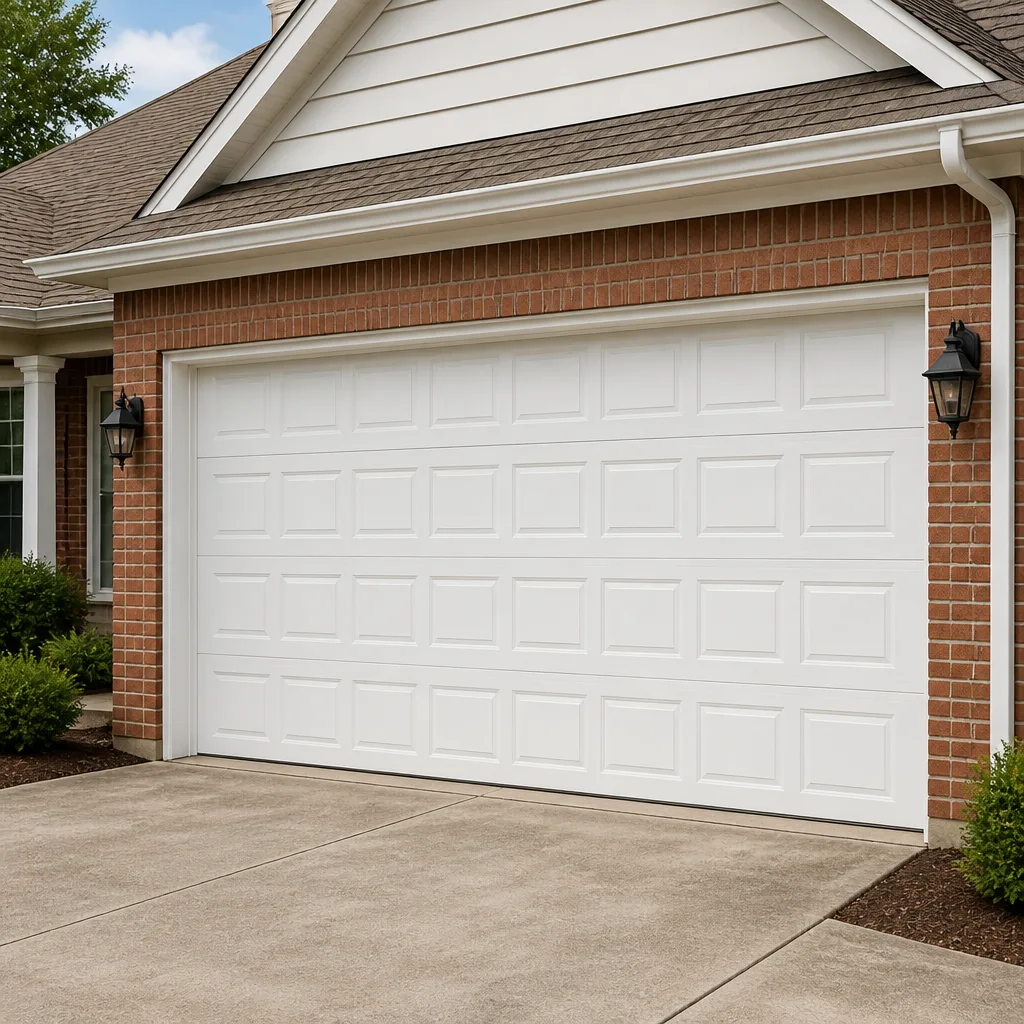 Raised-panel steel
 Carriage house
 Modern flush
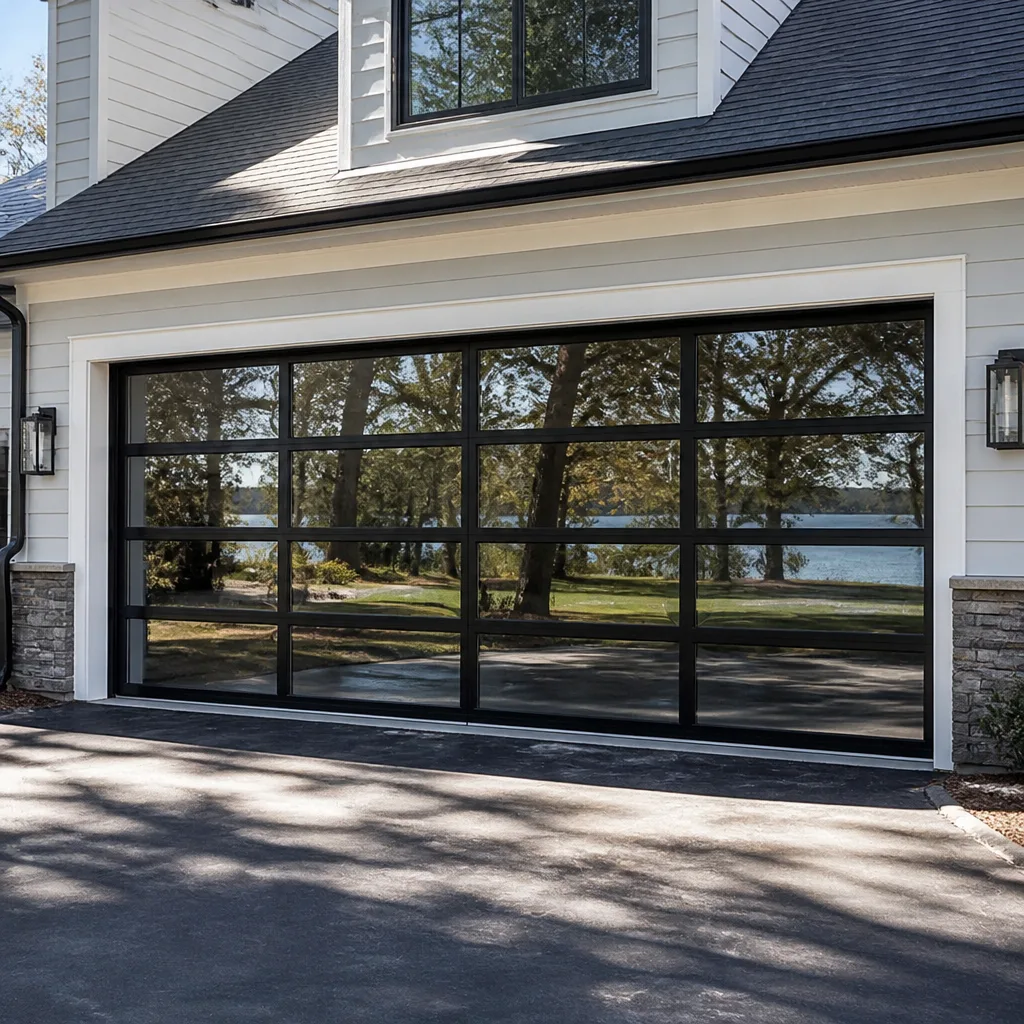 Full-view glass
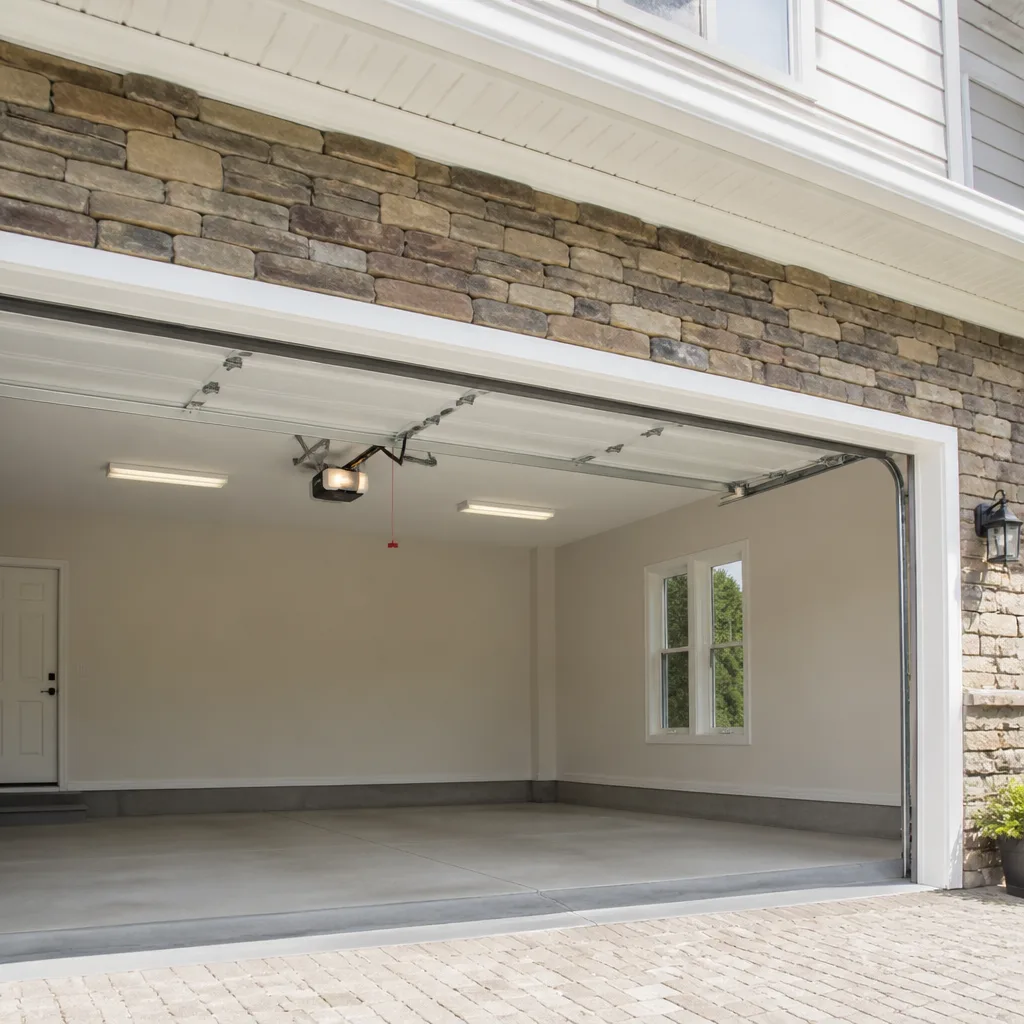 LiftMaster openers
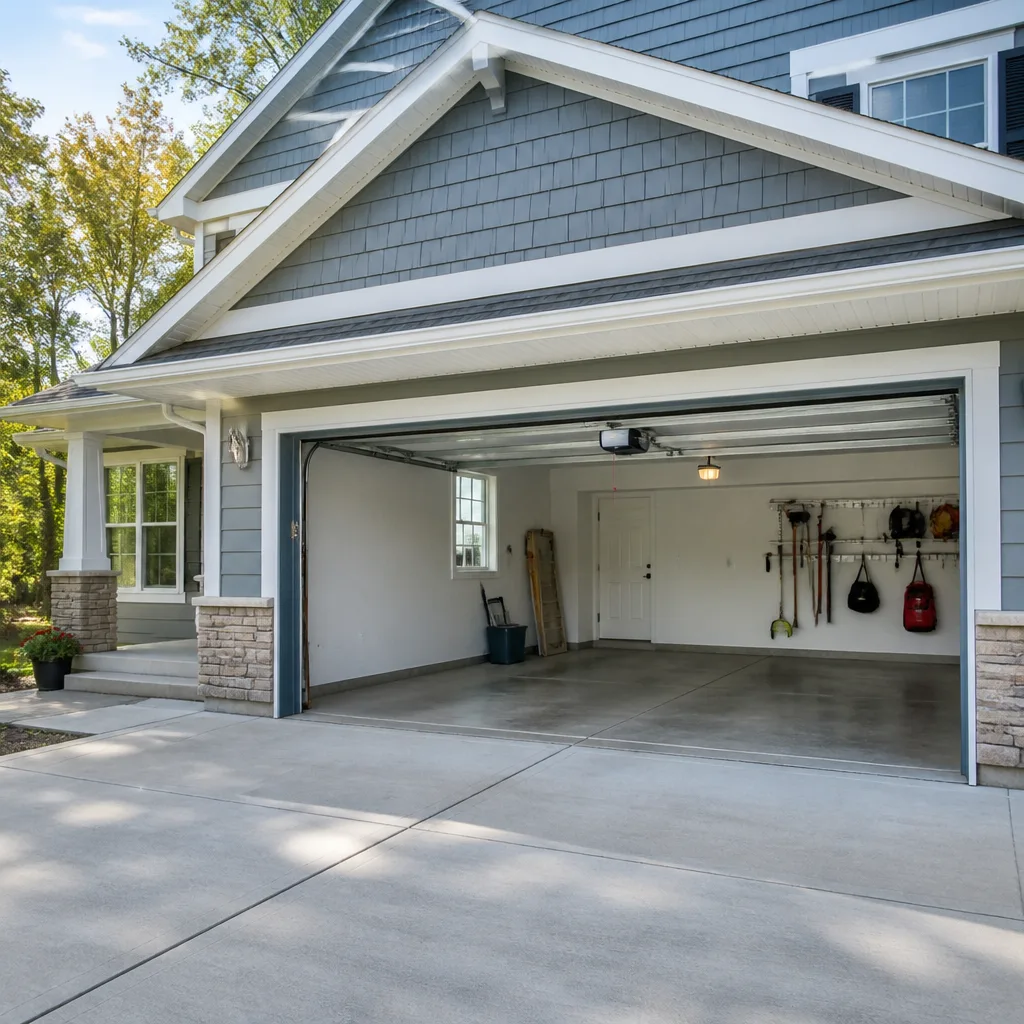 Chamberlain openers
Full 25-point door and opener safety check with every visit - springs, cables, rollers, tracks, and your LiftMaster or Chamberlain opener included
You get a price before we start. It does not change when the pro arrives.
Get your free estimateGarage Door Spring Repair Troubleshooting: Common Problems and How to Fix Them
When a garage door suddenly won’t open and the opener motor hums but nothing moves, most homeowners assume the opener is broken. It almost never is. The spring just failed, and the opener’s built-in resistance sensor shut it down to protect itself. In our experience across Boulder City, roughly nine out of ten “my opener died” calls turn out to be a spring problem wearing an opener costume. That misdiagnosis is expensive: a homeowner replaces a perfectly good opener while the real fault stays put. This guide teaches you to read the symptoms accurately, document what you’re seeing, and know exactly when to stop and call a trained professional.
Quick Answer
A garage door that hums but won’t move, opens unevenly, or feels impossibly heavy by hand almost always has a failed or weakened torsion spring, not a broken opener. You can safely observe and document the symptoms yourself, but spring and cable repair should only be done by a trained technician because the system stores dangerous tension. In Boulder City, most torsion-spring replacements run $150 to $280, parts and labor included, with the price quoted in writing before any work starts.
Styles & brands we work with
- Raised-panel steel
- Carriage house
- Modern flush
- Full-view glass
- LiftMaster openers
- Chamberlain openers
Table of Contents
- Why Your Opener Hums But the Door Won’t Move
- Broken vs. Stretched Springs: What Each Looks Like
- Cable Drums and Winding Cones: The Symptom, Not the Cause
- The Reverse-Force Test and What Midpoint Behavior Tells You
- Four Things You Can Safely Check vs. Two You Shouldn’t Touch
- Why a Wound Torsion Spring Is Dangerous
- Boulder City Conditions That Stress Springs
Why Your Opener Hums But the Door Won’t Move
This is the single most common misdiagnosis we see in Boulder City, and it’s an easy one to make. The motor runs, you hear the hum, the lights flicker on the opener, and then nothing. Here’s how to read it accurately before anyone arrives.
- Watch the opener’s light. Most LiftMaster and Chamberlain units blink a set number of times to signal a fault. A few blinks usually points to a safety-sensor or travel-limit problem. Rapid flashing with no movement often points to the opener stalling against resistance it can’t overcome.
- Pull the red emergency disconnect cord. It hangs from the trolley, the carriage that rides the rail and connects the opener to the door. Pulling it releases the door from the opener so you can move it by hand.
- Try to lift the door manually. A healthy door should lift with one hand and stay put when you let go halfway up. If it’s nearly immovable, the spring has no tension left and the opener was never the problem.
- Re-engage and listen. If the door moves freely by hand but the opener still hums without moving it, the fault may be in the opener’s gear or the door’s travel limit. If the door won’t budge by hand, you’ve found your culprit: the spring.
A sagging door on manual operation confirms spring status almost every time. The opener’s resistance sensor did its job. It stopped the motor rather than strain against a door it could no longer lift. You don’t need to fix the opener. You need a spring.
Broken vs. Stretched Springs: What Each Looks Like
Not every failing spring breaks cleanly. The two scenarios behave differently, and the difference matters for how quickly you should act.
A fully broken torsion spring
You’ll usually hear a loud bang from the garage, sometimes mistaken for something falling. After that, the door is nearly immovable by hand, and a visible gap appears in the coil above the door. A torsion spring, the heavy coil mounted above the door that handles most of the lifting weight, snaps under stored tension. There’s no mistaking it once you know what you’re looking for.
A stretched or weakened spring
This one sneaks up on people. The door still opens, but unevenly. One side leads while the other lags. You may notice a shudder on the way up or a door that slams down faster than it used to. A weakened spring has lost some of its lifting capacity, so the opener works harder and the door drifts. Our technicians have up to 25 years of experience, and they’ll tell you the stretched-spring call is the one homeowners most often delay, then regret.
- Broken: loud bang, door nearly stuck, visible gap in the coil.
- Weakened: uneven opening, one side leading, fast or hard closing, opener straining.
- Both: the door no longer behaves the way it did a year ago.
Either way, the repair is the same category of job. A trained technician measures the old spring, matches a replacement, and re-tensions the system correctly.
Cable Drums and Winding Cones: The Symptom, Not the Cause
When a cable jumps off its drum, homeowners often conclude the cable is the problem. In our experience it’s almost always a symptom of spring failure, not the root cause. Here’s the relationship in plain terms.
The cable drum is the grooved spool at each end of the shaft that the lifting cable winds onto. The winding cone is the fitting at the end of the torsion spring that sets its tension. When a spring weakens or snaps, the balance between spring tension and door weight breaks. The cable slackens or unspools unevenly, and it can jump the drum. Replacing the cable without addressing the spring just recreates the same failure in a few weeks.
- Cable off the drum: check the spring first. Nine times out of ten the spring caused it.
- Frayed or kinked cable: treat it as urgent. A cable under tension that snaps is dangerous.
- Winding cone backed off: stop. That’s a tension problem only a technician should handle.
For a focused walkthrough of the repair itself, our Garage Door Spring Repair in Boulder City page covers how we match springs and re-tension the system safely.
The Reverse-Force Test and What Midpoint Behavior Tells You
A properly tensioned spring system balances the door so it behaves predictably. Test that balance by hand with the opener disconnected, not with the motor running.
- Disconnect the door from the opener with the red cord.
- Lift the door to about waist height and let go.
- A balanced door stays put at midpoint. It shouldn’t drop or rise on its own.
- Open it fully, then close it slowly by hand. It should travel smoothly with light resistance.
If the door hesitates, creeps back up, or won’t hold midpoint, the spring tension is off. A door that sinks when released has lost lifting capacity. A door that rises on its own is over-tensioned. Both are spring or balance issues, and both should be corrected before you put the opener back to work. Your Genie or LiftMaster sensor is telling you the same thing every time it stops the door: something in the balance is wrong.
Four Things You Can Safely Check vs. Two You Shouldn’t Touch
There’s a real line between diagnosing and doing. Here’s where it falls.
Safe to observe and document
- Listen and look: a bang, a gap in the coil, uneven opening. Note what you see and when.
- Run the manual disconnect test: pull the red cord, test lift by hand, then re-engage.
- Check the safety sensors: make sure the photo-eye lenses at the door’s base are clean and aligned. Blinking opener lights often trace here.
- Watch for the symptoms: snapping, shuddering, a slamming close, one side leading. Write down which you’re seeing.
Stop touching immediately
- Never unwind or adjust a winding cone. That’s the fitting holding the spring under tension. Loosening it without the right tool can release that energy at once.
- Never cut or remove a cable under tension. A snapping cable can cause serious injury.
Stored torsion energy is the reason for that line. A wound torsion spring holds enough force to move a door weighing hundreds of pounds. When it lets go suddenly, it doesn’t stop to ask who’s in the way. A trained technician uses winding bars and knows how to release that energy safely. For most homeowners, the right move is to document the symptom and call.
Why a Wound Torsion Spring Is Dangerous
Understanding the danger isn’t meant to scare you off a repair. It’s meant to explain why the spring sits in a different category from a loose hinge or a squeaky roller. A torsion spring is wound to counterbalance the door’s weight. That stored energy is doing the lifting every time the door moves, which is exactly why the opener can be small and quiet.
When you see a professional adjust a spring, they’re releasing and re-applying tension in small, controlled increments with the correct bars. Do it wrong, or bypass the winding cone with the wrong tool, and the energy releases all at once. That’s the difference between a repair and an injury. Nearly every reputable manufacturer’s manual and every careful technician will tell you the same thing: springs and cables are a trained-professional job. We say it plainly because we’d rather you hear it from us than learn it the hard way.
Boulder City Conditions That Stress Springs
Boulder City has its own weather pattern, and it works on garage door springs in specific ways. The desert heat and dry air here push more loaded cycles onto a spring over a year than a milder climate would. In neighborhoods around Boulder City, we routinely see springs that feel fine in cooler months begin to strain once summer temperatures climb. That heat cycling is hard on metal, and it’s why so many spring failures here cluster around the seasonal swing rather than showing up randomly.
The dry air also speeds up wear on cables and rollers, and the dust that blows through the area finds its way onto the tracks. A door that sticks or shudders is sometimes just a dirty track, but in a dry, dusty climate like Boulder City’s, that same symptom often points to a spring that’s already tired. If you’ve noticed your door slowing down or opening unevenly since last summer, that’s a symptom worth documenting, not ignoring.
When it’s time to replace a spring or plan a bigger update, understanding your options helps. Our Garage Door Repair in Boulder City and Garage Door Installation in Boulder City pages outline what a repair versus a replacement decision looks like, and starting from our Bramwell Garage Door Repair Boulder City home page keeps the whole picture in reach.
Common Mistakes to Avoid
- Replacing the opener when the spring is the problem. That hum-and-no-move symptom gets blamed on the opener again and again, and a new unit won’t lift a door with a dead spring. Confirm the spring first.
- Ignoring a stretched spring because the door still opens. A weakened spring is a slow failure, and in Boulder City heat, a stretched spring can give out with little warning.
- Swapping a cable without checking the spring. A cable that jumped the drum is usually a symptom, not the cause. Fixing the cable alone tends to fail fast.
- Trying to wind a torsion spring yourself. Stored torsion energy is the real hazard here. This is the one part of the job that should never be a DIY attempt.
- Trusting a quote that changes at the door. Ask for the written price before work begins, so the invoice matches what you were told.
- Skipping the manual test on a sluggish door. A quick disconnect-and-lift check tells you more about the spring than any guess about the opener.
See the difference
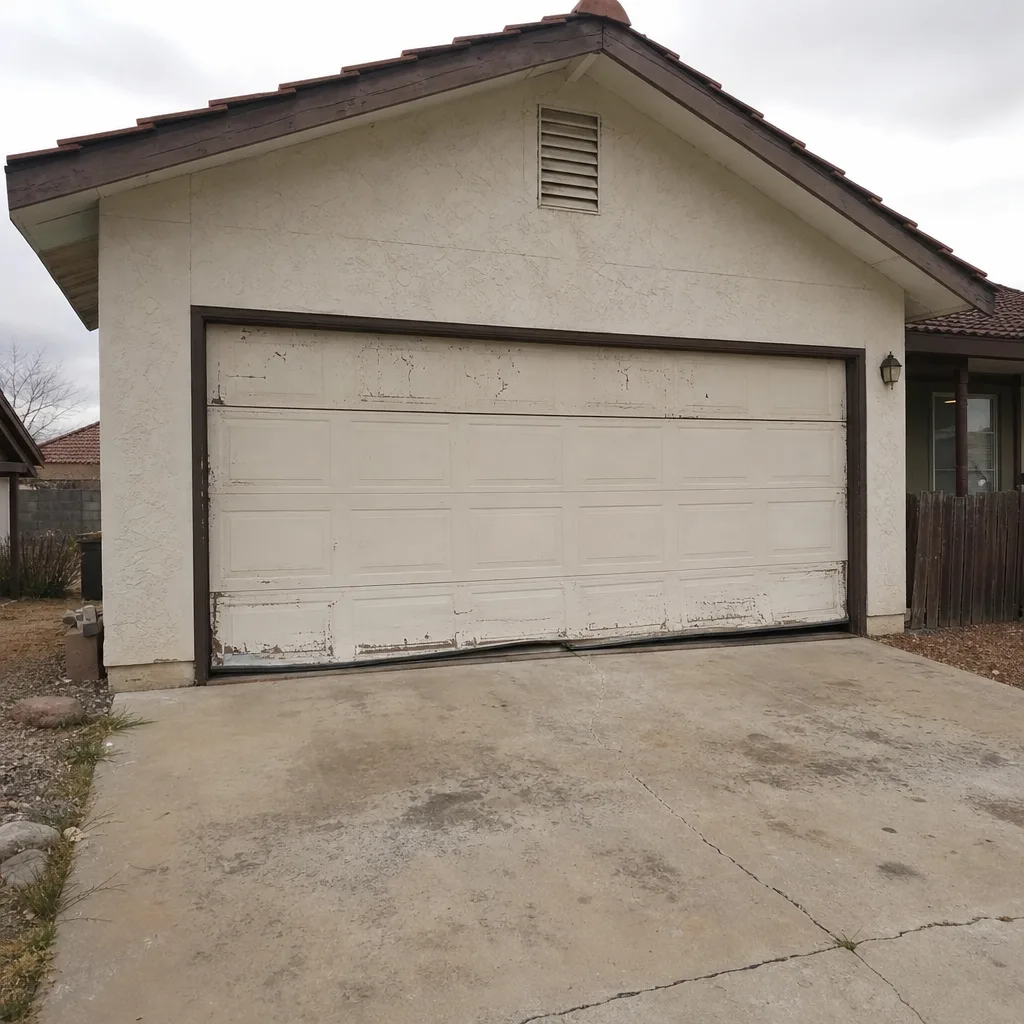 Before
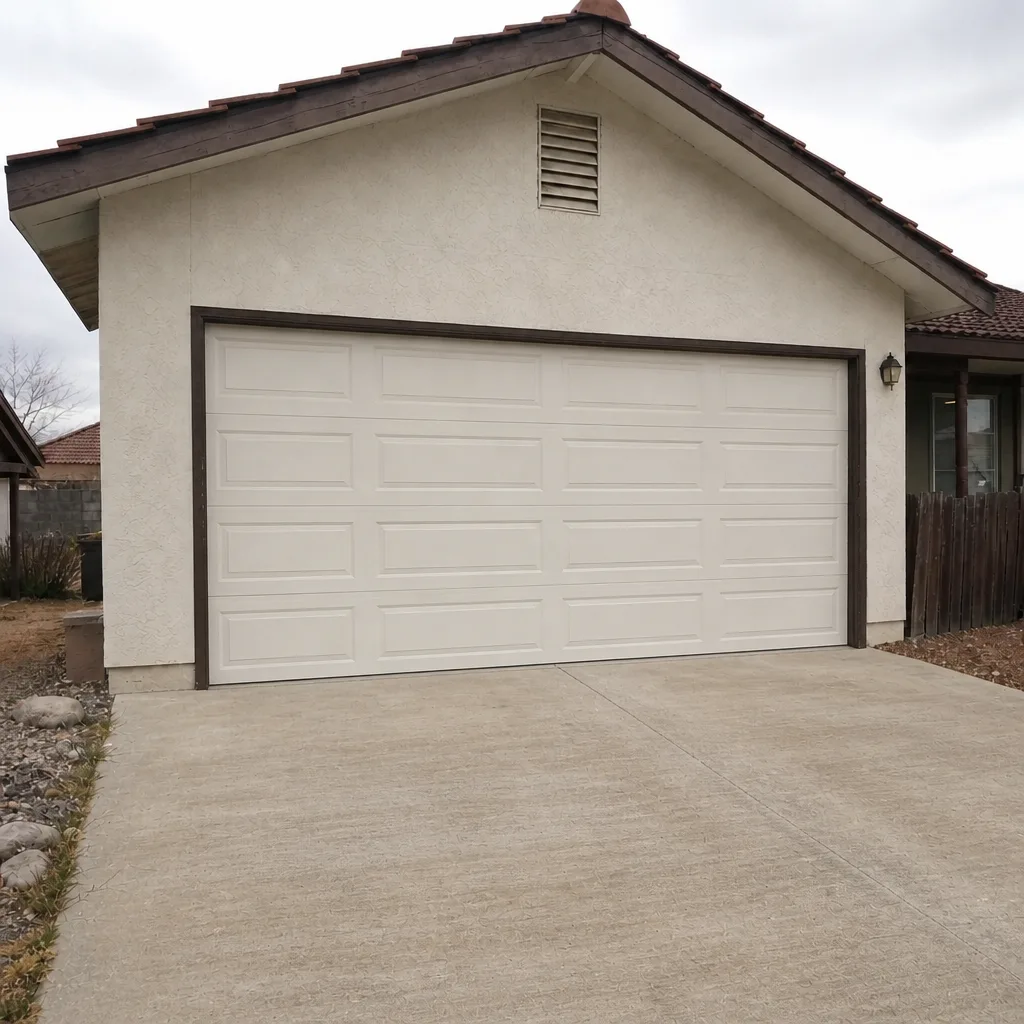 After
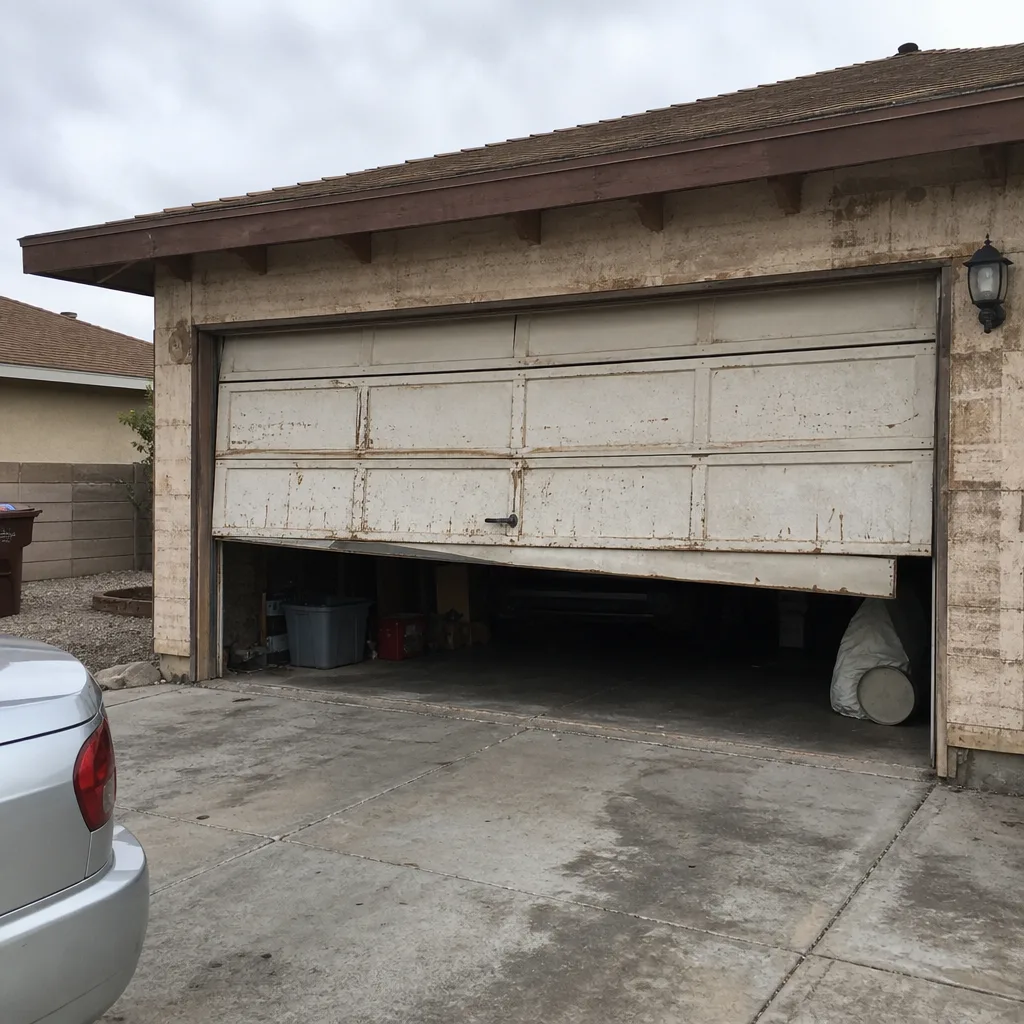 Before
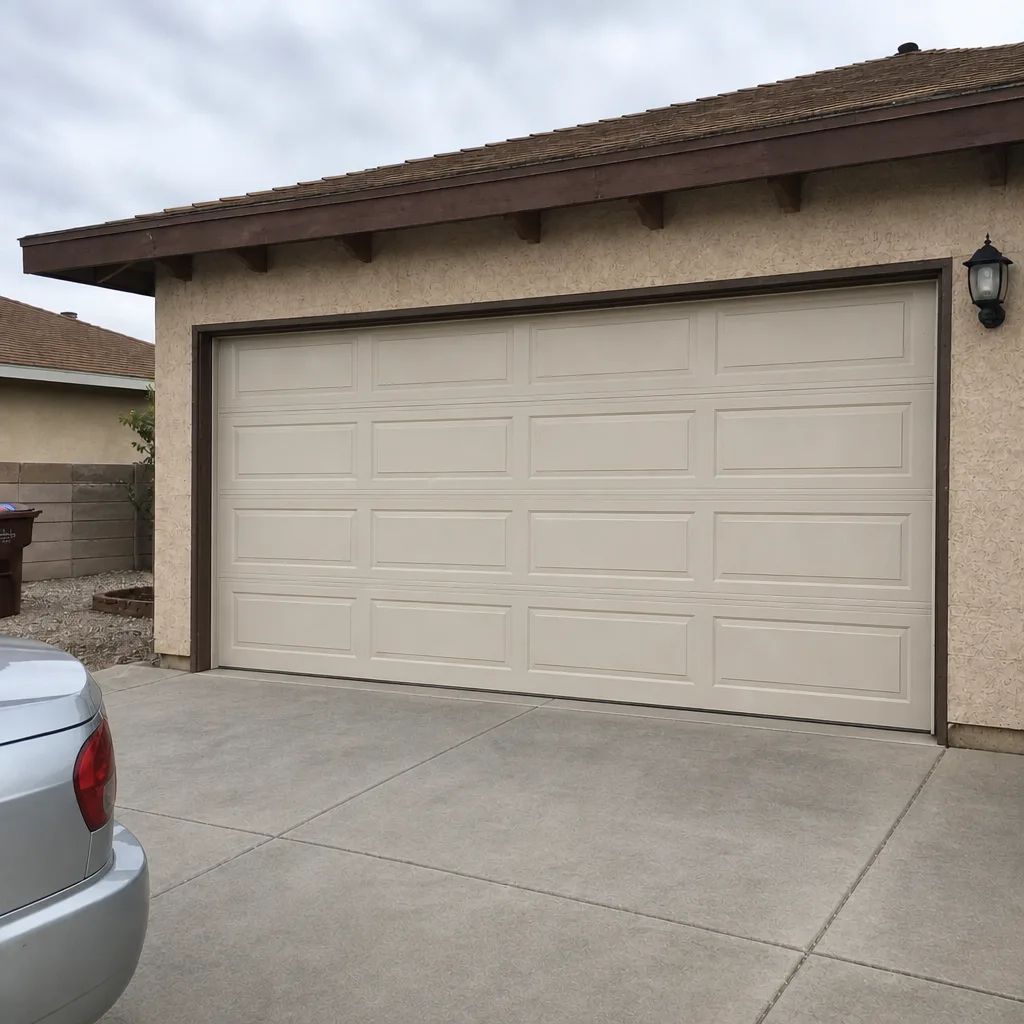 After
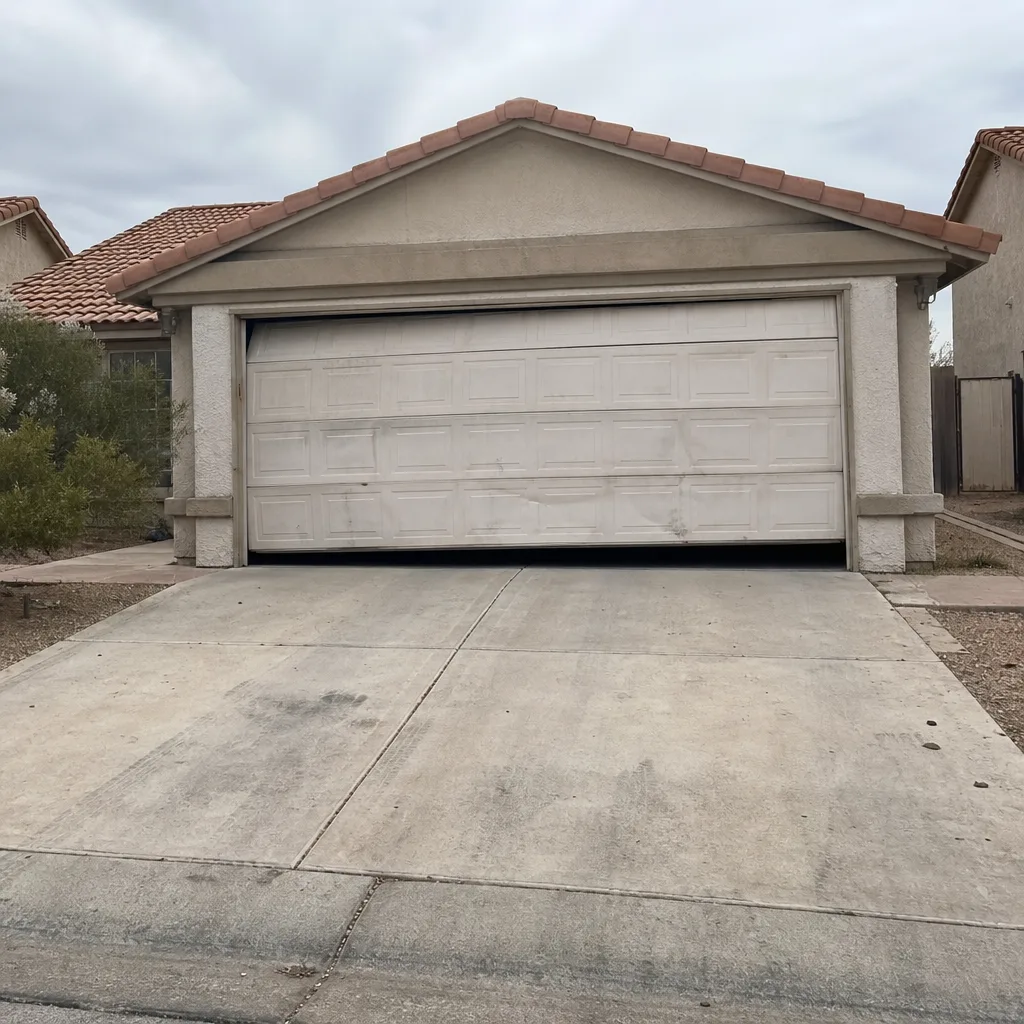 Before
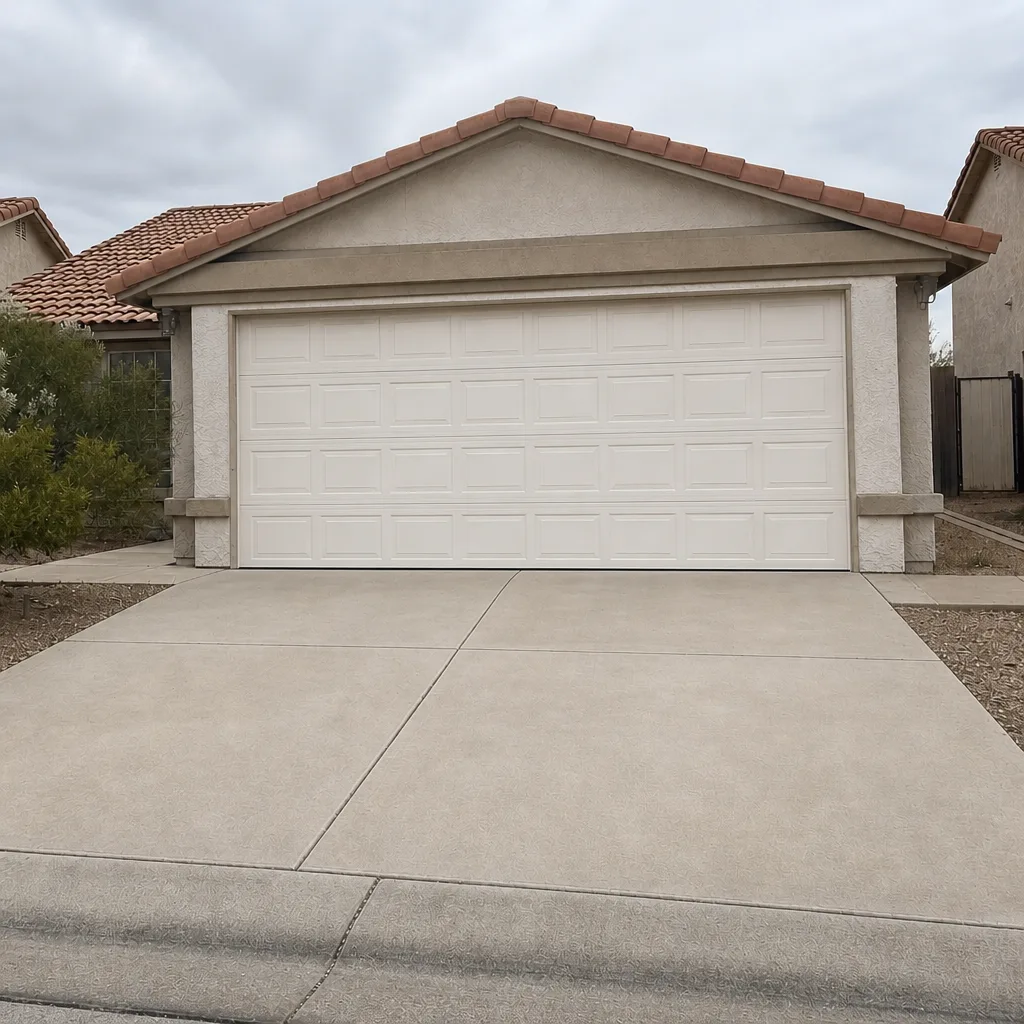 After
When to Call a Professional
Call a professional the moment you see a broken spring, a cable off the drum, a frayed cable, or a door that won’t hold midpoint. Those are safety issues, not maintenance items. If the door has become noticeably heavier or uneven since last season, that’s also worth a call before the opener bears extra strain. Bramwell Garage Door Repair Boulder City offers free estimates in Boulder City. Our technicians are background-checked and arrive in uniform within a stated arrival window. We deliver a written price before any work starts, so the number on the invoice matches the number you heard. Every repair is protected by the 365-Day Done Right Promise and the written Kingswell Guarantee. A live person answers the phone 24 hours a day, 7 days a week.
Frequently Asked Questions
If the opener hums but the door won’t move, and the door won’t lift by hand after you pull the disconnect cord, the spring is the problem. A balanced door moves with light resistance by hand. A dead spring makes it almost immovable. That single manual test separates a spring fault from an opener fault in seconds. Call (844) 560-4479 for an exact quote and a free estimate.
Most torsion-spring replacements in Boulder City run $150 to $280, parts and labor included. A single-spring replacement usually lands near the lower end, while a two-spring setup costs more. The price is quoted and agreed before any work starts, so there are no surprises. Call (844) 560-4479 for an exact quote, and the estimate is free.
A worn or stretched torsion spring needs to be replaced, not tightened, once it has lost its lifting capacity. Re-tensioning a fatigued spring is a short-term fix that fails again quickly. A technician measures the old spring and installs a correctly matched replacement. Call (844) 560-4479 to schedule an assessment, and the estimate is free.
With Bramwell the answer is no. We deliver a written price before any work starts, so the number on the invoice matches the number you were given. That written-price promise is part of the Kingswell standard. If something unexpected turns up, you hear about it before anyone touches the door. Call (844) 560-4479 and get a free written estimate.
Our technicians are experienced, background-checked, and arrive in uniform within a stated arrival window. Each Bramwell location is independently owned and operated and has agreed to uphold the same four Kingswell standards on every job: a written price, a real arrival window, a clean job site, and a written guarantee. Call (844) 560-4479 for a free estimate.
The 365-Day Done Right Promise means if a covered repair fails within a year, Bramwell comes back and fixes it at no charge, and that commitment is in writing. Ask the technician exactly what your repair covers and for how long. Every job includes the written Kingswell Guarantee. Call (844) 560-4479 to book an estimate.
The Bottom Line
Most “broken opener” calls are spring calls in disguise. The hum with no movement is the opener’s resistance sensor protecting itself from a door it can’t lift. A quick manual disconnect test tells you whether the spring, not the opener, is the culprit. You can safely observe and document the symptoms, but winding a torsion spring or handling a tensioned cable is a trained-professional job because of the stored energy involved. In Boulder City’s heat and dry air, springs fail more often, and catching a stretched spring early saves you a bigger repair. Get the written price, expect the real arrival window, and ask exactly what the guarantee covers.
Ready to know what your spring repair will cost before anyone arrives? Call Bramwell Garage Door Repair Boulder City at (844) 560-4479 for a free estimate. We give you a written price before any work starts, show up in the window we promise, and back every repair with the Kingswell Guarantee.
Written by the team at Bramwell Garage Door Repair Boulder City.