
Last updated November 18, 2026
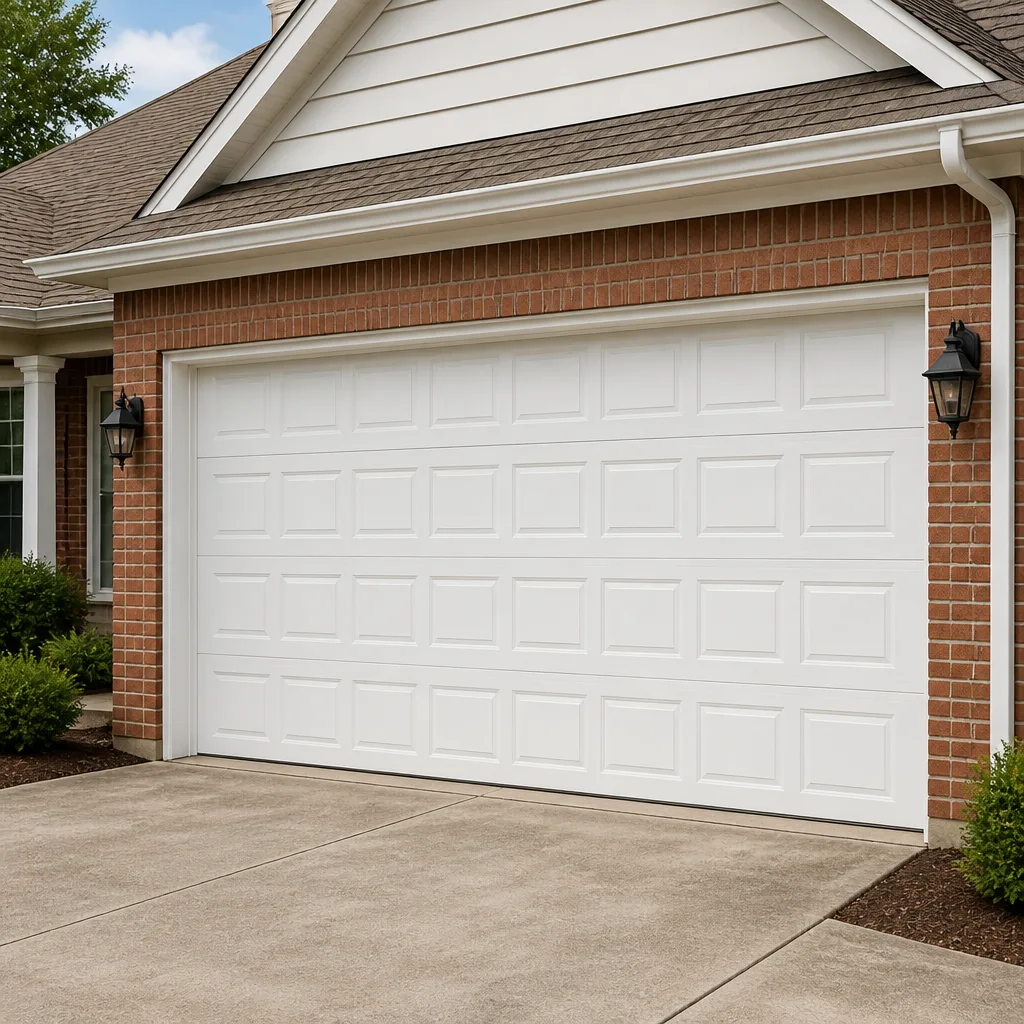 Raised-panel steel
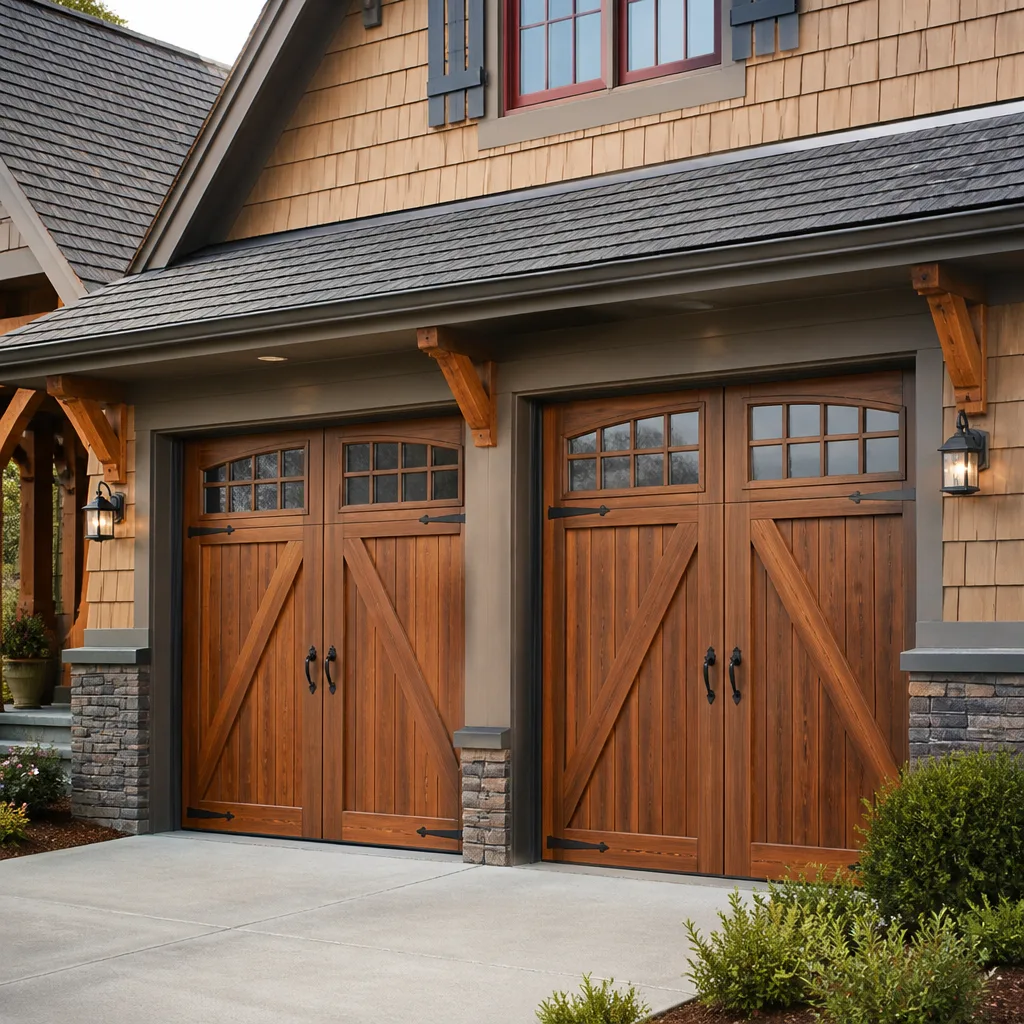 Carriage house
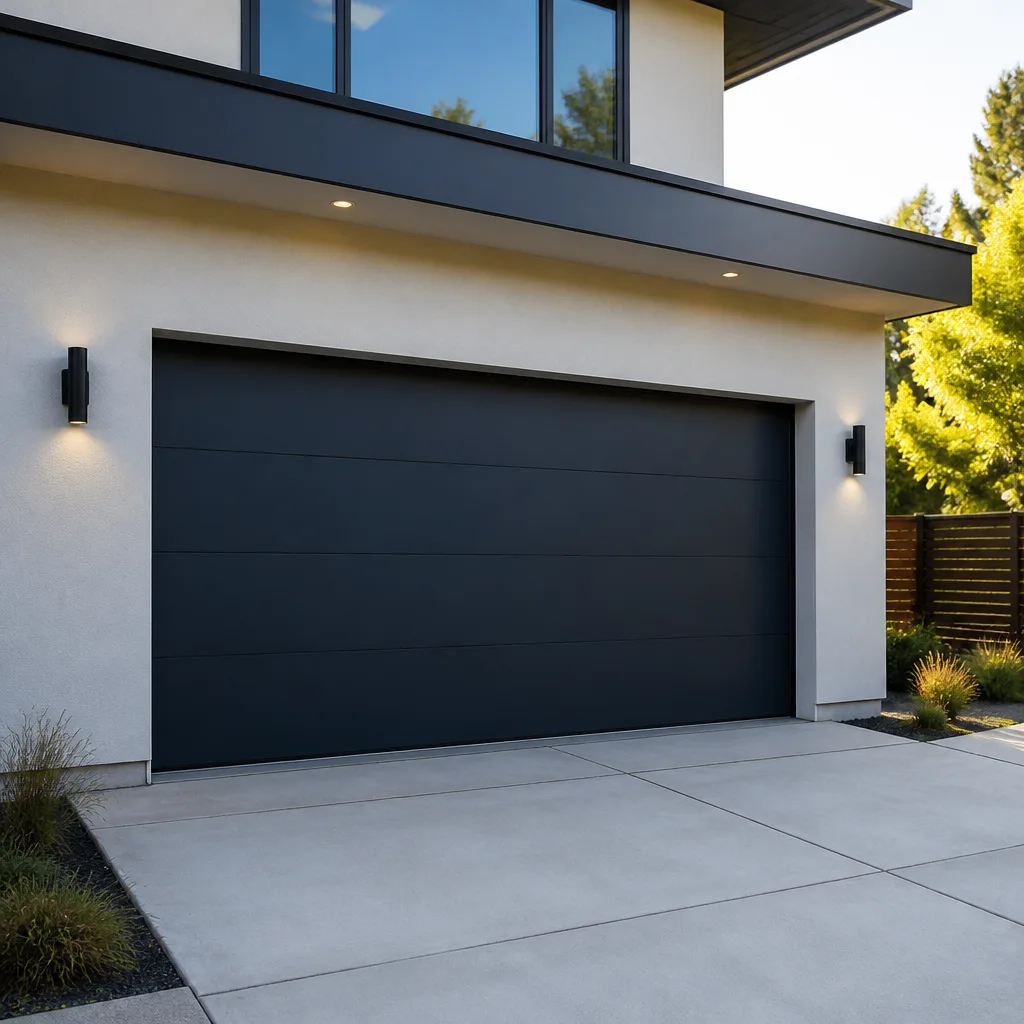 Modern flush
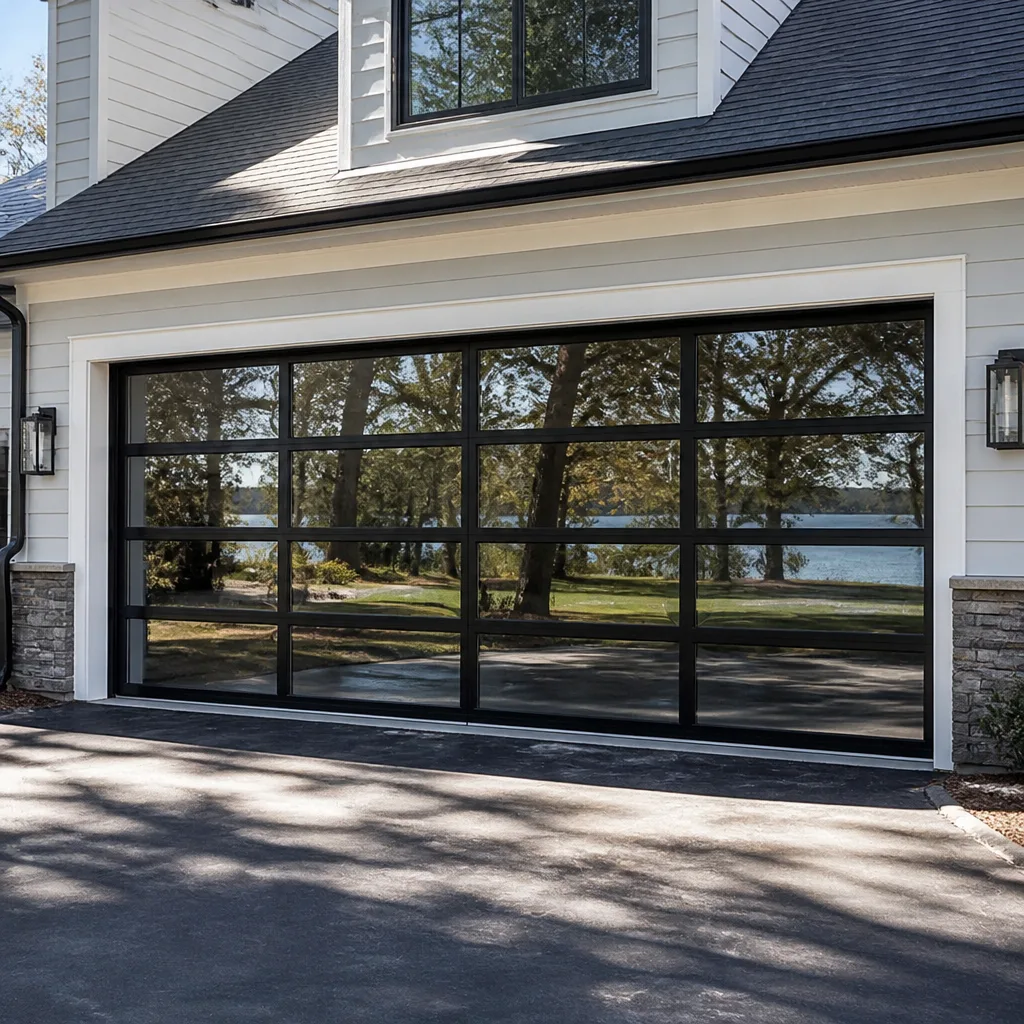 Full-view glass
 LiftMaster openers
 Chamberlain openers
Full 25-point door and opener safety check with every visit - springs, cables, rollers, tracks, and your LiftMaster or Chamberlain opener included
You get a price before we start. It does not change when the pro arrives.
Get your free estimateGarage Door Repair Troubleshooting: Common Problems and How to Fix Them
If your garage door reverses before it hits the ground, most guides tell you to adjust the limit switch. That advice is incomplete, and sometimes it’s expensive. The same symptom can come from four different components, and turning the wrong adjustment screw can burn out your opener motor within a few weeks. Homeowners in Boulder City run into this constantly, partly because the desert dust and summer heat stress the sensors and springs harder than in milder climates.
This guide teaches symptom-to-cause reasoning, the way a technician thinks through a fault. You’ll learn to describe what your door is doing precisely enough that a diagnosis takes a phone call instead of a service visit, and how to spot a diagnosis that’s really an upsell.
Quick Answer
Most garage door problems fall into one of six patterns: reversal, grinding, one-side sag, slow travel, a loud bang, or no response at all. Match the symptom to the component it points to – the safety sensor, the trolley carriage, a torsion spring, a track, or the opener logic board – then test only the low-voltage parts yourself. High-tension springs and cables are never a DIY item.
Styles & brands we work with
- Raised-panel steel
- Carriage house
- Modern flush
- Full-view glass
- LiftMaster openers
- Chamberlain openers
Table of Contents
- How a Garage Door Actually Works: The Mechanical Chain
- The Symptom-to-Component Map
- The Door Reverses Before It Closes
- Grinding, Scraping, and Squealing
- One Side Sags, or the Door Binds
- The Loud Bang and the Slow Climb
- No Response and the Silent Opener
- What to Document Before You Call
- Red Flags in a Technician’s Diagnosis
How a Garage Door Actually Works: The Mechanical Chain
Every troubleshooting decision gets easier once you understand that a garage door is a system where each part hands off to the next. When one link fails, the symptom shows up somewhere downstream, which is why a sensor problem can look like an opener problem and a spring problem can look like a track problem.
Here’s the chain, in order:
- Torsion spring – the heavy coil mounted above the door that stores the energy to lift it. It does most of the work; the opener only nudges.
- Cables and drums – the steel cables that connect the spring to the bottom corners of the door and keep it level.
- Rollers and tracks – the wheels and the rails they ride in, which govern how smoothly and straight the door travels.
- Trolley carriage – the sliding block on the rail that the opener pushes and pulls, connected to the door by the arm.
- Limit switch – the setting inside the opener that tells it where the fully open and fully closed positions are.
- Safety sensors – the two small eyes near the floor that project an invisible beam and stop the door if anything crosses it.
- Logic board – the circuit board that runs the sequence and reads the inputs.
Notice that the spring holds the weight. Six or seven out of ten “the opener broke” calls we see in Boulder City are actually a tired spring the opener has been fighting. The motor sounds weak because it’s lifting a door that the spring is no longer helping.
The Symptom-to-Component Map
Use this as your first pass. Read your symptom, note the likely components, then move to the detailed section for that pattern.
- Door reverses before closing → safety sensors, limit switch, close-force setting, or a binding track.
- Grinding or squealing → dry rollers, worn bearings, or a misaligned track.
- One side sags → stretched cable, loose drum, or a broken spring on one side of a two-spring setup.
- Slow travel up or down → weak spring, worn rollers, or a failing opener motor capacitor.
- Loud bang, door won’t lift → broken torsion spring, almost every time.
- No response, no light → power, wall control, logic board, or a lockout after repeated sensor trips.
Boulder City’s summer heat matters here. Springs, cables, and rollers all expand and fatigue faster in sustained 100-degree-plus weeks, which is why we see a cluster of spring failures between June and September. A spring that would last years in a coastal climate can give out sooner in the desert.
The Door Reverses Before It Closes
This is the symptom that sends the most homeowners to the wrong fix. Four components can cause it, and adjusting the limit switch blindly is the wrong first move. Work through them in this order, from cheapest and safest to most involved.
- Check the sensor eyes. The safety sensors near the floor should both glow steady. If one is dark or blinking, wipe both lenses with a dry cloth and check that nothing (a broom, a recycling bin, a coiled hose) is in the beam path. Dust buildup after a windy Boulder City day trips these more than anything else.
- Check the sensor alignment. If the lens is clean and still blinking, one eye has been nudged out of line. A gentle hand adjustment toward the other eye usually restores the beam – no tools, no risk.
- Test the close-force setting. If the sensors read normal and the door still reverses, the opener is set to stop if it feels resistance. This is a dial or button on the opener head, and small movements matter. Turn it in tiny increments, test, and never set it so high that the door would keep pushing on an obstruction.
- Look for a bind in the track. Watch the door from the side. If it starts down and then pulls inward or outward at one point, a track is out of line and the opener is sensing resistance and reversing. Don’t force it – a bound door needs the track corrected, not the force dial turned up.
If all four check out and the door still reverses, the limit switch or the logic board is the next suspect, and that’s a good point to call. Give us a ring at (844) 560-4479 and describe what you’ve already tested – it usually saves a step.
Grinding, Scraping, and Squealing
Noise is a message, and the pitch tells you which part is talking. A high squeal is usually friction, a low grind is usually metal on metal, and a rhythmic scrape once per revolution is usually a roller or a cable rubbing.
- Squeal from the springs or rollers → dry rollers and a dry torsion spring. A silicone-based lubricant on rollers, hinges, and the spring coil quiets it fast. Don’t use grease; it attracts desert grit and turns into a grinding paste.
- Low grind from the opener head → worn gears inside the opener. If your unit is a Craftsman or an older LiftMaster with a chain drive, the gears can wear smooth over time. That’s a repair or replacement decision, not a lubrication fix.
- Rhythmic scrape once per turn → a bad roller or a fraying cable rubbing the drum. Cables are high-tension; stop operating the door and have it looked at.
- Grinding that gets worse going up → a track that’s been bent or knocked out of alignment, common after a car bumper taps the vertical track.
In our experience around Boulder City, the single most common cause of a grinding complaint is dry, neglected rollers. A five-minute lubrication pass a couple of times a year prevents most of it – though any noise tied to cables or the spring coil should be checked by a technician.
One Side Sags, or the Door Binds
A door that hangs crooked on one side is telling you the two sides are no longer sharing the weight evenly. On a two-spring system, one spring can fail while the other holds, and the door will still open – but sag and strain on one side. On a single-spring setup, a stretched cable or a loose drum is the usual culprit.
This is one to watch carefully rather than fix. Here’s why: the cable under tension on the sagging side is the part that snaps and lashes. A snapped cable is dangerous, and it’s a component nobody without training should be near.
What you can safely do:
- Stop cycling the door more than necessary.
- Note which side sags (facing the door from inside) and whether the gap is at the top, bottom, or both.
- Check that the track on the sagging side hasn’t been physically bent – a visual inspection, no touching.
- If the door only sags sometimes, note whether it happens after the door has been up a while (a heat-related cable stretch) or from a cold start.
Then call. Uneven doors put stress on the opener and the tracks and usually get worse, not better. Our Garage Door Spring Repair in Boulder City team deals with exactly this pattern, and a trained eye can usually tell in minutes whether it’s a spring, a cable, or a drum.
The Loud Bang and the Slow Climb
If you heard a sharp bang from the garage and the door won’t lift, the torsion spring almost certainly broke. It’s one of the most distinctive sounds in home repair – a single hard crack, then a door that either won’t move or feels impossibly heavy when you try to raise it manually.
Stop here, and don’t try to lift it. A door with a broken spring can weigh well over a hundred pounds, and forcing it up by hand risks the door coming down hard or a cable letting go. That’s the point where a trained technician is the right call, not a brave homeowner.
Slow travel is the gentler cousin of the same problem. A door that used to open in fifteen seconds and now takes twenty-five is usually fighting a tired spring, worn rollers, or a failing motor capacitor. It’s not urgent, but it’s an early warning. Catching a weakening spring before it snaps is cheaper than catching it after.
Springs in Boulder City tend to fail fast in the heat. Replacement is a job for a pro, and it’s one where the written price matters – a torsion spring swap should be a clear, quoted number, not a moving target. Most torsion-spring replacements run $150 – $280, parts and labor included, and we give you that number in writing before any work starts.
No Response and the Silent Opener
When the opener does nothing at all – no light, no click, no movement – the fault is on the electrical side, not the mechanical side. Work through the sequence:
- Check the outlet. Plug a lamp into the same outlet the opener uses. If the lamp works, power is fine; if it doesn’t, check the breaker in your panel.
- Check for a lockout. Many openers lock themselves after repeated sensor trips. Unplug for thirty seconds, plug back in, and try again. If the door now responds, the sensor was the original problem.
- Test the wall control. If the wall button works but the remote doesn’t, it’s the remote or its battery. If neither works, it’s the opener head.
- Re-pair the remote. On a LiftMaster or Chamberlain, a fresh battery and a re-pair usually brings a dead remote back. If it won’t pair after two tries, the logic board or the receiver is the suspect.
A dead opener that won’t respond to anything, including a fresh wall control, is a logic board or motor failure. At that point you’re weighing repair against replacement, and it helps to know the door’s age. A door older than fifteen years paired with a failed board is often a fair candidate for replacement – our Garage Door Installation in Boulder City page walks through how that decision typically goes.
What to Document Before You Call
The difference between a five-minute diagnosis call and a full service visit is usually preparation. When you call Bramwell Garage Door Repair Boulder City, having these four things ready lets us point you toward the right fix – and often the right price range – before anyone drives out.
- The sound. Grinding, squealing, a single bang, a click but no movement, or silence. Use the plain word for it; don’t dress it up.
- The behavior. Does it reverse? Stall halfway? Go up but not down? Does it happen every time or only sometimes?
- The door’s age and make. If you can find a label on the door or opener (Raynor, Wayne Dalton, LiftMaster, Chamberlain are common around here), note the model.
- What you’ve already tried. Whether you cleaned the sensors, checked the breaker, or re-paired the remote. This saves the most time.
With those four pieces of information, we can often tell you on the call whether you’re looking at a sensor issue, a spring, or the opener – and give you a realistic price range before we schedule a visit.
Red Flags in a Technician’s Diagnosis
A good diagnosis names a specific component and a specific symptom, and it matches your description of the problem. A weak one reaches for the biggest possible repair. Here are the patterns that suggest an upsell rather than accurate fault-finding:
- “Your whole door needs replacing” for a sensor or roller issue. Sensors and rollers are cheap repairs on an otherwise sound door.
- No written price before work begins. If the number changes when the invoice arrives, that’s the opposite of the Kingswell standard. We put the price in writing before any work starts, on every job, without exception.
- A vague diagnosis. “Something’s worn out” is not a diagnosis. “The left torsion spring has broken and the cable on that side has stretched” is.
- Pressure to decide on the spot with no written guarantee. Every legitimate repair comes with a written guarantee – ask exactly what it covers and for how long.
- No name, no uniform, no verified identity. A technician who can’t tell you who they are and who they work for is a reason to pause.
A good technician will walk you through what they found and why it points to the part they’re quoting. That’s how the Kingswell Way works – say the price before the work, show up in the window, leave the place cleaner than we found it, put the guarantee in writing, and come back if it fails.
Common Mistakes to Avoid
- Adjusting the limit switch first. It’s the most-touched part and the least often the real problem. Adjust the wrong one and you’ll strip the opener’s travel calibration and can burn out the motor.
- Turning up the close-force dial to stop a reversal. That’s masking the symptom, not the cause, and it makes the safety system less protective. Fix the sensor or the bind instead.
- Lubricating with WD-40 or grease. WD-40 is a solvent, not a lubricant, and grease collects Boulder City’s fine desert dust into a grinding paste. Use a silicone-based spray.
- Trying to lift a door with a broken spring. It’s genuinely dangerous. A door without spring tension can fall hard or drop a cable. Stop and call.
- Ignoring a slow climb. A door that takes five extra seconds to open is telling you the spring is tiring. Catching it early is cheaper than after it snaps.
- Calling a company that can’t give a written price. Verbal estimates are how price surprises happen. Insist on a written number before any work starts.
See the difference
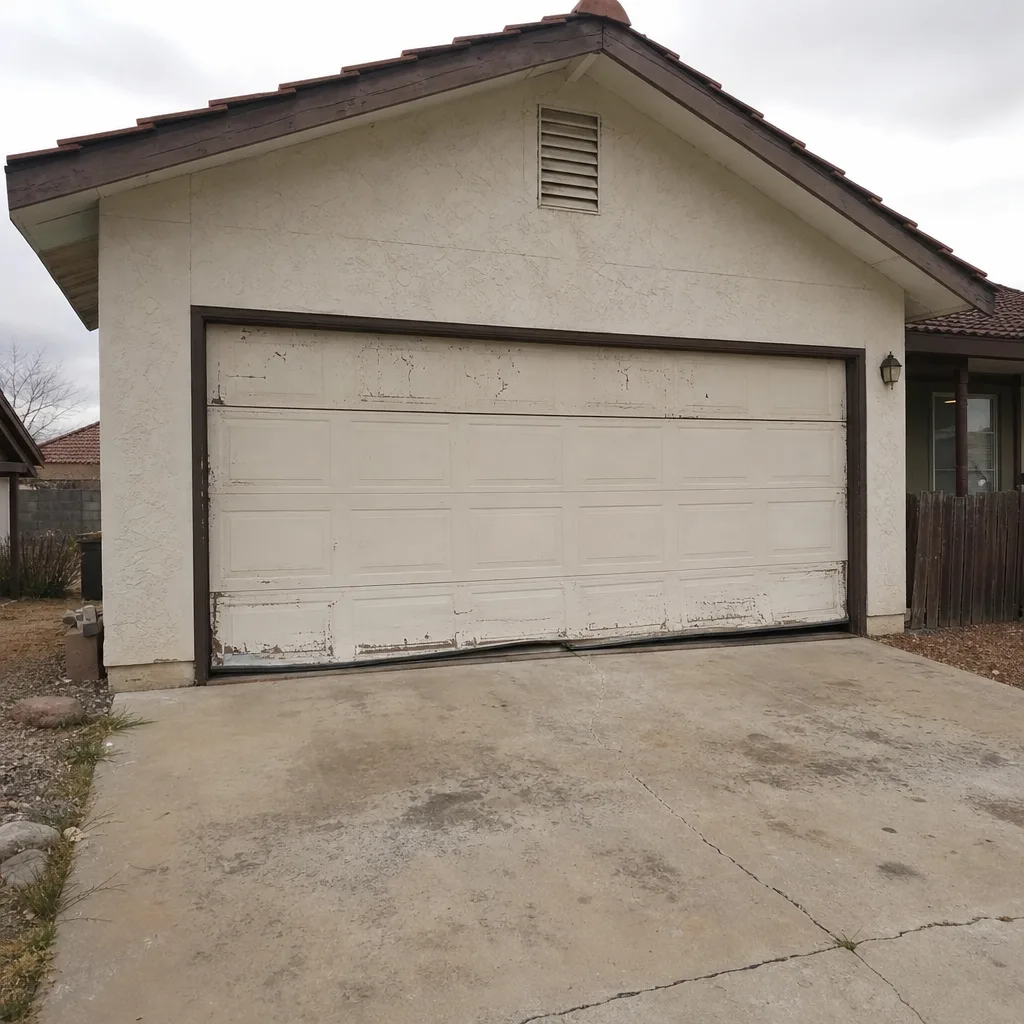 Before
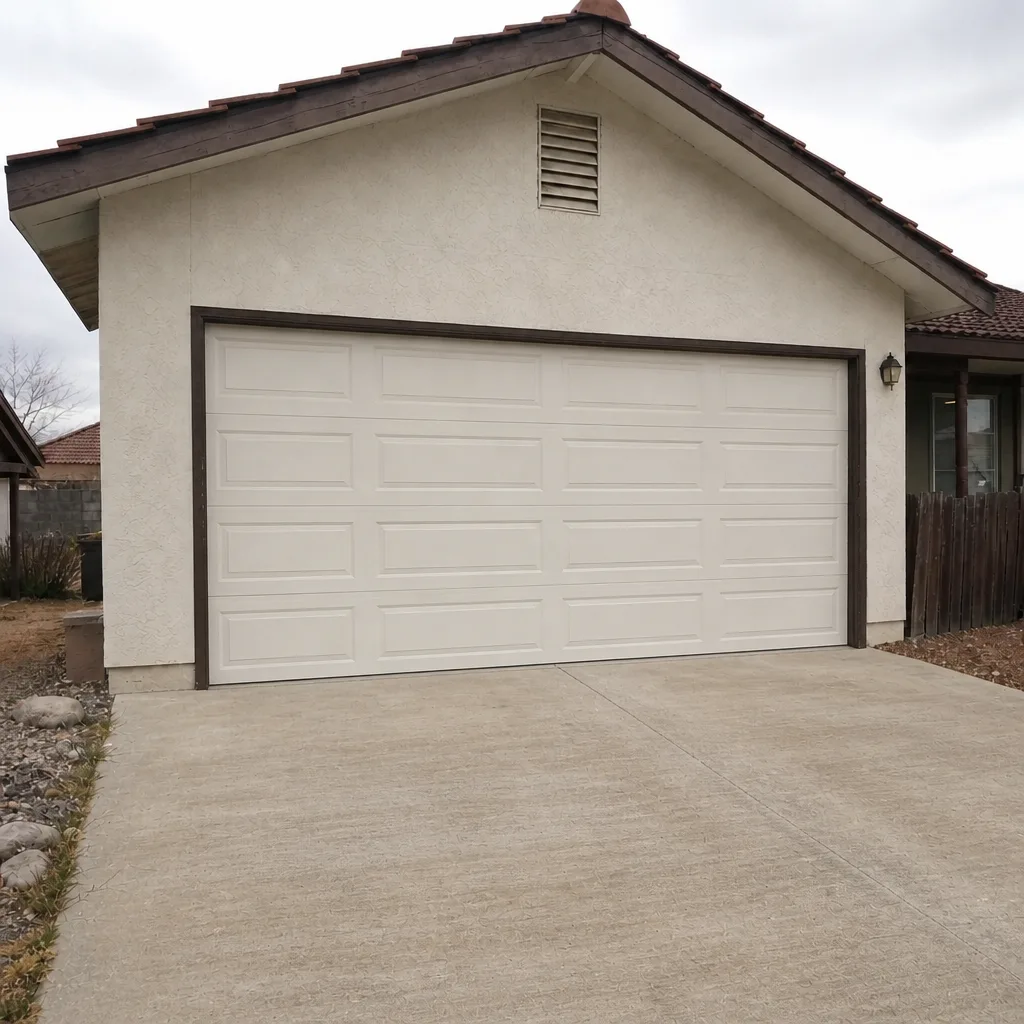 After
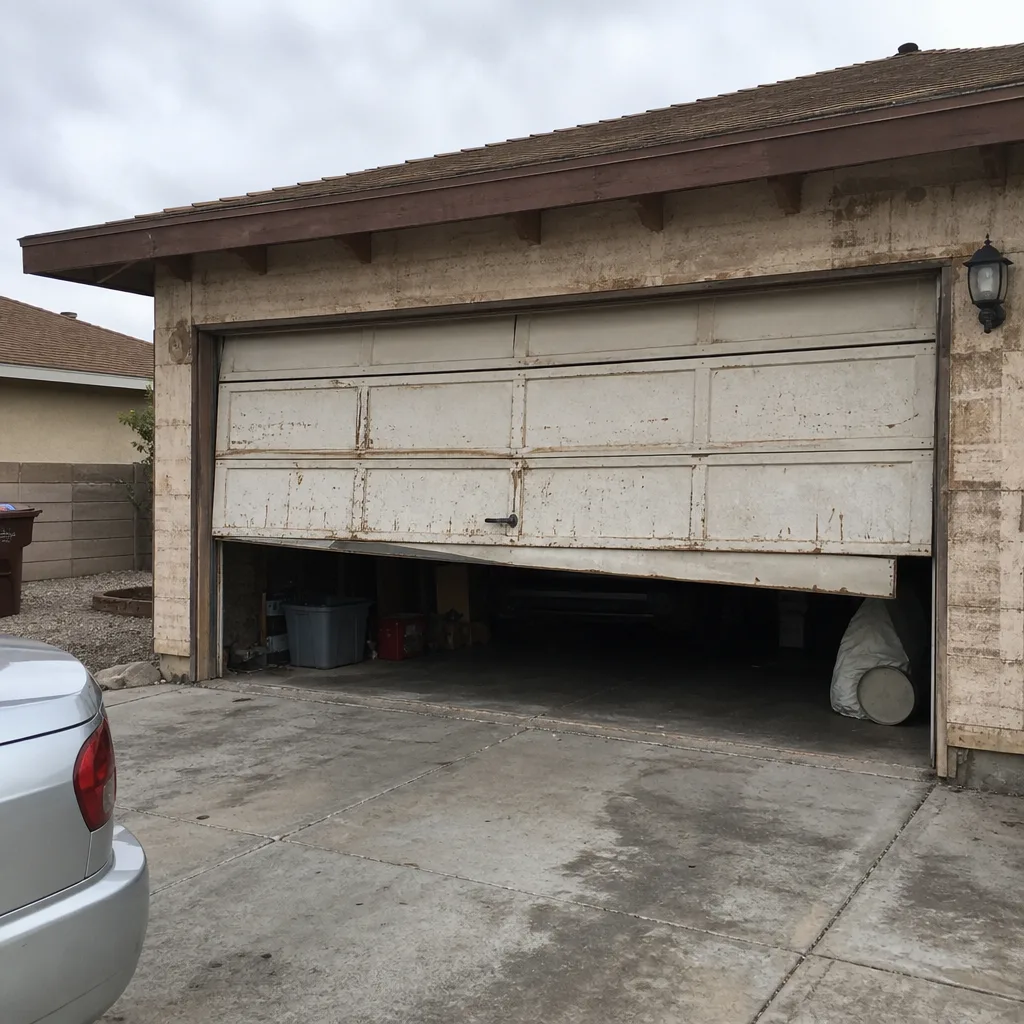 Before
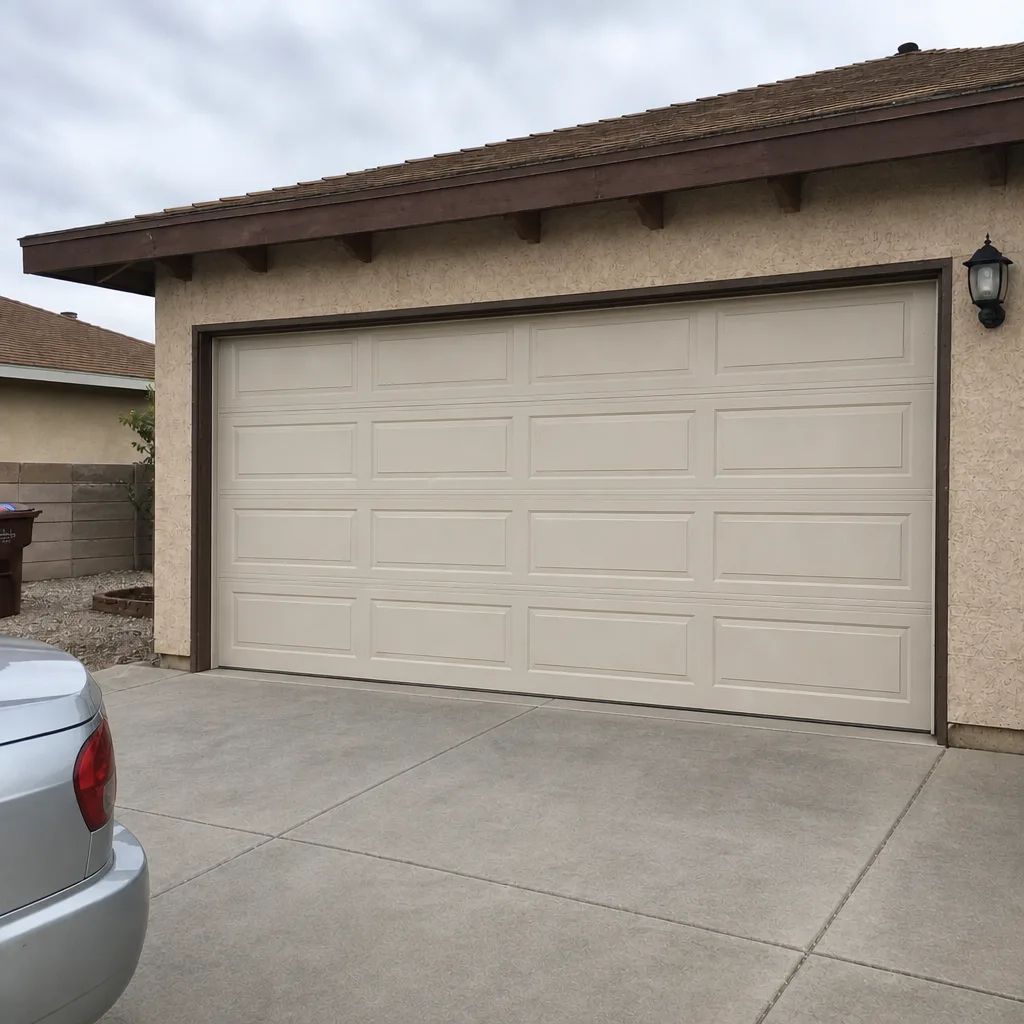 After
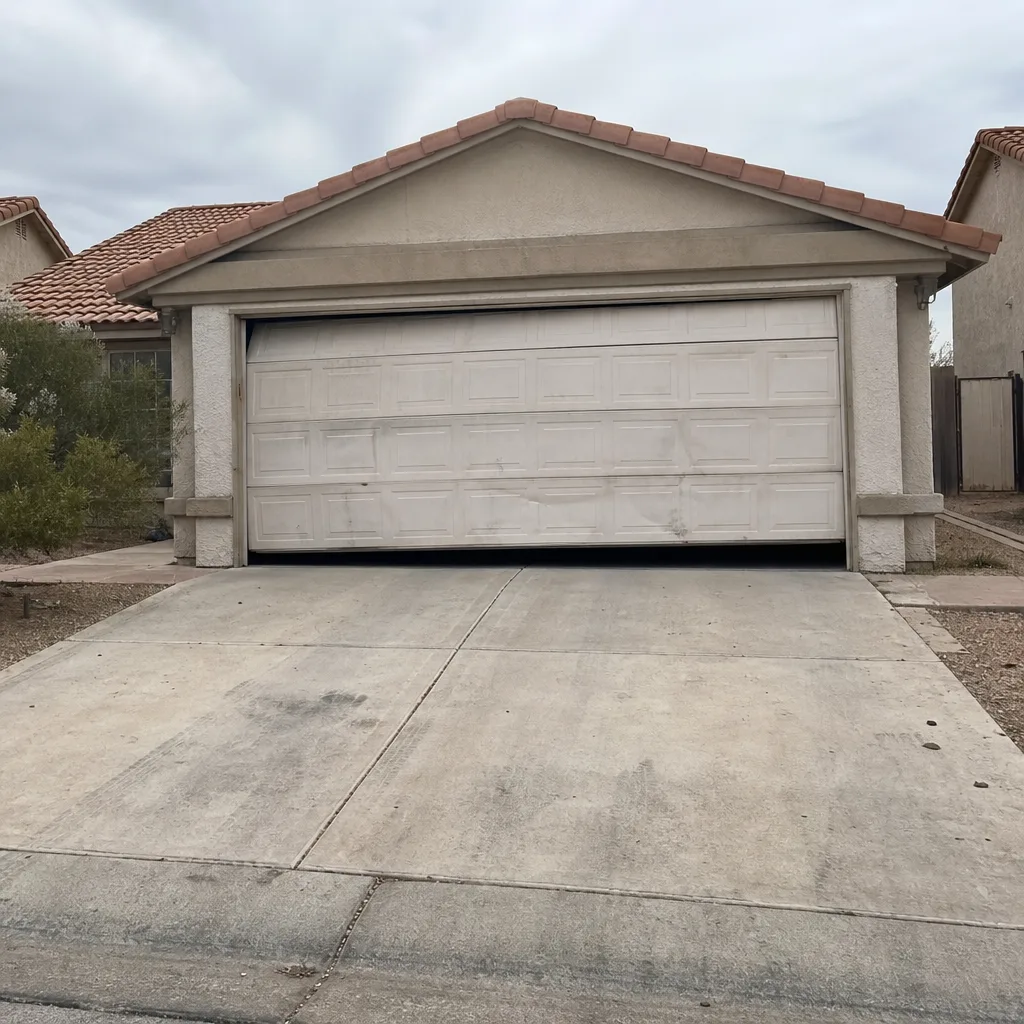 Before
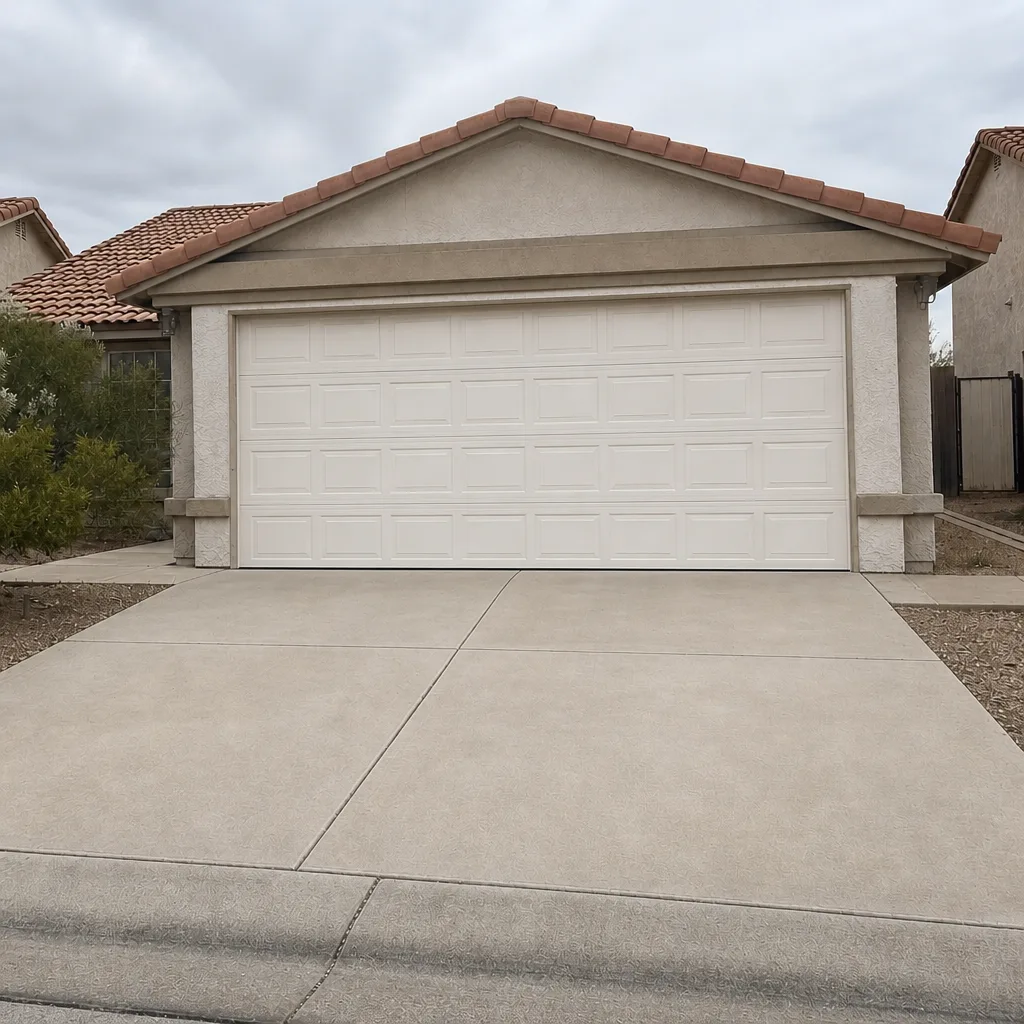 After
When to Call a Professional
Some problems are yours to fix in ten minutes. Others are genuinely dangerous to touch. Call a professional if you have a loud bang and the door won’t lift (broken spring), a sagging or binding door with visible cable strain, a door that won’t respond after you’ve checked power and re-paired the remote, any grinding tied to the spring coil or cables, or a door older than fifteen years that’s developed a structural bend. These are the scenarios where a trained technician with the right tools matters, and where the risk to a homeowner is real.
Bramwell Garage Door Repair Boulder City offers free estimates in Boulder City – call (844) 560-4479. We answer the phone 24 hours a day, seven days a week, with a live person on the line, and our technicians have up to 25 years of experience on doors of every major make. Every repair is protected by the 365-Day Done Right Promise and the written Kingswell Guarantee: if a covered repair fails within a year, we come back and fix it at no charge, and that commitment is in writing.
Frequently Asked Questions
Most torsion-spring replacements run $150 – $280, parts and labor included. The exact price depends on the spring size, whether it’s a single or two-spring setup, and whether a cable was also affected. We give you a written price before any work starts. Call (844) 560-4479 for an exact quote – estimates are free.
In most cases, yes – emergency and repair calls get same-day availability, and a broken spring or a dead opener is exactly the kind of call we prioritize. We’ll give you a real arrival window, not an open-ended “sometime today.” Call (844) 560-4479 and we’ll tell you the next window.
No. Torsion springs store enormous energy, and the wind-up process can cause serious injury if handled incorrectly – even a small slip can send the winding tool flying. That’s a job for a trained technician with the right bars and safety equipment. Leave this one to the professionals.
Yes. Every Bramwell technician is background-checked and arrives in uniform within the arrival window, and each Bramwell location is independently owned and operated to the same Kingswell standard. If a covered repair fails within the guarantee period, we come back and fix it at no charge.
It’s almost always the sensors first – a dirty lens or one eye nudged out of line. Wipe both lenses, check the beam path, and look for a steady glow on each eye. Only after the sensors check clean should you suspect the limit switch or the close-force setting. Call (844) 560-4479 if you’re not sure which it is.
Yes – we’re authorized to service all major brands, including LiftMaster, Chamberlain, Genie, Clopay, Amarr, Wayne Dalton, Craftsman, and Raynor. Whether your door is a Raynor or your opener is a Wayne Dalton, we’ll have the parts and know the model. Call (844) 560-4479 to confirm your exact model.
The Bottom Line
The pattern behind most garage door problems is cause and effect: a tired spring makes the opener strain, a dusty sensor trips a door into reversing, a dry roller starts to grind. Learn to match the symptom to the component it points to and you’ll describe your problem precisely enough that a diagnosis takes a call, not a full service visit. And when the fault is in a high-tension spring or a strained cable, stop and hand it to a pro. Bramwell Garage Door Repair Boulder City is here to help – free estimates, a written price before any work starts, and a written guarantee on every repair. Call (844) 560-4479 to get your door moving again.
Written by the team at Bramwell Garage Door Repair Boulder City.