
Last updated November 18, 2026
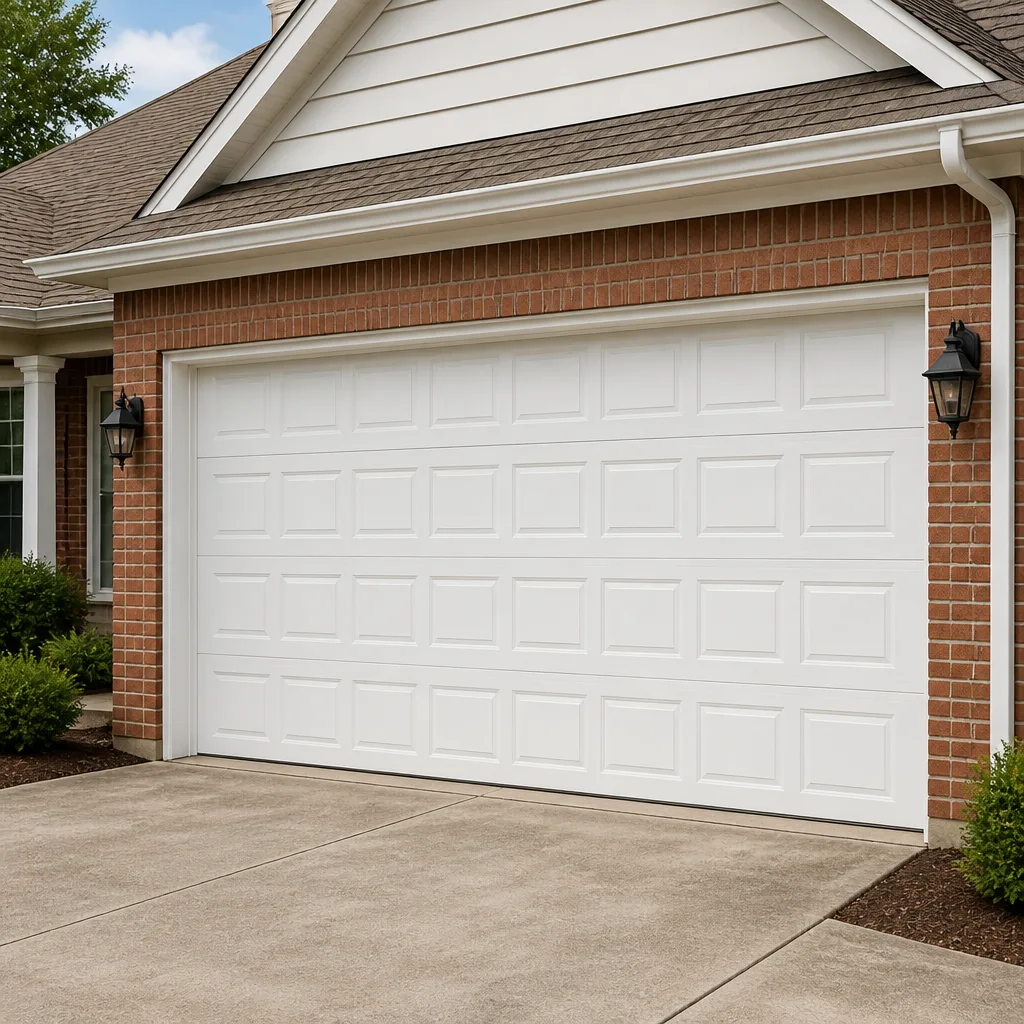 Raised-panel steel
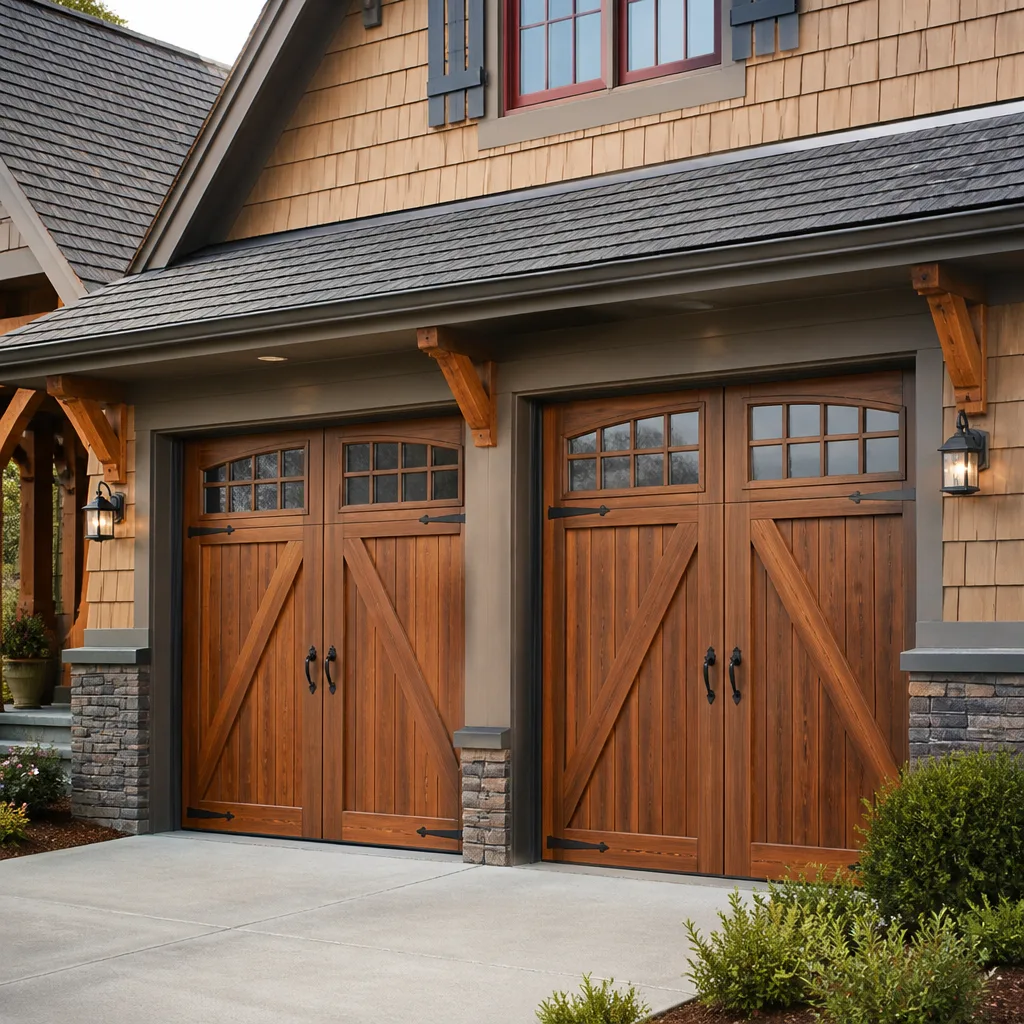 Carriage house
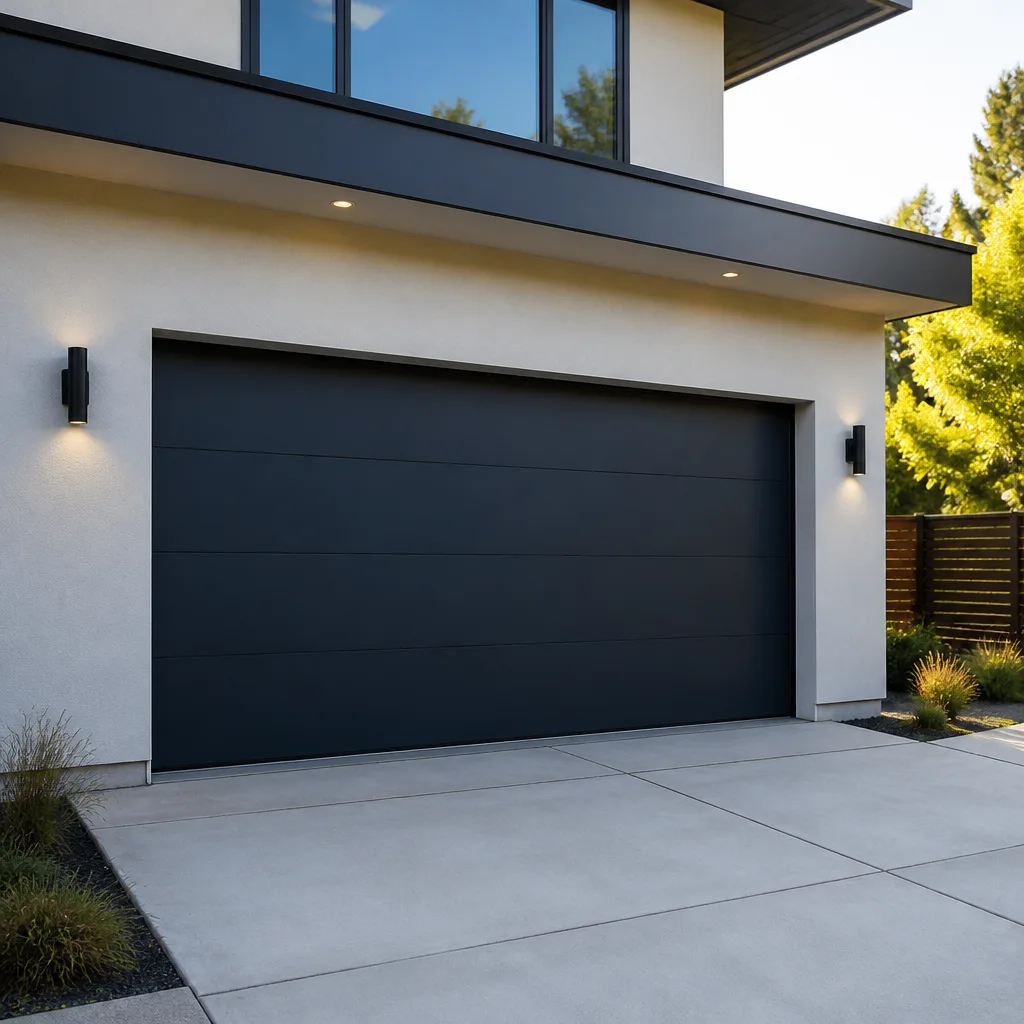 Modern flush
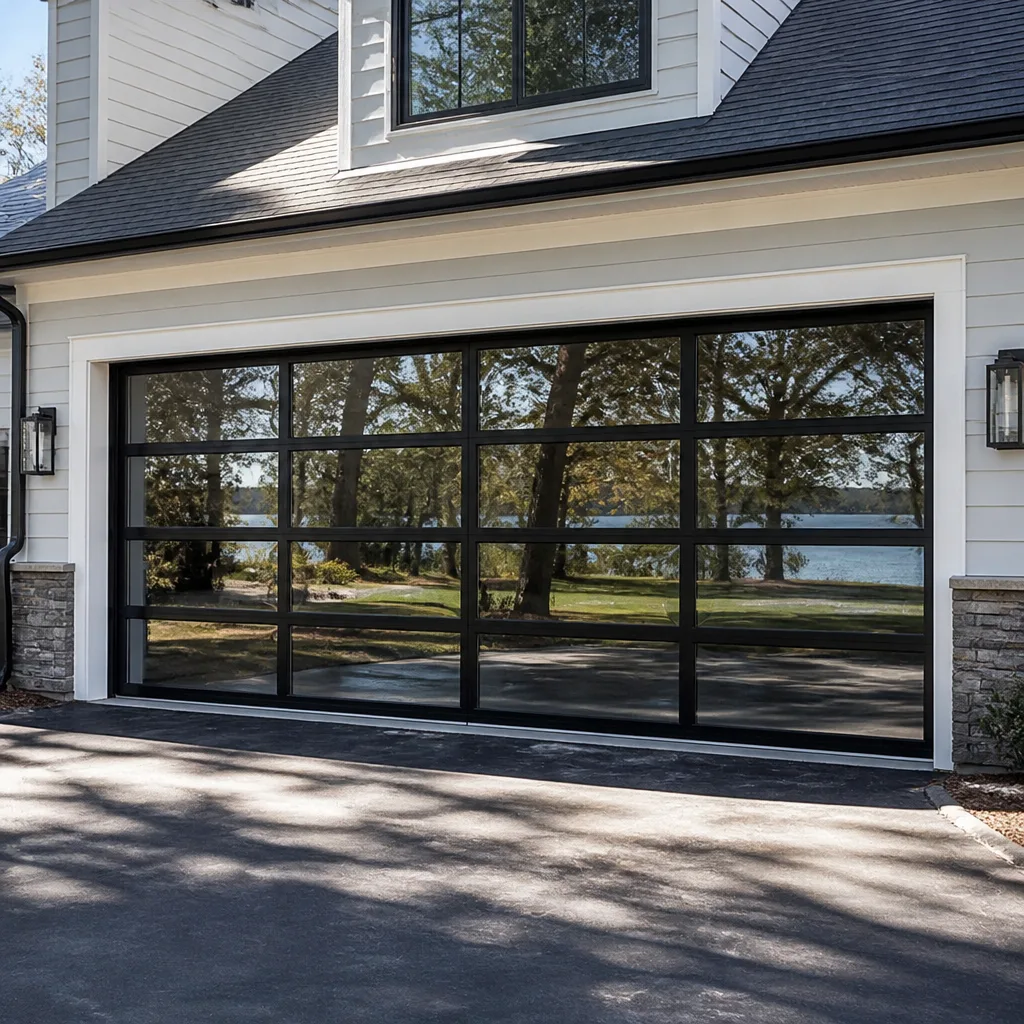 Full-view glass
 LiftMaster openers
 Chamberlain openers
Full 25-point door and opener safety check with every visit - springs, cables, rollers, tracks, and your LiftMaster or Chamberlain opener included
You get a price before we start. It does not change when the pro arrives.
Get your free estimateGarage Door Repair Warning Signs Every Homeowner Should Know
A garage door that’s slightly louder than it used to be isn’t just annoying. In most cases it’s a component under abnormal stress, finishing its last few hundred cycles before it fails – often at 7am when you’re already late for work. We’ve watched this play out across Boulder City for years: a homeowner mentions a small rattle in passing, then calls back three weeks later after a spring lets go and the door won’t budge. The door still moved, so it seemed fine. That’s the trap. This guide walks through eight warning signs ranked by urgency, shows you a 60-second test that reveals spring wear before any other symptom shows up, and explains which repairs stay simple at the $150 stage and which compound into $600 jobs once they’re ignored.
Quick Answer
If your garage door is louder than it used to be, moves unevenly, hesitates, reverses on its own, or leaves a gap at the floor, it’s telling you a component is wearing out. The most urgent signs – a door that won’t close, a snapped spring, or a door that reverses without warning – mean stop using it today and call for repair. Signs like grinding, scraping, or a slow drift downward mean schedule service within the month, before a $150 repair becomes a $600 one.
Styles & brands we work with
- Raised-panel steel
- Carriage house
- Modern flush
- Full-view glass
- LiftMaster openers
- Chamberlain openers
Table of Contents
- Why Garage Doors Fail Quietly: The Mechanical Story
- The 60-Second Balance Test That Reveals Spring Wear
- The Eight Warning Signs, Ranked by Urgency
- What the Sounds Mean: Grinding, Banging, Scraping
- Why a Door That “Still Works Fine” Can Be Two Cycles From Failure
- How Early Detection Changes Your Repair Estimate
- What Boulder City Conditions Do to Garage Doors
- When to Call a Professional
Why Garage Doors Fail Quietly: The Mechanical Story
A garage door isn’t really one machine. It’s a system of parts that wear at different rates, and the whole thing stays functional right up until one part crosses its breaking point. The torsion spring – the heavy coil mounted above the door that handles most of the lifting weight – is the part most homeowners never think about. That’s by design. When it’s healthy, the door feels light in your hand and moves with a steady hum. When it’s fatigued, it still lifts the door, just with more effort from the opener and more strain on every other component.
Here’s the part that catches people: springs don’t fail gradually at the end. They fatigue over thousands of cycles and then break suddenly, usually on a cold morning when the metal is least flexible. A door with a failing spring can look completely normal for months. The opener makes up the difference, the door goes up, and nobody notices the extra work happening behind the scenes.
This is why we tell Boulder City homeowners to listen to their door rather than just watch it. A door that’s working “fine” but getting louder is a door in the middle of a breakdown. The mechanical story is written in the sound, the speed, the balance, and the gap at the floor – you just have to know what you’re reading.
If you want a full picture of what repair involves when a part finally gives, our page on garage door repair in Boulder City walks through the process from diagnosis to written estimate.
The 60-Second Balance Test That Reveals Spring Wear
This test tells you more about your door’s spring health than any other check you can do from the driveway, and you need no tools. Do it when the door is down and the opener is disconnected. Here’s how:
- Pull the release cord. With the door fully closed, pull the red manual release handle hanging from the opener rail. You’ll hear a click as the trolley disconnects. This puts the door on manual.
- Lift the door to the halfway point. Raise it by hand until it’s about waist-to-chest height – roughly halfway open. Use a firm, steady grip.
- Let go and watch. A door with healthy springs will hold its position on its own, maybe drifting an inch or two. That’s normal.
- Read the result. If the door sags downward, the springs have lost lift and are fatigued. If it springs upward on its own, the springs are over-wound or the door is out of balance. If it slams down or moves fast, stop and don’t use the door – that’s a serious imbalance.
- Reconnect safely. Push the door back down, then pull the release cord again to re-engage the trolley. Run the opener once to confirm it’s connected.
If your door fails this test, don’t try to fix the springs yourself. Torsion springs are under extreme tension and can cause serious injury – they are the single most dangerous part of a garage door system. This is a job for a trained technician with the right winding bars and safety gear. Our garage door spring repair in Boulder City page explains what replacement involves.
The Eight Warning Signs, Ranked by Urgency
Not every symptom means “stop using the door today.” Some mean schedule a repair this month. Others mean call a professional before you touch the button again. Here’s the ranking we use when a homeowner describes a problem over the phone.
Stop Using the Door Today
- A snapped torsion spring. You’ll hear a loud bang, and the door will feel impossibly heavy if you try to lift it. Do not force it. Opener damage and door damage follow fast when a broken-spring door is run.
- A door that won’t close or reverses immediately. Usually the safety sensors or a limit switch, but a door that reverses repeatedly can trap a pet or a child. Stop and get it checked.
- A door that’s come off its track or hangs crooked. A door halfway off the track is a fall risk. Don’t run the opener and don’t try to push it back by hand.
Schedule Within the Week
- Loud grinding or a door that shudders as it moves. Usually a worn trolley carriage or dry rollers. Left alone, it eats the opener gear.
- A door that hesitates or jerks at the top or bottom of travel. Often a limit switch adjustment or a failing spring. Cheap to fix now, expensive if the opener motor burns out.
Schedule Within the Month
- A door that’s noticeably louder than it was a year ago. Rollers, hinges, and springs all contribute. Early service keeps the repair small.
- A gap at the floor, or a door that lets in daylight and weather. Worn bottom seal or a bent bottom section. Cheap to fix before water and pests get in.
- Slow drift downward after you let go during the balance test. Early spring fatigue. Catch it now and the door keeps working for months; ignore it and you’re looking at a full spring replacement.
What the Sounds Mean: Grinding, Banging, Scraping
Sound is the fastest way to describe a garage door problem accurately to a technician, and it points to completely different parts. Here’s how we translate what homeowners hear in Boulder City.
- Grinding. A rough, low grinding sound as the door moves usually means the trolley carriage – the part that rides along the opener rail and pulls the door – has worn, or the opener gear inside the motor housing has stripped. Grinding that gets worse over weeks is a sign the opener is doing the work a failing spring should be doing. On a LiftMaster or Chamberlain opener, this sound often means the drive gear is losing teeth.
- Banging. A sharp, single bang followed by a door that won’t lift usually means a torsion spring just broke. A repeated banging or slamming sound at the end of travel means the door is hitting the floor or the header too hard, often a limit switch or spring issue. A bang at the very start of the cycle can be a worn hinge or roller.
- Scraping. A metal-on-metal scrape as the door moves usually means the track is bent, the door is out of alignment, or a roller has come out of the track. Scraping that appears on one side only is a strong sign the door is racking – twisting – which stresses everything.
- Squealing or squeaking. Usually dry rollers or hinges, and the cheapest sound to fix. A garage door lube service is one of the best value maintenance calls there is.
Describe the sound when you call. “It grinds on the way up” tells a technician more than “it’s broken,” and it lets us give a more accurate price range before we arrive.
Why a Door That “Still Works Fine” Can Be Two Cycles From Failure
This is the counterintuitive part, and it’s the reason we wrote this guide. A garage door mechanism doesn’t fail because it’s been used – it fails because a worn part is taking load it was never designed for. The opener motor is often the thing that hides the problem. A torsion spring rated for 10,000 cycles might be at cycle 9,980 with cracks forming in the coil. The door still lifts because the opener pushes harder to compensate. Everything looks normal.
Then the spring breaks, the door drops into the opener’s gear, and the repair bill covers a spring, a trolley carriage, a stripped opener gear, and possibly a bent bottom section. That’s the difference between a $150-$280 spring replacement and a repair closer to $600 once the cascade is priced out.
In Boulder City, we see this pattern often on doors that face the afternoon sun. The extra heat cycling and the dust that blows through this part of the valley dry out rollers and work the springs harder than in cooler climates. A door on a west-facing wall might see twice the fatigue of an identical door in the shade. If your door faces the sun and sounds louder than it used to, that’s your cue to schedule an inspection before it makes the decision for you.
How Early Detection Changes Your Repair Estimate
The single biggest cost lever on any garage door repair is timing. We’ve laid out what each repair typically runs so you know what to expect before you call, parts and labor included.
- Torsion spring replacement: $150-$280. Caught early, this is the only repair you need.
- Torsion spring plus opener repair after a spring fails and the door runs on a stripped gear: $400-$600. Same underlying problem, later decision.
- Roller replacement: $100-$200. Skip it and the rollers eat the track, which pushes the job to $300-$500.
- Track realignment: $100-$200. Delayed, a bent track can crack a door section – a $350-$700 repair.
- Safety sensor or limit switch adjustment: often under $150. Left alone, the opener cycles constantly and the motor burns out.
The pattern is the same across every line: the early repair is small because it’s local. The late repair is bigger because the failure spread. On every job, our technicians give you a written price before any work starts, so you’re never looking at an invoice bigger than the number you were quoted. And the repair is backed by the 365-Day Done Right Promise – if it fails within the guarantee period, we come back and fix it at no charge. That’s in writing, not just said at the door.
If the door itself is worn beyond worthwhile repair, our page on garage door installation in Boulder City explains what replacement involves and how to schedule a free measure.
What Boulder City Conditions Do to Garage Doors
Boulder City sits in a particular pocket of the Mojave that changes how garage doors age. The heat is the obvious factor – summer afternoons regularly push past 105°F, and a west-facing garage door absorbs that heat and then cools sharply overnight. Metal expands and contracts daily, which works springs and track hardware harder than a stable climate would. Dust from the surrounding desert is the second factor. Fine grit works into rollers and hinges and turns grease into a grinding paste, which is why a garage door lube service every 12-18 months makes a real difference in Boulder City homes.
Most homes here sit on garage doors that have never had maintenance beyond an occasional splash of WD-40. That’s fine until it isn’t. We tell Boulder City homeowners the same thing we tell everyone: run the 60-second balance test twice a year, and listen to what the door is telling you in between. A door running quietly today that starts grinding next month is your signal to book an inspection before it becomes an emergency.
See the difference
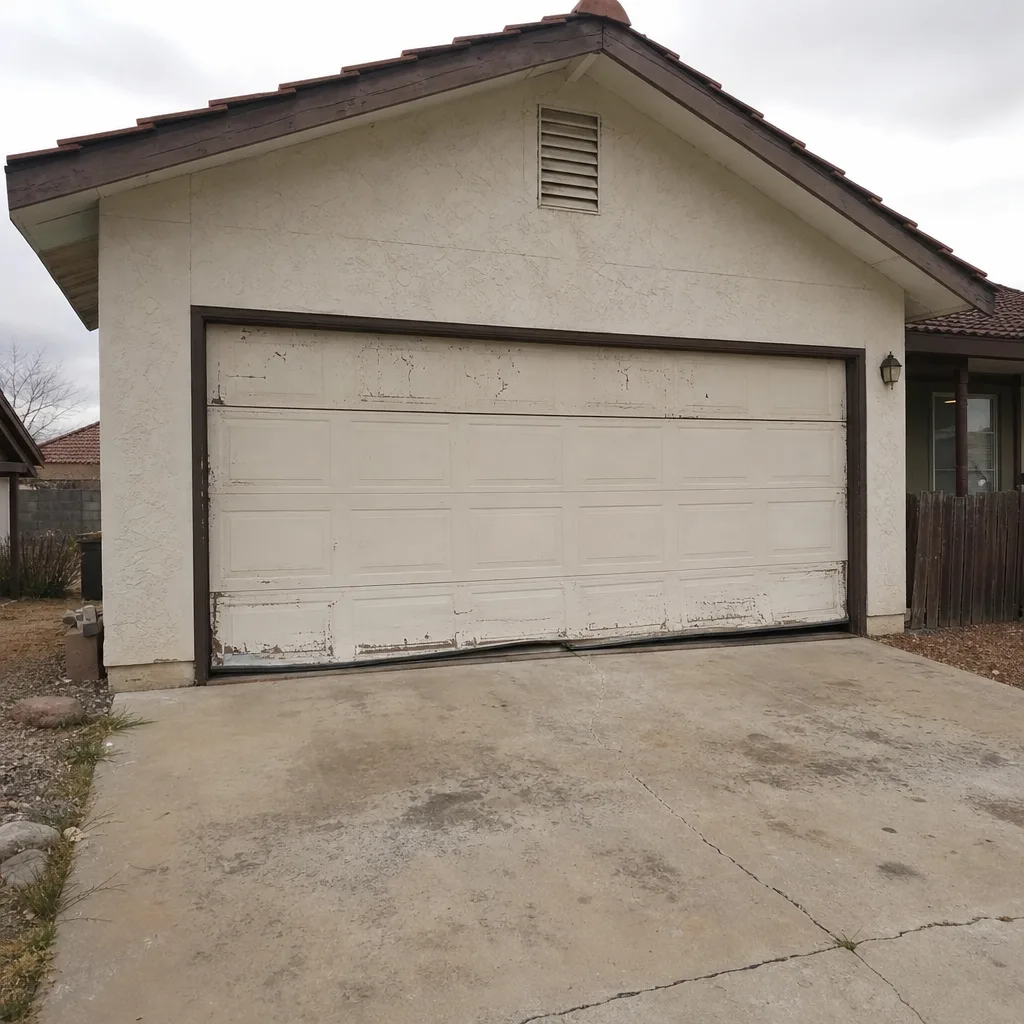 Before
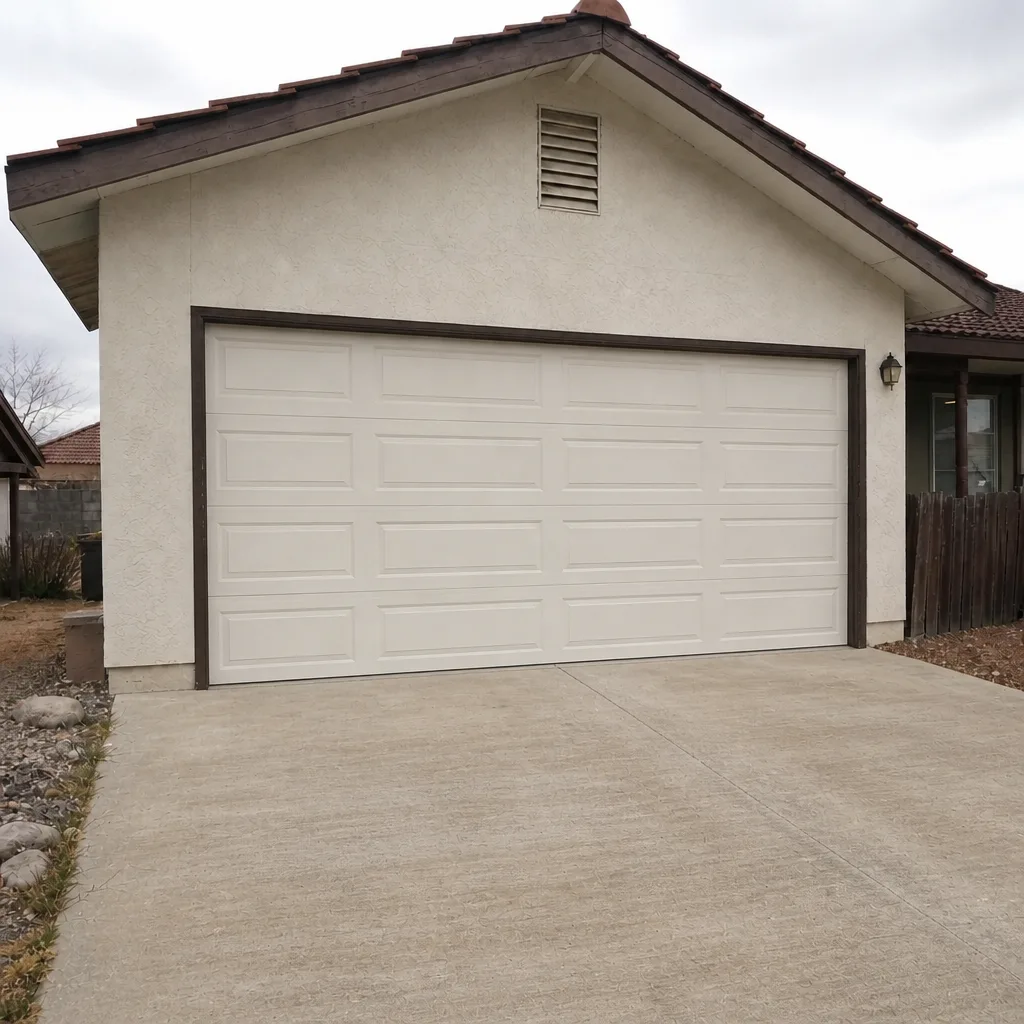 After
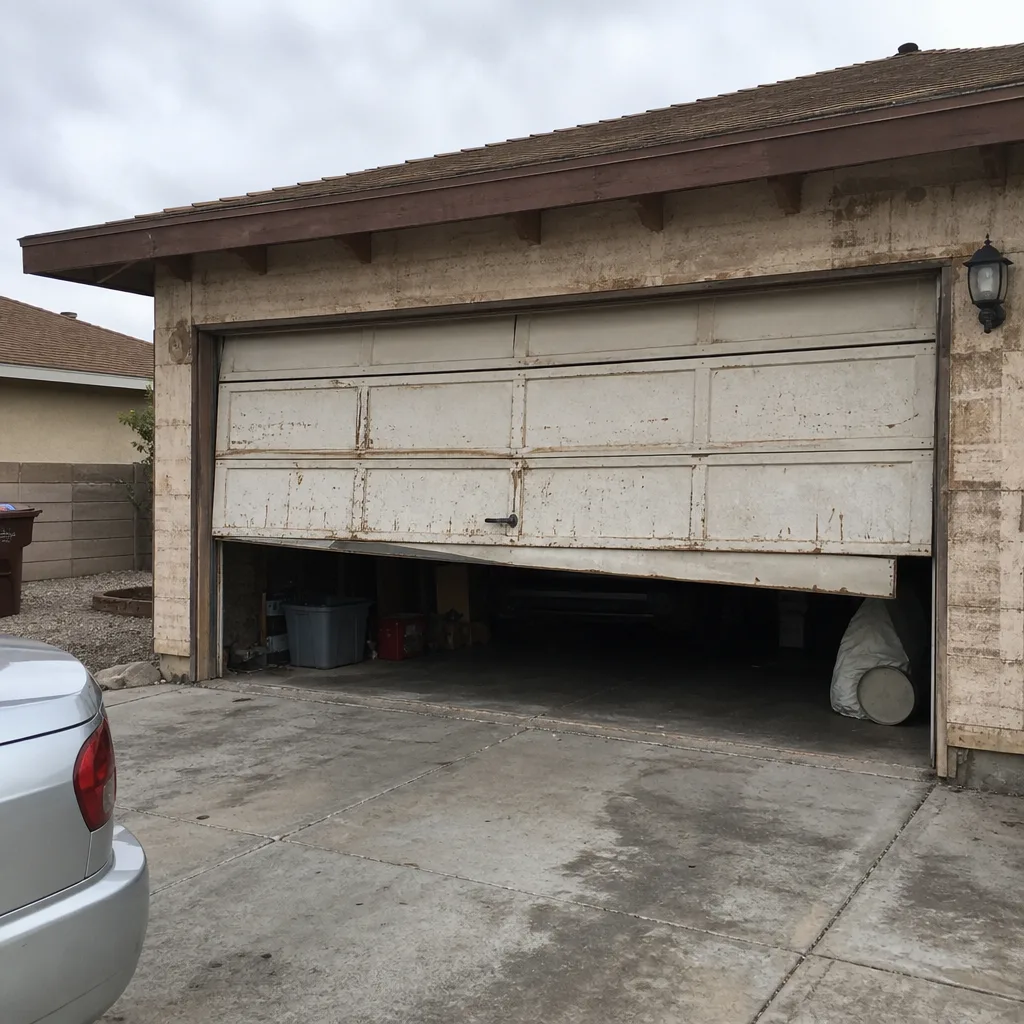 Before
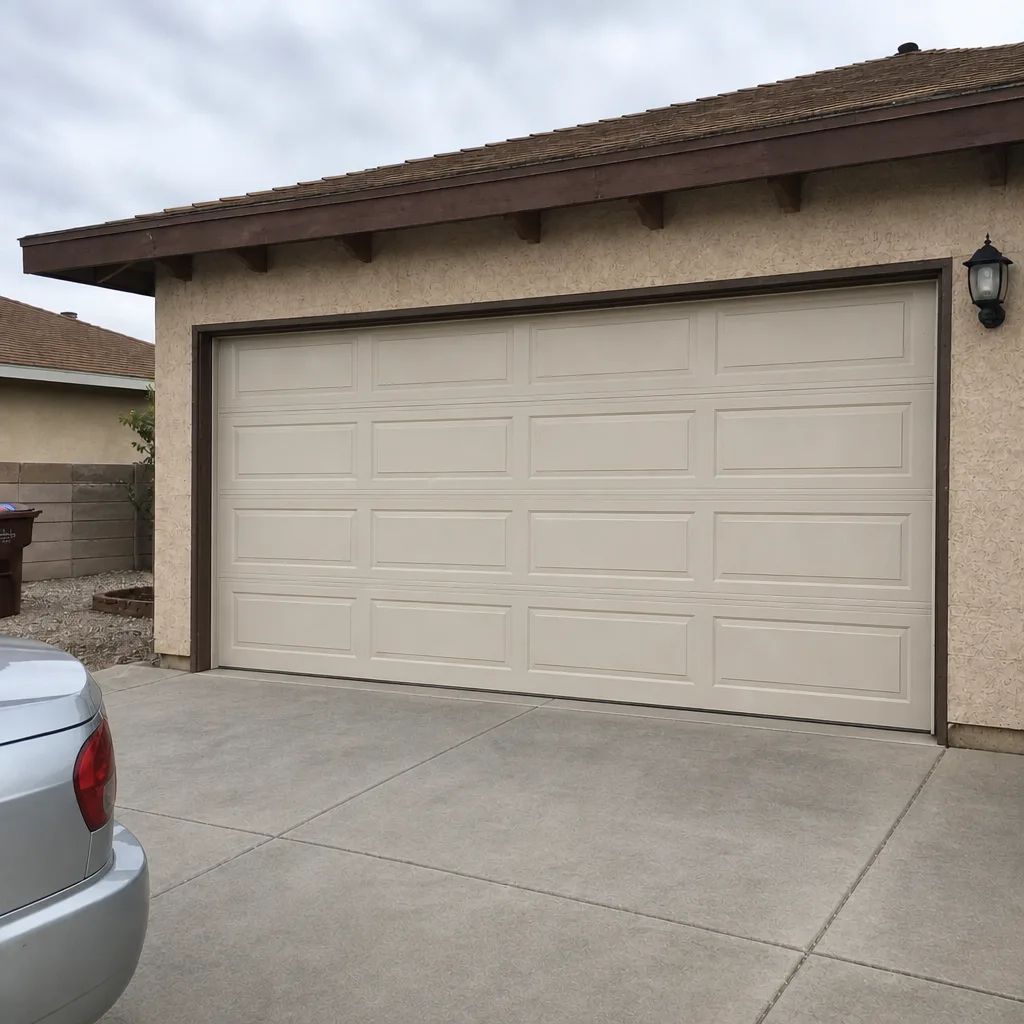 After
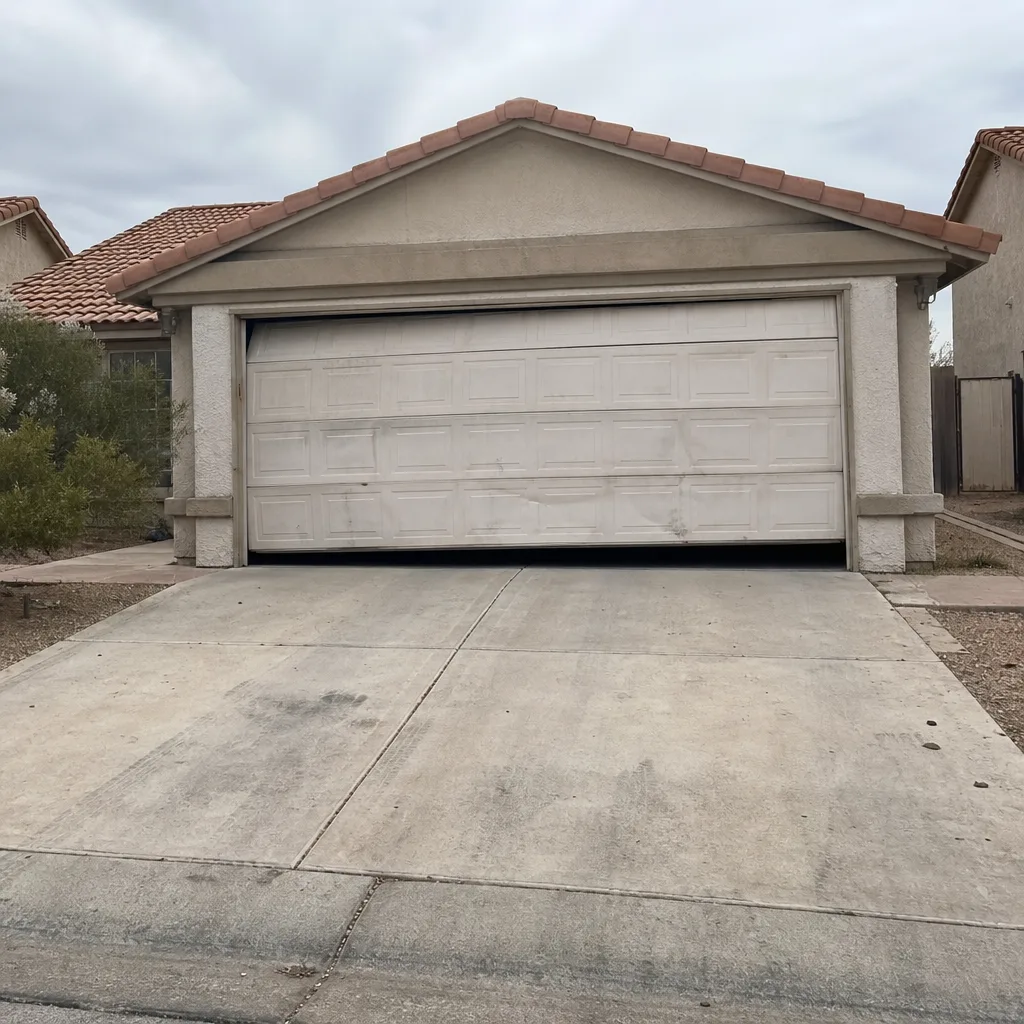 Before
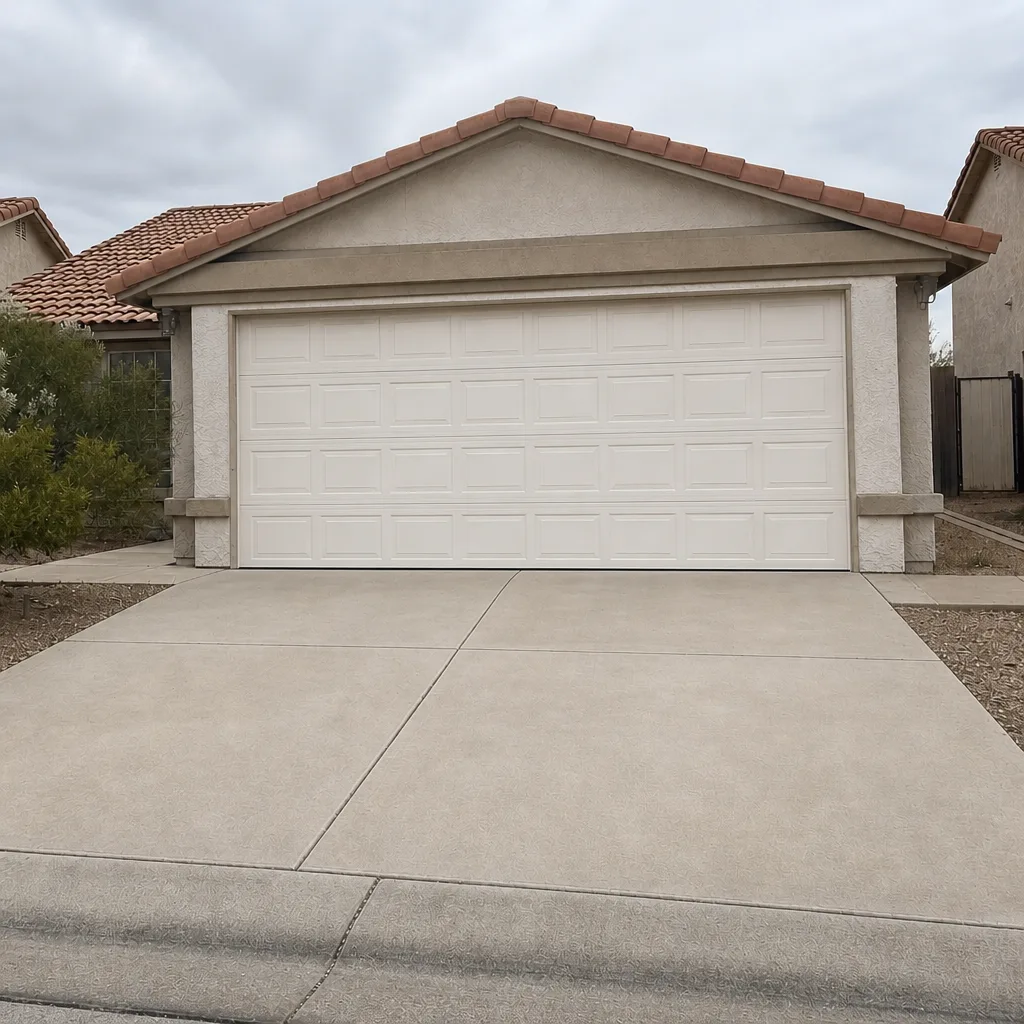 After
Common Mistakes to Avoid
- Ignoring a door that “still works.” Working and healthy are different things. A door in the middle of a breakdown still goes up – until it doesn’t.
- Spraying WD-40 on the springs or track. WD-40 is a solvent, not a lubricant. It dries out the rollers and attracts dust, which is a bigger problem in Boulder City’s dry climate than in most places. Use a proper garage door lubricant on rollers, hinges, and the opener rail.
- Trying to adjust or replace torsion springs yourself. Torsion springs hold so much stored energy that a slip can cause serious injury. There is no DIY version of this that’s worth the risk, no matter what a video shows.
- Forcing a door that won’t open. Forcing a door with a broken spring can bend the track, crack a section, or burn out the opener motor – turning a $150-$280 repair into a $600 one.
- Calling the first number on a search results page without asking about written pricing. The biggest regrets homeowners report to us are no-shows and prices that climbed at the door. Ask for a written price before work starts.
- Skipping the manufacturer’s spec on replacement parts. A spring rated for the wrong cycle count or a roller of the wrong type wears out fast. We’re authorized to service LiftMaster, Chamberlain, Genie, Clopay, Raynor, and other major brands so the replacement matches the door.
- Not asking what the guarantee covers. A verbal “we’ll take care of it” isn’t a guarantee. Ask for it in writing and know exactly how long it runs.
When to Call a Professional
Call a professional immediately if you hear a sharp bang and the door won’t lift, if the door is hanging off the track, or if it reverses on its own and won’t close. These are stop-use situations. Schedule a service call within the week if the door grinds, screeches, hesitates at the top or bottom of travel, or drifts downward during the balance test. Plan an inspection within the month if the door is simply louder than it was six months ago or if you’re seeing daylight under the bottom edge.
Bramwell Garage Door Repair Boulder City offers free estimates in Boulder City – call (844) 560-4479 and a live person will answer, day or night. You’ll get a real arrival window, a background-checked technician in uniform, a written price before any work begins, and the Kingswell Guarantee on the finished repair. If a covered repair fails within the guarantee period, we come back and fix it at no charge.
Frequently Asked Questions
A garage door that’s louder than it used to be is the most common early sign of a failing component – usually worn rollers, a tired trolley carriage, or spring fatigue. The door still lifts because the opener makes up the difference, which is exactly why the symptom is so easy to ignore. Call (844) 560-4479 for a free estimate before it turns into an emergency.
Most common garage door repairs in Boulder City run $150-$350, with spring replacement at $150-$280 and roller or track work at $100-$200. The number that matters is the written price you get before any work starts, and that’s standard on every Bramwell job. Call (844) 560-4479 for an exact quote – estimates are free.
Yes. A door that won’t close or reverses on its own is a top-priority call, and we keep openings for those every day. Call (844) 560-4479 and a live person will tell you the next available arrival window – we answer 24 hours a day.
No. We give you a written price before any work starts, and the number on the invoice matches the number you heard. If we discover something that changes the scope, we tell you and get your approval before proceeding – the price never changes at the door without your say.
Yes. Every Bramwell technician is background-checked, arrives in uniform, and works to the Kingswell standard – written price, real arrival window, clean job site, and a written guarantee. Ask the technician exactly what the guarantee covers and for how long, and you’ll get it in writing. Call (844) 560-4479 to book.
Twice a year is the right cadence for most Boulder City homes – spring and fall, when temperatures shift and the door’s hardware goes through the most change. The 60-second balance test above catches spring fatigue before any other symptom appears, and one of our technicians can walk you through it on a free estimate call. Ring (844) 560-4479 if the test shows any drift.
The Bottom Line
A garage door rarely fails without warning. It gets louder, drifts in the balance test, grinds on the way up, or lets in daylight for weeks before the part actually breaks. The signs are quiet but they’re there. Catch them early and you’re looking at a $150-$280 spring or roller repair. Ignore them and you’re looking at $400-$600 once the opener and door get pulled into the failure. Run the balance test twice a year, listen to the door, and have a company you trust on speed dial – Bramwell Garage Door Repair Boulder City, a Kingswell company, with a written price before any work starts and the 365-Day Done Right Promise on every repair. Start with our Bramwell Garage Door Repair Boulder City home page if you want the full picture of what we do.
Ready to get a free, written estimate? Call (844) 560-4479 – a live person answers 24 hours a day, 7 days a week, and we’ll give you a real arrival window for the next available visit.
Written by the team at Bramwell Garage Door Repair Boulder City.